










Description
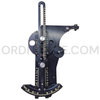
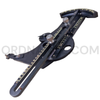
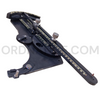
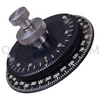
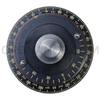
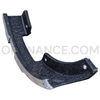
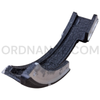
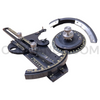
Automatic Bombing Computer kit for the M-9 Norden Bombsight
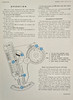
This Norden M-9 bombsight Automatic Bombing Computer (ABC) is a highly recognizable piece of U.S. military aviation and World War II bombardment history. For collectors of U.S. Army Air Forces equipment, aircraft armament instruments, bomber crew artifacts, aviation display items, and historic fire-control technology, this is a standout piece tied to the era of high-altitude strategic bombing. Condition is near mint, which is astonishing, given the fact that this kit is over 80 years old! See additional images that include information taken from the WW2-era Bombardier Information File that covers this Automatic Bombing Computer.
The Norden M-9 Bombsight was one of the best-known American bombsights of the Second World War. The National Museum of the United States Air Force identifies the Norden bombsight as a crucial part of the U.S. Army Air Forces’ daylight bombing campaign and notes that it was originally developed by Carl Norden for the U.S. Navy before the Army Air Corps acquired its first Norden bombsight in 1932. It was also highly classified during wartime service.
The Norden M-9 Bombsight
The M9 Bomb Sight belongs to the broader family of aircraft armament sights, bomber fire-control instruments, and precision bombing equipment. Unlike a simple optical sight, the Norden system combined optical sighting, mechanical computation, stabilization, and aircraft-interface technology into a sophisticated wartime instrument.
In U.S. Army Air Forces service, the Norden bombsight functioned as part of a larger bombing system. The National Museum of the United States Air Force explains that the bombsight used an analog computer to account for factors such as wind, airspeed, and altitude, while an internal gyroscope provided the stability needed for high-altitude optical sighting. When connected with the C-1 Autopilot, the system provided the stability needed for accurate high-altitude bombing.
For collectors, that gives this item exceptional appeal. It represents not only a piece of aircraft equipment, but also the technical and operational mindset behind American strategic bombing doctrine during World War II. It fits especially well in collections focused on B-17 Flying Fortress equipment, B-24 Liberator equipment, B-29 Superfortress history, U.S. Army Air Forces artifacts, bomber crew equipment, and World War II aviation technology.
Known M-9 Bombsight Details
Because surviving examples vary by configuration, accessories, and completeness, collectors typically evaluate an M9 Bomb Sight by markings, model designation, sighthead condition, stabilizer presence, mounting hardware, data plates, and included accessories.
Relevant known reference information for the Norden M-9 family includes:
- Common Designation: Norden M-9 Bombsight
- Item Type: Aircraft bombsight / armament sighting instrument
- Military Association: U.S. Army Air Forces
- Era: World War II / postwar service period
- Function Category: High-altitude visual bombing sight
- Technology Type: Optical, mechanical, gyroscopic, and analog-computing instrument
- Known Manufacturers: Carl L. Norden Inc. and, on some documented examples, Victor Adding Machine Company
- Related Equipment: Stabilizer assembly, C-1 Autopilot system, sighthead, reflex sight, transit case, data book, and maintenance references, depending on configuration
Smithsonian collection records identify a Norden M-9 example associated with the Enola Gay as a metal-and-glass armament sighting instrument attached to an M-9 stabilizer and X-1 reflex sight, while another Smithsonian M-9 sighting-head record identifies Carl L. Norden Inc. as manufacturer and describes materials including aluminum, paint, steel, synthetic rubber, glass, plastic, paper, and ink.
What This Bomb Sight Represents
As an M9 Bomb Sight, this item represents a specialized military aviation instrument rather than a weapon, ammunition item, or explosive device. It is best understood as a historic aircraft sighting and fire-control component connected to bomber operations and wartime navigation, targeting, and bombardment equipment.
In practical collecting and display terms, a bomb sight like this is especially relevant for:
- World War II U.S. Army Air Forces displays
- B-17, B-24, and B-29 bomber equipment collections
- aviation armament and fire-control instrument collections
- bomber crew and bombardier training displays
- museum exhibits on strategic bombing and aircraft technology
- restoration or display projects involving bomber nose-section equipment
- collectors of optical, gyroscopic, and mechanical computing instruments
- military aviation research libraries and artifact collections
Because the Norden bombsight was treated as a sensitive wartime instrument, it also has strong historical interest beyond its mechanical design. The National Museum of the United States Air Force notes that during World War II, bomber crews flying into Wright Field used a secure vault for top-secret Norden bombsights, and the bombardier would remove the sighthead for storage before reinstalling it when the aircraft was ready to depart.
Historical Significance
The M9 Bomb Sight is closely tied to the story of American daylight precision bombing during World War II. The U.S. Army Air Forces placed major emphasis on high-altitude bombing doctrine, and the Norden bombsight became one of the most famous technical instruments associated with that effort.
The National Museum of the United States Air Force describes the Norden as the U.S. Army Air Forces’ primary high-altitude visual bombsight during World War II, while also noting that its legendary reputation for extreme accuracy was exaggerated in wartime publicity. That balance makes the item historically important: it was both a major technical achievement and a symbol of the challenges of real-world bombing accuracy under combat conditions.
For collectors and historians, this bomb sight is especially relevant to subjects such as:
- World War II U.S. Army Air Forces equipment
- Norden M-9 bombsight history
- B-17 Flying Fortress and B-24 Liberator bomber equipment
- B-29 Superfortress aviation artifacts
- bombardier training and strategic bombing doctrine
- aircraft armament sights and controls
- wartime classified aviation instruments
- mechanical analog computing and gyroscopic stabilization
The Imperial War Museums identifies its M-9-B Norden sighthead as a highly advanced American bombsight that became standard on B-17 and B-24 bombers in the later stages of World War II. That makes the M9 family especially desirable for collections centered on heavy bomber equipment and U.S. Army Air Forces aviation history.
About This M9 Bomb Sight
This listing is for an M9 Bomb Sight / Norden M-9 Bombsight.
It is especially well suited for:
- World War II aviation collectors
- U.S. Army Air Forces equipment collections
- bomber crew and bombardier displays
- B-17, B-24, and B-29 reference collections
- aircraft armament and sighting-instrument displays
- museum exhibits on strategic bombing and aviation technology
- collectors of classified or formerly restricted wartime equipment
- military optics, gyroscope, and analog-computer collectors
This listing is for the bomb sight only unless otherwise stated. No aircraft, bomb-release equipment, ammunition, explosive item, autopilot system, stabilizer, mounting base, transit case, tools, manuals, data book, or additional accessories are included unless specifically shown or noted.
Why This Bomb Sight Matters
Many military collectibles focus on uniforms, helmets, firearms, vehicles, or paper documents. This item represents a different but equally important category: the precision instruments used by bomber crews to support high-altitude air operations.
For collectors, the M9 Bomb Sight is a strong display piece with immediate historical recognition. For researchers, it offers a useful reference point for U.S. Army Air Forces bombing technology and wartime aviation instrumentation. For museums, it helps explain the technical systems inside heavy bombers and the role of the bombardier in World War II aircrew operations.
Because surviving examples can vary greatly in markings, included assemblies, and condition, an M9 bomb sight is especially valuable as a physical reference artifact. It preserves the engineering, secrecy, training, and operational history behind one of the most famous aviation instruments of the Second World War.
Ideal For
This bomb sight is a strong fit for:
- World War II U.S. Army Air Forces collections
- Norden M-9 bombsight displays
- B-17 Flying Fortress equipment collections
- B-24 Liberator and B-29 Superfortress displays
- aircraft armament and fire-control instrument collections
- bombardier training and strategic bombing exhibits
- museum and archival display use
- collectors of historic military optical and mechanical instruments
- aviation historians and World War II researchers
Pictures are stock images of our inventory. Unless otherwise noted, you will not be receiving the exact item shown in the pictures. The pictures are representative of the item's general condition. The item you receive might be slightly better, or worse, condition than was shown in the pictures.
Please visit our page about order lead times here: Order Lead Times