




Description
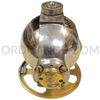
WWII U.S. Navy Mark 13 Torpedo Gyroscope No. 503 for the Mark 10 Mod 3 Torpedo
This WWII-era U.S. Navy Mark 13 torpedo gyroscope, No. 503, is a precision steering instrument from the age of mechanical torpedo guidance. Navy records identify the Mark 13 gyro with the Mark 10 Mod 3 submarine torpedo. The marked bearings retain useful details for comparing the assembly with period drawings and parts records. The piece suits a naval ordnance collection, submarine-history exhibit, or display of early guidance technology.
Identification and Features
The gyroscope's model, identifying number, and bearing stamps are the key details for this listing. The bearing codes are recorded exactly as supplied, preserving the different markings found at each position.
- Item: U.S. Navy Mark 13 torpedo gyroscope.
- Identifying number: No. 503.
- Era: World War II.
- Documented model application: Mark 10 Mod 3 submarine torpedo.
- Top and bottom bearing stamps: "NORMA E-8-6."
- Side bearing markings: "79392-F-6."
- Historical role: Mechanical reference for torpedo course control.
Function and Contents
A torpedo gyro helped the weapon hold its intended direction after launch. A fast-spinning wheel supplied a steady reference, while pivoting rings, called gimbals, allowed the surrounding torpedo to move around it. The gyro worked with a separate steering mechanism that corrected the rudders when the weapon moved off course. Bearings supported the wheel and moving rings with very little friction. This kept the instrument sensitive to small changes in direction. The assembly was one part of the torpedo's control equipment; depth control and warhead operation had their own mechanisms.
Documented Applications
The Navy's U.S. Navy Torpedo Gyroscopes Non-Tumble Type, Ordnance Pamphlet 627(A), lists the Mark 13 gyroscope for the Mark 10 Mod 3 torpedo. This is an important distinction because the Mark 13 aerial torpedo used a Mark 12 Mod 1 gyro. Component and complete-weapon numbers followed separate naming systems. The documented connection for a gyro identified as Mark 13 is therefore the older submarine-torpedo family. This places the model within the equipment history of boats that carried Mark 10 torpedoes, including the Navy's R- and S-class submarines.
Product History
Torpedo gyroscopes developed as navies sought better control of self-propelled underwater weapons. Near the end of the nineteenth century, Ludwig Obry adapted a gyroscope for torpedo steering, helping these weapons maintain a chosen course. By the early twentieth century, gyroscopic control had become a key part of torpedo design. The Mark 13 belonged to the Navy's later non-tumble gyro family. These instruments used carefully balanced moving parts and precision bearings. The model appears in the Navy's October 1942 gyro manual, and its Mark 10 Mod 3 application remains listed in the manual's March 1957 change.
Bearing Markings and Precision Engineering
The bearing stamps are useful evidence of the small components inside a naval guidance instrument. Norma bearings were discussed in naval engineering literature as early as 1919. That same literature explained why accurate bearings mattered in high-speed instruments: they reduced friction and vibration while keeping moving parts properly supported. In a gyro, unwanted movement could disturb balance and weaken the direction reference. The bearing inscriptions on No. 503 are therefore worth preserving alongside the assembly number. A bearing brand identifies a component supplier; it does not establish the maker of the complete gyroscope.
Equipment History
The Mark 10 torpedo grew from the Bliss-Leavitt torpedo work of the early twentieth century. The Naval Torpedo Station at Newport, Rhode Island, manufactured the type during World War I, and it continued serving between the wars. Its shorter length suited older submarine installations. During World War II, R- and S-class boats retained the Mark 10 because they could not accommodate the longer Mark 14 in their existing tubes. The Mark 10 thus remained useful after newer torpedoes entered service. Production ended in 1943, as improved supply and replacement designs reduced the need for the older weapon.
Weapon-System Background
The Mark 10 was a 21-inch torpedo intended to attack surface ships from submarines. Steam-turbine propulsion drove its propellers, giving the weapon a speed of about 36 knots and a range of roughly 3,500 yards. A forward warhead supplied the destructive effect, while the gyro and steering gear controlled direction. For the submarine crew, success depended on both a sound firing solution and dependable machinery inside the torpedo. The Mark 13 gyro belongs to that larger system of mechanical control, underwater propulsion, and submarine fire control.
History of Use
Mark 10 torpedoes remained part of the U.S. submarine force's early Pacific War arsenal. One documented combat example was USS S-44, which sank the Japanese heavy cruiser Kako on August 10, 1942, after the Battle of Savo Island. Navy historical accounts identify the weapons used as Mark 10 torpedoes. The type also faced a wartime depth-control problem: in January 1942, the Navy informed the fleet that it ran about four feet deeper than its setting. That issue concerned depth control, a separate function from the gyro's directional steering. These events show the importance of reliable torpedo machinery aboard submarines operating under combat conditions.
Condition
This historic gyroscope is intended for collecting, display, and reference study. Please check the pictures for the general condition of the item.
Ideal For
No. 503 suits collections that explain the mechanical systems behind naval weapons. Its numbered identity and bearing stamps make it useful for comparing surviving hardware with wartime technical references.
- WWII U.S. Navy collections.
- Mark 10 torpedo and S-class submarine displays.
- Historic gyroscope and bearing collections.
- Museum exhibits on mechanical guidance.
- Naval ordnance research collections.
Approx length 5", Approx width 4", Approx height 4", Approx weight 4.3lbs.
Pictures are stock images of our inventory. Unless otherwise noted, you will not be receiving the exact item shown in the pictures. The pictures are representative of the item’s general condition. The item you receive might be slightly better, or worse, condition than was shown in the pictures.
Please visit our page about order lead times here: Order Lead Times.