




Description
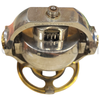
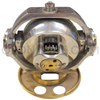
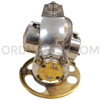
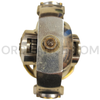
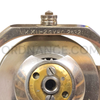
WWII U.S. Navy Mark 12 Mod 2 Torpedo Gyroscope No. 2532
This WWII-era U.S. Navy Mark 12 Mod 2 torpedo gyroscope, No. 2532, is a mechanical course-control instrument associated with both submarine and destroyer torpedoes. It brings an important part of underwater naval engineering into a collection or historical display. Its appeal lies in the precision mechanism that helped a torpedo hold its assigned direction after launch.
Identification and Features
The model identifies the gyro design and its modification, while No. 2532 identifies this individual example. Navy manuals also use the shortened designation Mark 12-2.
- Service: WWII-era U.S. Navy torpedo equipment.
- Model: Mark 12 Mod 2, also written Mark 12-2.
- Gyroscope number: 2532.
- Design: Air-sustained, constant-spin, non-tumble type.
- Historical role: Direction reference for torpedo course control.
Function and Contents
The gyroscope supplied a steady reference direction for the torpedo's steering system. Its spinning wheel sat within pivoting support rings called gimbals. These rings allowed the torpedo body to move around the wheel's reference axis. If the weapon turned off course, a separate mechanical linkage called the pallet mechanism detected that change. An air-powered steering engine then moved the vertical rudders to bring the torpedo back toward its set course. The Mark 12 family used a continuous air supply to maintain wheel speed during the run. A separate depth-control system governed the torpedo's up-and-down movement.
Product History
Torpedo gyro steering grew from work by Ludwig Obry in the late 1800s. His adaptation of the gyroscope to Whitehead torpedoes helped these self-propelled weapons maintain direction over longer runs. Later Navy designs refined this mechanical principle for faster and more capable torpedoes. The Mark 12 Mod 2 appears in Plate 5 of the Navy's October 1942 manual, OP 627(A), which documents its wartime design. The identification supplied for No. 2532 does not establish its maker or manufacture date.
Documented Applications
The application table in OP 627(A) lists the Mark 12 Mod 2 gyro for Mark 14 and Mark 14 Mod 2 torpedoes, as well as Mark 15, Mark 15 Mod 1, and Mark 15 Mod 2 torpedoes. The manual also lists the Mark 12 Mod 3 gyro for the Mark 15 Mod 1, so that torpedo model had more than one documented gyro application. Gyroscopes and complete torpedoes carried separate model designations.
Equipment History
The Naval Torpedo Station at Newport, Rhode Island, was established in 1869 and became a major center for U.S. torpedo development. In 1930, Newport received the task of designing three related weapons: the Mark 13 for aircraft, Mark 14 for submarines, and Mark 15 for destroyers. Limited funding encouraged shared technology, including steam turbines, compressed-air and alcohol systems, and common depth and course controls. This approach reduced development costs, but the Navy relied heavily on recoverable exercise torpedoes for testing. Tests with combat warheads against real targets were very limited before the war.
Weapon-System Background
The Mark 14 and Mark 15 were 21-inch torpedoes built to attack surface ships. Their gas-steam power plants used compressed air, fuel, and water to drive turbines and propellers. The submarine-launched Mark 14 offered two speed settings: about 46 knots over 4,500 yards, or about 32 knots over 9,000 yards. The larger Mark 15 was launched from surface-ship deck tubes and offered three speed settings. Wartime figures ranged from 46 knots over 6,000 yards to 28 knots over 15,000 yards. These weapons combined propulsion, steering, depth control, and a warhead into one underwater system, with the gyro serving the course-control section.
Gyroscope Servicing and Testing
The Navy treated torpedo gyroscopes as precision instruments. Bearing condition, cleanliness, lubrication, and balance could all affect course accuracy. Service manuals distinguished routine care from major repair work, directing certain overhauls and balancing operations to torpedo stations. Special test stands allowed technicians to check a gyro's running performance. This maintenance history helps explain the close attention given to small mechanical parts inside a much larger weapon.
History of Use
The Mark 14 family was a major U.S. submarine weapon in the Pacific war. Early service exposed deep-running torpedoes, premature explosions, and hits that failed to explode. These faults involved depth control and exploders, separate systems from the gyro's course-control role. By fall 1943, corrections had made the Mark 14 far more reliable. The Mark 15 family served U.S. destroyers in surface combat. A notable example of successful American destroyer torpedo tactics was the Battle of Vella Gulf on August 6-7, 1943. U.S. destroyers opened with a surprise torpedo attack, followed by gunfire and further torpedo fire, sinking three Japanese destroyers. These events describe the weapon families; no specific ship or battle attribution has been established for gyro No. 2532.
Postwar Service and Historical Significance
The Mark 14 family remained in service after WWII. Later Mark 14 Mod 5 torpedoes were adapted for electrical fire-control systems and continued serving until the Mark 48 replaced them during the 1970s. That later service belongs to the broader torpedo family. This WWII-era gyro illustrates an earlier stage of naval guidance, when spinning wheels, bearings, and mechanical linkages supplied the reference needed for an underwater weapon's course.
Condition
Please check the pictures for the general condition of the item.
Ideal For
This torpedo gyroscope suits collections that connect naval history with mechanical engineering. Its documented model applications make it useful for explaining how wartime submarines and destroyers depended on precise internal instruments, as well as larger engines and warheads.
- WWII U.S. Navy militaria collectors.
- Submarine and destroyer history collections.
- Torpedo and naval ordnance displays.
- Museums and maritime history exhibits.
- Educational study of mechanical gyroscopes and guidance.
Approx length 5", Approx width 4", Approx height 4", Approx weight 4.3lbs.
Pictures are stock images of our inventory. Unless otherwise noted, you will not be receiving the exact item shown in the pictures. The pictures are representative of the item’s general condition. The item you receive might be slightly better, or worse, condition than was shown in the pictures.
Please visit our page about order lead times here: Order Lead Times.