



Description
WWII U.S. Navy Mark 12 Mod 1 Torpedo Gyroscope No. 22031
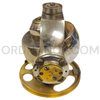
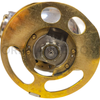
This WWII-era U.S. Navy Mark 12 Mod 1 torpedo gyroscope, No. 22031, is a precision instrument from the age of mechanical underwater guidance. Its design served Mark 13 aerial torpedoes and several earlier Navy torpedo types. For collectors, it connects the small steering components inside a torpedo with the larger story of naval aviation and surface warfare.
Identification and Features
Mark 12 identifies the gyro design, and Mod 1 identifies its modification. Navy documents also write this model as Mark 12-1. The individual gyro number is 22031.
- Service: WWII-era U.S. Navy torpedo equipment.
- Model: Mark 12 Mod 1, also designated Mark 12-1.
- Gyroscope number: 22031.
- Design: Air-sustained, constant-spin, non-tumble type.
- Original role: Mechanical reference for torpedo steering.
Function and Contents
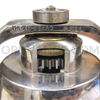
The gyro supplied a steady direction reference during a torpedo's underwater run. Its spinning wheel rested within pivoting support rings called gimbals. These rings let the torpedo body turn around the wheel's reference direction. A mechanical linkage called the pallet mechanism detected a change in course and passed a correction to an air-powered steering engine. That engine moved the vertical rudders to bring the torpedo back toward its intended path. The constant-spin design used a continuous air supply to maintain wheel speed. Separate equipment controlled running depth and warhead operation.
Documented Applications
The Navy's OP 627(A) application table lists the Mark 12 Mod 1 gyro in the following torpedo families. The Mark 8 entries apply to selected configurations; the manual specifically notes that not all of those torpedoes used this gyro. Component model numbers and complete torpedo model numbers were assigned separately.
- Mark 8 Mod 3C, Mod 3D, and Mod 8: selected configurations.
- Mark 11, Mark 11 Mod 1, Mod 2, and Mod 3.
- Mark 12 and Mark 12 Mod 1.
- Mark 13, Mark 13 Mod 1, and Mark 13 Mod 2.
Product History
Gyroscopic torpedo steering traces its roots to Ludwig Obry's work with Whitehead torpedoes in the late 1800s. Later designs refined this principle as torpedoes gained speed and range. Navy records list an earlier non-tumble gyro manual, OP 627, dated May 20, 1936. Its wartime replacement, OP 627(A), dated October 1942, illustrates the Mark 12 Mod 1 in Plate 4. This places the design within the Navy's established torpedo equipment of WWII.
Equipment History
The Mark 13 was the first U.S. torpedo designed specifically for aircraft launching. The Navy began its dedicated aircraft-torpedo project in 1925, formally named the resulting weapon Mark 13 in 1930, and recorded a successful test run in 1932. The Mark 13 Mod 0 entered service in 1938. Its successor, the Mod 1, reached the fleet in 1940 with changes to the tail. This development gave naval aircraft a purpose-built torpedo, but early service exposed serious faults that required further work during the war.
Earlier Surface Torpedo History
The gyro's other applications connect it with older ship-launched weapons. The Mark 8 was a 21-inch destroyer torpedo that remained in Navy inventory when WWII began. Completed in 1926, the Mark 11 was the first torpedo designed entirely within the U.S. Navy and introduced three speed settings that could be selected while it was in a tube. The Mark 12 torpedo followed in 1928 with refinements, including a lower maximum speed to improve reliability. Navy conversions of Mark 11 and Mark 12 torpedoes in 1941-1942 helped stretch available stocks as wartime demand grew.
Weapon-System Background
The Mark 13 was shorter and wider than the long, 21-inch surface torpedoes. The aircraft type measured roughly 13.5 feet long and 22.5 inches in diameter. Typical later specifications gave a range of about 6,000 yards at 33.5 knots. Its gas-steam power plant used compressed air, fuel, and water to drive turbines and propellers. Aircrews had to line up their launch with a calculated intercept course. The weapon then had to survive entry into the sea and make a controlled underwater run toward a surface ship.
Wartime Development and Production
Early Mark 13 performance suffered from poor water entry, damaged parts, and unreliable underwater runs. A Navy evaluation in 1943 found satisfactory runs in only 31 percent of 105 torpedoes released at aircraft speeds above 150 knots. Major improvements arrived in 1944. A plywood nose drag ring steadied the torpedo in the air and softened water impact, while a tail shroud ring improved its underwater stability. Changes also reduced gyro damage. Together, these improvements made the weapon far more dependable. Approximately 17,000 Mark 13 torpedoes were produced during WWII by Navy facilities and industrial contractors.
History of Use
During the Coral Sea campaign in May 1942, USS Yorktown's TBD torpedo bombers carried Mark 13 torpedoes. Later in the war, TBF and TBM Avenger torpedo bombers carried the improved Mark 13 in Pacific combat. These torpedoes helped sink the Japanese battleship Yamato on April 7, 1945. PT boats also adopted the Mark 13 beginning in 1943, replacing heavier Mark 8 torpedoes and bulky tubes with lighter launching racks that rolled the weapon into the water. This history spans carrier air groups, coastal patrol boats, and the continuing use of older torpedo stocks. The applications and combat examples describe the equipment families rather than an individual combat record for No. 22031.
Postwar Use and Historical Significance
The Mark 13 family also saw use during the Korean War. On May 1, 1951, AD Skyraiders from USS Princeton attacked the floodgates of Hwachon Dam with aerial torpedoes. This unusual mission showed that a WWII torpedo design could still serve a later military need. A period gyro helps explain the mechanical guidance behind these weapons, linking the history of precision instruments with the changing roles of naval aircraft and torpedoes.
Gyroscope Care and Testing
Navy manuals treated gyro bearings, cleanliness, lubrication, and balance as important factors in course accuracy. Specialized stands allowed technicians to check running performance, while certain major repairs and balancing work belonged at torpedo stations. These service requirements show why a small steering instrument received careful attention alongside the torpedo's larger power plant and warhead.
Condition
Please check the pictures for the general condition of the item.
Ideal For
This gyro suits collections focused on the engineering behind naval weapons. Its documented applications make it useful for comparing aircraft and surface-torpedo equipment, studying period Navy manuals, or adding a technical component to a WWII maritime display.
- WWII U.S. Navy militaria collections.
- Naval aviation and PT boat displays.
- Torpedo and gyroscope collectors.
- Museums and maritime history exhibits.
- Mechanical engineering and Navy manual study.
Approx length 5", Approx width 4", Approx height 4", Approx weight 4.3lbs.
Pictures are stock images of our inventory. Unless otherwise noted, you will not be receiving the exact item shown in the pictures. The pictures are representative of the item’s general condition. The item you receive might be slightly better, or worse, condition than was shown in the pictures.
Please visit our page about order lead times here: Order Lead Times.