







Description
WWII U.S. Navy Norden Mark 15 Mod 7 Bombsight Sight Head with Transport Tray – Serial L717
Item Overview
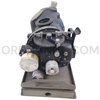
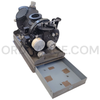
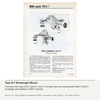
This U.S. Navy Norden Mark 15 Mod 7 bombsight sight head, serial number L717, is shown on its metal transport tray. Its original Bureau of Ordnance data plate identifies the model and individual instrument. The removable head contains the sighting telescope, stabilizing gyroscope, and mechanical analog computer that formed the heart of the Norden bombing system. This was the final version and last iteration of the Navy's Norden Bombsight.
Identification and Features
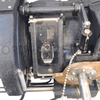
The original markings identify this as the Navy’s Mark 15, Modification 7. Its inspection window and separate viewing eyepiece help explain the different parts of the instrument.
- U.S. Navy Bureau of Ordnance: Identifies the Navy bureau responsible for this equipment’s development and procurement.
- Bomb Sight: The equipment designation recorded on the data plate.
- Mk 15: Mark 15, also written Mark XV in period records.
- Mod 7: Modification 7 within the Mark 15 series.
- L717: The individual sight head’s serial number.
- Date field: Obscured, so an exact manufacturing date is not readable from the supplied information.
- Large circular glass window: Provides a view of the gyroscope and leveling bubbles.
- Rubber-rimmed eyepiece: The separate opening through which the bombardier viewed the target.
- Period Navy catalog identification: OP 865 lists the Mark 15 Mod 7 under stock number 2-B-2307 and specifies a 24-volt DC design.
- Metal transport tray: Supports the removable sight head during handling and shipment.
Function
The telescope allowed the bombardier to track a target, while the gyroscope helped keep the optical system steady as the aircraft moved. The mechanical computer combined flight information with the bomb’s known flight characteristics to determine the release point. Its moving mechanical parts performed these calculations continuously during the approach. The round inspection window allowed observation of the gyro and leveling bubbles; target viewing took place through the separate eyepiece.
Documented End-Item Application
A documented aircraft application for this exact model is the Consolidated PBY-5A Catalina. Twin Beech’s published account of a surviving Navy service log records another Mark 15 Mod 7 head, serial L-518, installed in PBY-5A Navy aircraft number 48450. That record establishes a naval aircraft application for the model. The supplied plate information for L717 identifies the instrument without establishing its own aircraft assignment.
Product History
The Navy’s May 1944 OP 865 catalog described the Mark 15 Mod 7 as the latest bombsight modification. It retained the improvements of the preceding Mod 5 but omitted its Automatic Erection System, abbreviated AES. This mechanism brought the gyroscope upright. The Navy judged that the maintenance difficulties involved outweighed its benefits. The Mod 7 therefore preserved the gyro-stabilized sighting and computing functions while simplifying this part of the equipment.
Parent-Equipment History
The Mark 15 grew from Carl L. Norden’s earlier bombsight work for the Navy. The Bureau of Ordnance first contracted with him in January 1920 to improve an existing sight. Two Mark XV prototypes reached the Naval Proving Ground at Dahlgren in February 1931. Testing led to production orders, and the Navy received its first production instrument in September 1932. The design later became the basis of the Army’s Norden M-series bombsights.
Weapon-System Background
The Navy developed the Norden system to improve level bombing, with ships among its intended targets. A further step came when Norden’s Stabilized Bombing Approach Equipment, or SBAE, reached Dahlgren for testing in February 1935. Production followed in 1937. This equipment linked the bombsight to aircraft control, allowing the bombardier to direct the bombing approach. By 1944, the Navy catalog listed compatibility with Norden and Minneapolis-Honeywell SBAE systems, along with suitably adapted Sperry Mark 3 autopilots.
History of Use
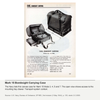
Wartime use required a support system of trained personnel, spare parts, and calibration equipment. OP 865 lists squadron spare-parts sets covering Mark 15 Mods 4, 5, and 7, together with calibration equipment for routine 100-hour checks. It also describes the head being shipped on a tray inside a metal container, then mounted on a separate directional stabilizer aboard the aircraft. Massey Air Museum documents a surviving Navy Mark 15 Mod 7 sight head in its collection.
Condition
The item shown consists of the sight head and metal transport tray. The separate aircraft-mounted directional stabilizer is not pictured. Please check the pictures for the general condition of the item.
Ideal For
This identified Navy sight head offers a focused addition to a World War II aviation collection. Its original plate, visible gyro assembly, and transport tray help explain the relationship between precision optics, mechanical computing, and aircraft equipment handling.
- U.S. Navy aviation and World War II equipment collections.
- Norden bombsight and mechanical-computer displays.
- Bombardier, aviation-ordnance, and instrument-maintenance exhibits.
Approx length 17", Approx width 14", Approx height 10", Approx weight 44.4lbs.
Please visit our page about order lead times here: Order Lead Times.