







Description
WWII Japanese Type 2 1/3 kg Cluster Bomb Submunition (Shūdan Bakudan) – Inert
Item Overview
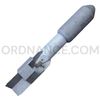
This World War II Japanese Type 2 1/3 kg cluster-bomb submunition is a compact Imperial Japanese Army aviation-ordnance artifact. Collectors often describe this type as a shūdan bakudan, meaning a grouped or cluster bomb. It was one of many small bombs packed inside a larger aircraft dispenser rather than a bomb carried alone. All ordnance is inert and intended only for display, collection, or historical study.
Identification and Features
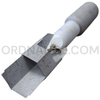
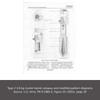
U.S. Army Technical Manual TM 9-1985-4 identifies this design as the Type 2 1/3-kg Cluster Bomb. The Type 2 designation corresponds to Japanese imperial year 2602, or 1942. Its compact 40mm-class body, threaded tail extension, side-mounted fuze-vane area, three-fin tail, and hexagonal tail bracing match the published military drawings.
- Japanese Army Type 2 1/3 kg cluster-bomb submunition
- Collector name: Shūdan Bakudan
- Published service fuze: B-5(a) mechanical impact tail fuze
- Published overall length: approximately 10 1/4 inches
- Published body diameter: approximately 1 9/16 inches
- Published service weight: approximately 11 ounces
- Steel bomb body with a lightweight three-fin tail assembly
- Original service finish was a black body with a yellow center band and gray tail
Bomb Function and Construction
The service bomb used a hollow inner cone to produce the shaped-charge effect that period American manuals called the “Monroe effect.” The cylindrical steel body joined a threaded tail extension containing the booster assembly, while the B-5(a) fuze was housed beneath the tail structure. Three fins stabilized the small bomb after it separated from its carrier. The pictured example is inert, allowing its threaded body joint and external tail construction to be examined safely.
Documented End-Item Application
This submunition had no individual aircraft suspension lug. It was packed inside a larger horizontally carried dispenser containing either 30 or 76 Type 2 bombs. The dispenser attached to an Imperial Japanese Army aircraft through a standard Army bomb suspension lug. After release, the outer corrugated-steel container separated and scattered its small bombs over the target area.
Type 2 Bomb History
Japanese Type numbers normally identified the imperial calendar year in which an item was adopted for service. Type 2 therefore indicates adoption in 2602, corresponding to 1942. Postwar American ordnance manuals documented both an older and a modified Type 2 pattern. The later pattern used revised tail bracing, different fin material, and a longer arming spindle. The tail construction visible on this example appears consistent with the older pattern illustrated in Figure 25 of TM 9-1985-4.
Cluster-Container System History
The 30-bomb container was approximately 43 inches long and weighed about 39 pounds when loaded. The 76-bomb container was approximately 41 1/2 inches long and weighed about 77 pounds loaded. Both used several interlocking corrugated-steel body sections held together by bands and buckles. This arrangement allowed a single aircraft station to carry and spread many compact submunitions.
Imperial Japanese Army Air-Ordnance Background
The Imperial Japanese Army and Navy operated separate air arms with different bombs, fuzes, markings, and designation systems. The Type 2 1/3 kg bomb belonged to the Army system. Its compact size and container delivery method reflect Japan’s wartime development of specialized aircraft ordnance designed to place many small shaped-charge bombs across a wider area.
History of Use
Captured Japanese documents examined by American ordnance specialists described the Type 2 1/3 kg bomb as being used for air-to-air bombing. A fighter or interceptor could release the carrier above or near an enemy aircraft formation, allowing the container to disperse its bombs through the air. The system could also deliver a concentrated group of shaped-charge submunitions against material targets on the ground.
Condition
This is an inert display example with no live explosive content. The photographed item includes the nose and body, threaded tail extension, three-fin tail structure, hexagonal bracing, and visible side vane assembly. The body and tail can be displayed assembled or separated. Most of the original black, yellow, and gray service finish is absent. The exposed surfaces show age-related oxidation, discoloration, scratches, and handling wear.
Ideal For
This rare Japanese aviation-ordnance artifact is well suited for:
- World War II ordnance collections
- Imperial Japanese Army Air Force displays
- Cluster-munition and submunition collections
- Military museums and educational exhibits
- Comparative shaped-charge and bomb-development studies
Approx length 10", Approx width 2", Approx height 2", Approx weight 0.5lbs.
Pictures are stock images of our inventory. Unless otherwise noted, you will not be receiving the exact item shown in the pictures. The pictures are representative of the item’s general condition. The item you receive might be slightly better, or worse, condition than was shown in the pictures.
Please visit our page about order lead times here: Order Lead Times.