




Description
WWII German Glasmine 43 Glass Antipersonnel Mine Body and Pressure Plate – Inert
Item Overview
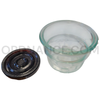
This inert German Glasmine 43, also designated Gl.Mi. 43, consists of a clear glass mine body and a dark-colored pressure plate. All other internal components are missing. Germany developed this unusual antipersonnel mine during World War II with a body made mainly from glass instead of metal. The surviving components show the distinctive shape and material that made the Glasmine 43 an important example of late-war German mine design.
Identification and Features
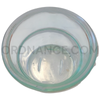
This incomplete example retains the two largest and most recognizable external components of the Glasmine 43. Its transparent body allows the molded interior ledges and recessed charge area to remain visible.
- German designation: Glasmine 43
- Abbreviated designation: Gl.Mi. 43
- Later designation: Schützen-Küstenmine
- Type: Minimum-metal antipersonnel mine
- Country of origin: Germany
- Period: World War II
- Included: Clear glass mine body and dark-colored pressure plate
- Missing: Glass shear plate, fuze-support components, fuze or igniter, detonator, explosive charge, spacers, sealing material, safety device, and all other internal parts
- Status: Inert and incomplete
Original Complete Configuration
A complete Glasmine 43 used a deep, dish-shaped glass body with an internal recess for the explosive charge. A thin glass shear plate originally rested near the upper edge of the body, with a heavier molded pressure plate above it. The center of the assembly held the fuze-support parts and one of several approved German pressure or chemical fuzes. These parts, along with the explosive charge and detonator, are absent from this item. Only the clear body and dark pressure plate are included.
Original Service Function
In its original live configuration, pressure on the upper plate broke the thin glass shear plate beneath it and transferred force to the fuze. The fuze then initiated the detonator and main explosive charge. The extensive use of glass reduced the amount of metal in the assembly, making the mine harder to locate with the metal-detection equipment then in service. The glass body also conserved steel and other strategic metals needed for weapons and vehicles.
Documented Applications
The Glasmine 43 was first documented as a land-based antipersonnel mine intended for defensive minefields and areas traveled by enemy personnel. U.S. Army technical material also records a late-war coastal role under the name Schützen-Küstenmine, meaning antipersonnel coastal mine. In this role, the design was intended for beaches, shallow-water approaches, and likely river-crossing points. Different fuze arrangements were associated with land and coastal applications, but none of those components are included with this example.
Product History
The clear molded body and separate pressure plate reflect Germany’s effort to manufacture military equipment from substitute materials during the later years of World War II. Glass factories could produce the body without consuming the sheet steel normally needed for conventional mine cases. Bodies and pressure plates were made in several shades, so surviving examples may appear clear, green, amber, brown, or nearly black. This example combines a clear body with a dark-colored pressure plate, creating a strong display of the design’s two main glass components.
Glasmine 43 Development History
The Glasmine 43 was developed in 1943 as German forces faced improved Allied mine-detection equipment and growing shortages of strategic materials. Production expanded during 1944 and 1945, with approximately eleven million reported as manufactured. Large numbers remained in storage when the war ended. Its simple molded body allowed widespread production, while the ability to accept different fuze systems made the design adaptable to changing material supplies and field requirements.
German Mine-Warfare Background
Germany used mines on a very large scale during World War II to protect defensive lines, slow infantry and armored movement, cover obstacles, and delay clearing operations. Conventional mines often used steel cases that could be found with magnetic detectors. German designers responded with mine bodies made from wood, glass, concrete, and molded nonmetallic materials. The Glasmine 43 was one of the best-known results of this effort and belongs to the early history of minimum-metal mine development.
History of Use
Glasmine 43 mines were associated with German defensive positions during the final years of World War II. They were intended for use along approaches, footpaths, defensive belts, beaches, and river-crossing areas where enemy personnel might travel. Their glass construction made detection and removal difficult, and buried examples remained a postwar clearance problem in parts of Europe. This inert and incomplete example preserves the main visual form of the mine without its original explosive or initiating components.
Condition
The item includes a clear glass body and dark-colored pressure plate only. All other internal parts are missing, including the explosive charge, detonator, fuze or igniter, shear plate, internal support parts, spacers, and safety components. All ordnance is inert. Please check the pictures for the general condition of the item, including any manufacturing marks, scratches, chips, staining, or other storage wear visible on the glass.
Ideal For
This incomplete Glasmine 43 is suited to collections and displays focused on World War II German ordnance, mine-warfare development, substitute materials, and historic military engineering.
- World War II ordnance collections
- German military-equipment displays
- Mine-warfare and engineering exhibits
- Minimum-metal mine development studies
- Glass-manufacturing and substitute-material collections
- Museum, classroom, and historical research displays
Approx length 6", Approx width 6", Approx height 4", Approx weight 7.8lbs.
Pictures are stock images of our inventory. Unless otherwise noted, you will not be receiving the exact item shown in the pictures. The pictures are representative of the item’s general condition. The item you receive might be slightly better, or worse, condition than was shown in the pictures.
Please visit our page about order lead times here: Order Lead Times.