




Description
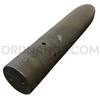
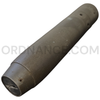
German B1E 1 kg Elektron Incendiary Bomb with A.Z. 8312 Fuze
This German B1E 1 kg Elektron incendiary bomb retains its A.Z. 8312 impact fuze and stamped nose and body markings. Offered with its tail assembly missing, it provides collectors with a marked example of the small incendiary bombs used by the Luftwaffe before and during World War II.
Identification and Features
The recorded markings identify the fuze and preserve additional production information.
- Nose face: “A.Z. 8312,” identifying the impact fuze.
- Nose, lower left: “268c,” consistent with a fuze lot marking.
- Nose, right: “K,” date code.
- Upper body: “59 Rh 14 K S 41.”
- Lower body: “59 K III R 14 K S 41.”
Elektron Body and Impact Fuze
The B1E used a cylindrical body made from Elektron, a magnesium-based alloy that served as both the casing and part of the incendiary material. In service, the A.Z. 8312 impact fuze initiated an internal incendiary filling, which heated and ignited the alloy body. This construction devoted much of the bomb’s weight to producing fire. The original design included a light-alloy nose and a sheet-metal tail with three fins enclosed by a circular shroud to stabilize its fall. The 1 kg designation refers to the complete service bomb.
Development and Wartime Use
The B1E was already in service during the Spanish Civil War. The type was used by the German Condor Legion, including during the bombing of Guernica on April 26, 1937. It subsequently became one of the Luftwaffe’s principal incendiary bombs during World War II and was widely used in raids on Britain, including the Blitz. Carried in aircraft bomb containers, these small bombs were released in large numbers to start fires across a target area. Their history is closely connected with wartime air-raid precautions, fire watching, and civilian firefighting.
Related B1-Series Designs
The B1E belonged to a family of small German incendiary bombs that shared the same basic alloy-body construction. The related B1.3E used a heavier steel nose in place of the B1E’s light-alloy nose. Separate B1EZA and B1EZB versions incorporated small explosive charges intended to hinder firefighting. These variants illustrate the development of the family.
Condition
The bomb retains its A.Z. 8312 fuze, but the tail assembly is missing. All ordnance is inert. Please check the pictures for the general condition of the item.
Ideal For
The surviving fuze and body markings make this example useful for focused collecting and historical interpretation.
- Luftwaffe bomb and fuze collections.
- Museum displays covering the Blitz and wartime civil defense.
- Comparative study of German incendiary bomb markings.
Approx length 10", Approx width 2", Approx height 2", Approx weight 1.4lbs.
Pictures are stock images of our inventory. Unless otherwise noted, you will not be receiving the exact item shown in the pictures. The pictures are representative of the item’s general condition. The item you receive might be slightly better, or worse, condition than was shown in the pictures.
Please visit our page about order lead times here: Order Lead Times.