






Description
WWII British No. 68 A.T. Drill Rifle Grenade — PDC, 1942
Item Overview
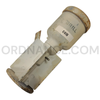
This is a British drill version of the No. 68 anti-tank rifle grenade used during World War II. Its white finish, drilled identification holes, weighted construction, and faded “DRILL” stencil identify it as a training item made to copy the size and handling of the service grenade without an explosive filling. It retains the four-fin tail, gas-check base, safety pin, cord, and warning tag associated with the No. 68 design. All ordnance is inert. This is the only example that we have, so you will be receiving the exact unit in the photos!
Identification and Features
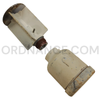
The visible markings and construction identify this example as a 1942 No. 68 A.T. drill rifle grenade manufactured with a PDC-marked body. The grenade separates at the threaded connection between the head and tail, allowing its internal drill construction to be viewed.
- Cast designation: “No 68 ATI/L”
- Cast manufacturing date: “1942”
- Oval “PDC” manufacturer mark for Patent Die Castings Co. Ltd.
- Remnants of a black “DRILL” stencil on the white-painted head
- Two drilled identification openings in the head
- Visible solid training weight inside the threaded body opening
- Four fixed flight fins and circular gas-check base
- Threaded two-piece head and tail construction
- Safety pin with aged cord and metal warning tag
- Tag marked “TO BE WITHDRAWN FROM GRENADE BEFORE FIRING”
- Modern “B93” inventory label, which is not a wartime designation
Training Function
The drill No. 68 allowed soldiers to practice carrying, handling, loading, aiming, and assuming the correct firing position without using a live high-explosive grenade. British training instructions called for drill grenades or correct-size substitutes during aiming and firing-position exercises. The weighted body reproduced the handling of the service grenade, while the white finish and drilled holes clearly separated it from live ammunition.
Documented Rifle and Launcher Application
The service No. 68 was designed for the 2½-inch grenade discharger fitted to the .303-inch Rifle No. 1 SMLE, including reinforced rifles commonly associated with the EY grenade-launching configuration. The No. 1 Mark I discharger cup was mounted at the muzzle, and a special No. 68 sight helped the grenadier aim at short ranges. Live grenades were launched with a special ballistite cartridge, while drill grenades like this example were used to teach the same loading and aiming sequence without an explosive warhead.
No. 68 Grenade History
The No. 68 was developed during the opening period of World War II and entered British service in 1940. Its live warhead used the shaped-charge principle to focus explosive force against armor, making the No. 68 one of the earliest operational anti-tank weapons of its type. The design passed through several marks as its body, filling, and impact mechanism were improved. This drill example is dated 1942, when the weapon and its training system were in active British service.
Lee-Enfield Grenade-Launching Equipment
The SMLE and its cup-type grenade discharger formed a simple infantry launching system that could fire several British rifle-grenade patterns. Grenade-launching rifles were often strengthened to withstand the heavy recoil produced by the special launching cartridge. For the No. 68, the rifle butt was braced against a sandbag or other yielding support, and the grenadier used a special sight while firing from a low position.
British Infantry Anti-Tank Background
Britain entered World War II with few portable weapons capable of defeating armored vehicles. The live No. 68 gave infantry and Home Guard units a short-range shaped-charge weapon that could penetrate about two inches of armor when it struck at a suitable angle. Its limited range and the increasing armor of later tanks reduced its value, but the grenade helped fill an important gap before wider issue of weapons such as the PIAT and the 6-pounder anti-tank gun.
History of Use
The No. 68 served with the British Army and became closely associated with Home Guard anti-invasion training. Period instructions listed an effective range of approximately 50 to 75 yards and advised engaging the thinner rear armor of a vehicle when possible. Drill grenades were used to teach loading, aiming, safety-pin handling, supported firing positions, and teamwork between the grenadier and assistant. This 1942 drill example was made for that training role rather than combat detonation.
Condition
This drill grenade retains much of its aged white or light-gray finish with scratches, chips, rub marks, grime, and scattered areas of exposed metal. Surface oxidation is visible around the nose ring, gas-check plate, fin edges, threaded joint, safety tag, and base hardware. All four fins are present, and the head and tail separate at the threaded joint as shown. The safety pin, aged and frayed cord, and warning tag remain attached. The tag has oxidation and finish loss but remains readable. A modern “B93” inventory label is attached to the head.
Ideal For
This dated and maker-marked drill grenade is suited to displays focused on British wartime ordnance, infantry training, anti-tank development, and Lee-Enfield grenade-launching equipment.
- World War II British ordnance collections
- Home Guard and British infantry displays
- Lee-Enfield and SMLE accessory collections
- Historic drill and training-ammunition collections
- Museum, classroom, and military-history exhibits
Approx length 6.5", Approx width 2.5", Approx height 2.5", Approx weight 1.8lbs.
Pictures are stock images of our inventory. Unless otherwise noted, you will not be receiving the exact item shown in the pictures. The pictures are representative of the item’s general condition. The item you receive might be slightly better, or worse, condition than was shown in the pictures.
Please visit our page about order lead times here: Order Lead Times.