





Description
British CV64 Resonant-Cavity Magnetron – WWII Radar Transmitter Tube
Item Overview
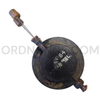
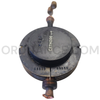
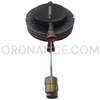
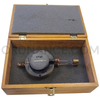
British CV64 resonant-cavity magnetron, a microwave transmitter valve used in Second World War radar equipment. This type generated the powerful pulses needed for airborne interception and ground-mapping radar. Its visible CV64 marking identifies a component closely tied to the growth of British wartime electronics. This historical artifact was a very important stepping-stone in the mass-production and miniaturization of radar technology. This is the only one that we have available, so you will be receiving the exact one in the photos.
Identification and Features
The visible CV64 marking identifies the British military valve type. Its construction matches the CV64 pattern cataloged by the Science Museum Group.
- Type: British CV64 resonant-cavity magnetron
- Approximate operating frequency: 3.3 GHz
- Nominal wavelength: 9.1 cm
- Typical peak output: 40 kW during each pulse
- Internal strapped-cavity design
- Threaded fitting: microwave output connection
- Opposite-side connections: heater and cathode
Function
The magnetron converted electrical energy into brief bursts of microwave radio energy. Electric and magnetic fields guided electrons past resonant cavities inside the tube, producing the outgoing signal. The radar antenna transmitted these pulses, while the complete radar set received returning echoes to reveal targets or ground features.
Documented End-Item Application
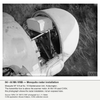
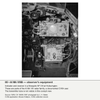
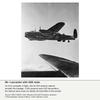
Documented CV64 applications include AI Mk VIII airborne interception radar and early H2S ground-mapping radar. AI stands for Airborne Interception; these sets equipped Bristol Beaufighter and de Havilland Mosquito night fighters. H2S served RAF bombers as a navigation and bombing aid, helping crews recognize terrain when darkness or cloud blocked a clear view.
Product History
British Thomson-Houston developed the CV64 under the initial designation BM717. It belonged to the improved, early strapped-magnetron generation that followed earlier production designs such as the GEC E1189/NT98. GEC engineer W. E. Willshaw recorded approximately 2,000 NT98 tubes produced by the end of 1941. The CV64’s internal electrical straps helped control unwanted patterns of oscillation, improving operating stability and efficiency.
Parent-Equipment History
AI Mk VIII formed part of Britain’s move to centimetric airborne radar in 1942. Earlier airborne sets used longer wavelengths; microwave equipment allowed a compact antenna to produce a narrow beam. H2S developed a different role by turning echoes from land and water into a map-like display. It entered RAF Bomber Command service in early 1943, adding radar ground mapping to the bomber crew’s navigation tools.
Weapon-System Background
The wider breakthrough grew from John Randall and Harry Boot’s cavity-magnetron work at the University of Birmingham in 1940. Eric Megaw and GEC helped turn laboratory designs into practical production tubes. The Tizard Mission carried an early magnetron to the United States in September 1940, strengthening British-American radar cooperation. High power and short wavelengths made compact radar practical aboard aircraft and smaller ships, supporting air interception, navigation, and the detection of small maritime targets.
History of Use
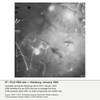
AI Mk VIII helped night-fighter crews locate other aircraft before making visual contact. H2S first went into action with RAF Bomber Command on the night of 30–31 January 1943. Pathfinder crews from Nos. 7 and 35 Squadrons used it during a raid on Hamburg. Radar ground mapping helped crews identify coastlines and built-up areas during night operations, reducing their dependence on visible landmarks.
Condition
Please check the pictures for the general condition of the item.
Ideal For
This CV64 suits collections and exhibits about the electronic equipment behind wartime night fighting and radar navigation.
- Second World War radar and military electronics collections
- British valve and microwave technology collections
- RAF night-fighter and Bomber Command displays
- Museums and educational exhibits about radar development
Approx length 8.5", Approx width 5", Approx height 3.5", Approx weight 1.8lbs.
Please visit our page about order lead times here: Order Lead Times.