







Description
WWI U.S. Army Air Service Mark 1-A Bombsight by Edison Phonograph Works with Original Wooden Case
Item Overview
This World War I–era U.S. Army Air Service Mark 1-A bombsight was manufactured by Edison Phonograph Works of Orange, New Jersey. It retains original paint and markings and comes in its original fitted wooden carrying case. The instrument combines early aviation history, mechanical sighting equipment, and a documented connection to Edison’s wartime manufacturing work.
Identification and Features
The nameplate identifies the exact model, production lot, individual instrument, and manufacturer. The sight’s labeled scales explain the flight information used by its mechanical framework, while the carrying case preserves a separate inspection marking.
- “BOMB SIGHT, MARK 1-A” identifies the American bombsight model, also written Mark I-A in period publications.
- “LOT 105” identifies the production lot associated with this instrument.
- “SERIAL 75” is the individual instrument’s serial number.
- “EDISON PHONOGRAPH WORKS” identifies the manufacturer.
- “ORANGE, N.J., U.S.A.” records the manufacturer’s stated location.
- “AIR SPEED IN MILES PER HOUR” identifies the scale for aircraft speed through the air.
- “WIND IN MILES PER HOUR” identifies the wind-speed allowance used in the sight’s settings.
- “INSPECTED BY R.W.S.” on the wooden case records an inspection under those initials.
Function
The Mark 1-A helped the bombardier judge when to release bombs during level flight. Its adjustable framework established a sighting angle that accounted for aircraft height, speed, and drift. The airspeed and wind scales supported those allowances. The design performed its sighting task mechanically and did not require a separate stopwatch or timing device.
Documented End-Item Application
The August 1918 Handbook of Aircraft Armament describes the Mark I-A as suitable for American bombing airplanes generally, documenting its intended application across the bombing-aircraft program. It served as an aircraft-mounted aiming instrument alongside separate bomb-carrying and release equipment. The Smithsonian’s National Air and Space Museum catalogs the same Mark 1-A model manufactured by Edison Phonograph Works, supporting the identification of this example.
Product History
American production of the Mark I-A formed part of the wartime effort to equip an expanding air service. The official report America’s Munitions 1917–1918 states that Frederick Pearce & Co. of New York received production work in January 1918. Additional contracts went to Edison Phonograph Works and Gorham Manufacturing Company later that year. American factories had completed 8,500 Mark I-A sights by the Armistice on November 11, 1918. The maker’s plate on this instrument connects it to one of those documented wartime suppliers.
Parent-Equipment History
The parent design was the British High Altitude Wimperis bombsight, which had been tested and found satisfactory by the Royal Flying Corps before American adoption. The United States adopted this British pattern as the Mark I-A. Its development addressed the growing need to account for flight conditions when bombing from higher altitudes. The American instrument carried that Allied design into domestic military production, with the 1918 handbook specifically identifying its Wimperis origin.
Weapon-System Background
World War I bombing required aircraft armament to develop beyond simple bomb carriage. Sights, release mechanisms, aircraft instruments, and crew training became parts of a coordinated bombing system. Mechanical sights such as the Mark I-A marked an important stage in that development, but aircraft movement remained a source of aiming error. After the war, the Air Service Engineering Division at McCook Field pursued improved designs. The Estoppey D-1 appeared in 1921, Sperry experimented with gyroscopic stabilization of the Mark I family in 1922, and the Army adopted the Estoppey D-4 in 1926.
History of Use
The Mark I-A was documented in Army aircraft-armament literature during 1918 and continued into the early postwar period. The National Museum of the U.S. Air Force identifies it as the Air Service’s primary bombsight immediately after World War I. Its service therefore bridges wartime aircraft-armament production and the interwar search for more stable, accurate bombing instruments. Surviving examples preserve the mechanical approach used before later, more complex stabilized bombsights became established.
Condition
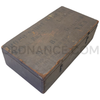
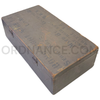
This example retains original paint and markings and is supplied with its original fitted wooden carrying case. The case bears the “INSPECTED BY R.W.S.” marking. Please check the pictures for the general condition of the item.
Ideal For
This bombsight suits World War I aviation collections, U.S. Army Air Service displays, and exhibits about early aerial bombardment. Its Edison manufacturer’s plate adds interest for collectors of American industrial history. The original finish, numbered identification plate, labeled scales, and fitted case also make it useful for comparing surviving equipment with period technical illustrations.
Approx length 18", Approx width 9.5", Approx height 5", Approx weight 11.1lbs.
Please visit our page about order lead times here: Order Lead Times.