











Description
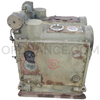
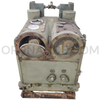
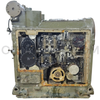
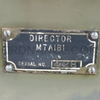
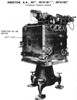
WWII U.S. Army M7A1B1 Anti-Aircraft Director for 90mm M1 and M2 Guns
Item Overview
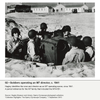
This World War II U.S. Army M7A1B1 anti-aircraft director is an electromechanical analog computer for the 90mm M1 and M2 gun systems. Historically, it formed the computing center of a heavy antiaircraft battery, turning target observations into aiming data. Its design links precision mechanical instruments with the rise of automatic military fire control. Check out the video under the Video tab for archival WW2 footage of the M7 director being used.
Identification and Features
Army supply records listed M7A1B1 spare parts under Standard Nomenclature List F-167. This period reference helps researchers locate parts information for the director.
- Model: M7A1B1 anti-aircraft director
- Service: U.S. Army
- Era: World War II
- Equipment type: Electromechanical analog fire-control computer
- Documented gun applications: 90mm M1-series and M2 anti-aircraft guns
Function
The director continuously solved trigonometric problems, using angles and distances to calculate a moving target's future position. Its gears, cams, and linked mechanisms converted tracking observations into gun direction, elevation, and time-fuze data. The aim was to place shell bursts where the aircraft would arrive after the shell's flight.
Electrical Control and Battery Coordination
Electrical transmitters sent the calculated targeting data to the guns. With the proper remote-control equipment, those commands automatically moved the guns left or right in azimuth and up or down in elevation. One director could control up to four 90mm guns at the same time. This let the battery concentrate its fire on one aircraft and improve the chance of a hit. Gun crews still handled ammunition and firing duties.
Documented End-Item Application
The Army's November 17, 1944, Table of Organization and Equipment 44-17 listed the M7A1B1 or M9A2 director for a mobile antiaircraft gun battery. The same table authorized four 90mm guns with M1, M1A1, or M2 mounts. It also listed an M1A2 or M2A1 height finder. These records tie the M7A1B1 to a complete battery system, with the director serving several guns from one control point.
Product History
The M7A1B1 improved the basic M7 by smoothing small input errors before they could produce larger errors in the firing solution. The War Department documented the M7, M7A1B1, and M7A1B2 in TM 9-658, dated January 6, 1944. Army training films also covered the two smoothing modifications. By late 1944, the M7A1B1 remained an authorized battery director alongside the newer M9A2.
Equipment History
The M7 family grew from Sperry's work on Army directors during the 1920s and 1930s. The M4, standardized in 1939, could account for changes in a target's altitude. The M7 followed in 1941 and added full power control of gun direction and elevation. Sperry and its subcontractor, Ford Motor Company, faced a demanding production task because the design required many precision parts. These instruments show how mechanical computing and electrical control developed together before digital computers.
Parent Weapon-System Background
The Army developed its 90mm antiaircraft guns to meet the threat of faster aircraft flying at greater heights. The M1 was standardized on March 21, 1940. The M2 followed on May 13, 1943, with a mount suited to both air and ground targets. It also used a powered combination fuze setter and rammer. These guns depended on accurate tracking and prediction to make effective use of their reach and firepower.
History of Use
During World War II, 90mm antiaircraft guns served in both the European and Pacific theaters. Army histories record their use at the Anzio beachhead in Italy and against enemy aircraft over Rendova in the Solomon Islands. The M7A1B1's place in wartime equipment tables and training publications shows its role in both battery service and crew instruction. As the war progressed, electrical computing directors from the M9 family joined and increasingly replaced earlier mechanical designs.
Condition
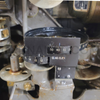
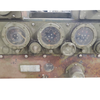
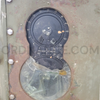
Please check the pictures for the general condition of the item.
Ideal For
This director suits displays that explain the work behind a heavy antiaircraft gun battery. It is especially useful for showing how crews combined observation, prediction, electrical signals, and powered gun mounts to engage a moving aircraft.
- WWII U.S. Army artillery collectors
- 90mm gun restoration projects
- Military and computing museums
- Fire-control equipment researchers
Approx length 48", Approx width 36", Approx height 36", Approx weight 822lbs.
Please visit our page about order lead times here: Order Lead Times.
