







Description
U.S. Angle of Sight Instrument, Model of 1917 — Atwater Kent No. 3605
Item Overview
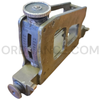
This World War I U.S. Angle of Sight Instrument, Model of 1917, is a portable fire-control instrument made by Atwater Kent Manufacturing Works of Philadelphia, Pennsylvania. It was designed to measure the vertical angle between the observer and a target or terrain feature. The photographed example bears instrument number 3605 and retains its sight tube, bubble carrier, adjustment controls, and elevation-and-depression scale.
Identification and Markings
The instrument is identified by its original stamped markings and characteristic open aluminum frame. The physical designation uses the words “Angle of Sight,” while the period U.S. Army handbook calls the same device an “Angle of Site Instrument.” Both terms refer to measuring a vertical angle above or below a horizontal line.
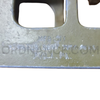
- Designation: ANGLE OF SIGHT INSTRUMENT. MODEL OF 1917
- Inspection marking: U.S. INSPR-W.L.
- Instrument number: NO. 3605
- Manufacturer: MFD. BY ATWATER KENT MFG. WKS. PHILA. PA.
- Scale markings: ELEV. and DEPR.
- Main scale: 0 to 180 mils above and below horizontal, numbered in 20-mil steps
- Fine adjustment: Micrometer adjustment capable of readings to 1 mil when correctly calibrated
Construction and Features
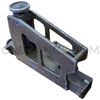
The instrument has an olive-painted aluminum frame with rectangular openings that reduce weight. An optical sight tube runs along the lower portion of the frame, while a pivoting bubble carrier is mounted above it. A large knurled adjustment knob moves the bubble carrier across the graduated elevation-and-depression scale. The original design also used an inclined internal mirror so the operator could view the bubble while looking through the sight tube.
Function
The operator looked through the eyepiece and placed the horizontal cross wire on the object being measured. The adjustment knob was then turned until the reflected bubble appeared level. The instrument could be lowered and the vertical angle read from the main scale and micrometer. A positive reading showed elevation above the horizontal line, while a depression reading showed an object below it.
Documented End-Item Application
The U.S. Army listed the Model of 1917 instrument as part of its machine-gun fire-control equipment. It was a separate observation tool and was not designed to mount directly on a machine gun. Fire-control personnel used instruments of this type with plane tables, clinometers, compasses, panoramic sights, aiming stakes, plotting tools, and rangefinders to gather and apply firing data.
Product History
The Model of 1917 was developed during the rapid expansion of American military production in World War I. Atwater Kent Manufacturing Company received an order for 4,468 angle-of-site instruments. Official production records show that 4,401 had been delivered by November 11, 1918, and the entire order had been delivered by February 20, 1919. Instrument No. 3605 falls within the documented Atwater Kent production quantity, although its number alone does not establish an exact delivery date or unit assignment.
Manufacturer History
Before becoming famous for radios, Atwater Kent produced automobile ignition and electrical equipment in Philadelphia. During World War I, the company used its precision manufacturing ability to fill military contracts for fire-control instruments, fuse setters, clinometers, and machine-gun sights. This instrument represents that lesser-known period of Atwater Kent history before the company entered the radio market.
Parent Equipment History
The Army handbook places this instrument in its machine-gun section, which also discusses the water-cooled Browning Machine Gun, Model of 1917, and the Vickers Machine Gun, Model of 1915. These heavy, tripod-mounted guns were built for sustained fire. The angle instrument was part of the larger fire-control system used by machine-gun organizations, but the surviving documentation does not limit it to only one model of gun.
Larger Weapon-System Background
World War I changed machine guns from mainly direct-fire weapons into parts of organized fire plans. Crews could use plotted positions, known ranges, directions, and vertical-angle measurements to place fire on targets that were difficult to see from the gun position. The Model of 1917 instrument helped measure one part of that firing problem. It did not calculate the entire solution or control the gun by itself.
History of Use
American machine-gun units adopted more advanced fire-control methods as they prepared for service in France. The Browning M1917 reached the front during the final months of the war and was used for sustained and overhead fire during the 1918 campaigns. Instruments such as this supported observation, terrain study, and firing-data work. No surviving documentation supplied with this example connects No. 3605 to a named unit, location, or battle.
Photograph Descriptions
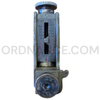
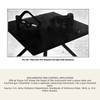
Photograph 1 shows the ELEV. and DEPR. scale, 0-to-180-mil graduations, micrometer drum, sight-tube end, and upper adjustment knob. Photograph 2 shows the stamped model designation, U.S. inspector marking, and NO. 3605. Photograph 3 shows the Atwater Kent manufacturer marking and Philadelphia address. Photograph 4 shows the open frame, sight tube, adjustment mechanism, and visible spirit-level bubble carrier. Photograph 5 provides an overall view of the instrument and its worn olive finish.
Condition
This original military instrument shows age, handling wear, scratches, grime, oxidation, and substantial paint loss around the frame and exposed edges. The major knobs, screws, sight-tube assembly, scale plate, and bubble carrier visible in the supplied photographs are present. The bubble vial appears intact in the photographs, but the optics, calibration, accuracy, and mechanical operation have not been tested. This item is offered as a historical collectible and display piece. All ordnance is inert.
Ideal For
This instrument is well suited to a collection or display focused on World War I, early American fire-control equipment, military optics, machine-gun history, Philadelphia manufacturing, or Atwater Kent products.
- World War I militaria collections
- U.S. machine-gun equipment displays
- Military optical and surveying-instrument collections
- Atwater Kent and Philadelphia manufacturing collections
- Museum, research, or educational displays
Approx length 6.5", Approx width 4", Approx height 1.25", Approx weight lbs.
Pictures are stock images of our inventory. Unless otherwise noted, you will not be receiving the exact item shown in the pictures. The pictures are representative of the item’s general condition. The item you receive might be slightly better, or worse, condition than was shown in the pictures.
Please visit our page about order lead times here: Order Lead Times.