


Description
Vietnam-Era U.S. M9 Portable Riot Control Agent Disperser Gun — M3 / Vehicle-Mounted M5
Item Overview
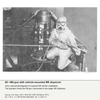
This U.S. military M9 Portable Riot Control Agent Disperser Gun was the handheld discharge assembly used with the M3 backpack disperser and the ground-vehicle configuration of the M5 disperser. Its identification plate, stock number, and contract marking connect it to Vietnam-era military equipment. This listing is for the gun assembly only. The hose and backpack tanks are not included.
Identification and Features
The identification plate names the component, supplies its military stock number, and records its procurement contract. The additional stamp repeats the United States marking and the final characters of that contract. These markings identify the gun separately from the larger disperser systems it supported.
- “GUN, PORTABLE RIOT CONTROL AGENT DISPERSER, M9” is the official designation for the handheld gun assembly.
- “1040-771-4557” is its Federal Stock Number. The 1040 supply class covers chemical weapons and equipment; 771-4557 identifies the supply item.
- Later Army records list the same gun under National Stock Number 1040-00-771-4557.
- “DAAA15-67-C-0408” is the procurement contract identifier. The DAAA15 prefix appears in period Edgewood Arsenal procurement records, “67” identifies fiscal year 1967, “C” identifies the contract category, and “0408” is the contract sequence.
- “U.S. C-0408” includes the United States marking and matches the final fields of the contract number on the plate.
Function
The M9 combined a valve section and a barrel section to form the handheld discharge point of the complete system. Compressed air stored in a separate pressure tank moved powdered irritant agent from the agent containers through a delivery hose to the gun. The gun controlled the discharge while the tanks and hose supplied the material and pressure.
Documented End-Item Application
The primary documented application is the M3 Portable Riot Control Agent Disperser. Its complete assembly combined an M2A1 tank group, an M8 hose group, and the M9 gun group. TM 3-1040-214-24P lists the exact gun designation and FSN 1040-771-4557 under Group 100, Gun Group. The M9 also served with the M5 Helicopter or Vehicle-Mounted Riot Control Agent Disperser when that system was installed on a ground vehicle. The M5’s helicopter configuration used a separate delivery-hose arrangement.
Product History
The M9 became a shared handheld component within the Army’s Cold War riot-control disperser family. Its use extended from the portable M3 backpack system to the larger, vehicle-mounted M5, giving the same gun design roles with two different equipment layouts. The gun retained its D116-4-16 drawing reference and stock identity in the 1972 M3 parts manual and the 1977 M5 parts list. This example’s fiscal-year 1967 contract marking places its procurement reference within the Vietnam-era supply history of that common gun assembly.
Parent-Equipment History
The M3 developed from the backpack arrangement of the M2-series portable flamethrower. Army data sheets identify its foundation as an M2A1 tank group, with agent tanks, a pressure tank, and a frame and harness. The larger M5 extended bulk-agent dispersal to mounted equipment, with a standard-classification record dating to 1962. Its frame carried an agent container and separate compressed-air cylinders for transport in a ground vehicle or cargo helicopter. These systems carried forward established military pressure-equipment concepts into dedicated riot-control equipment.
Weapon-System Background
The M3 and M5 belonged to the Army Chemical Corps’ postwar development of irritant-agent delivery equipment. In June 1959, the Corps classified CS and CS1 as standard agents, marking an important stage in the move toward CS-based riot-control munitions. The equipment family included hand grenades, cartridges, and bulk-agent dispersers. Backpack and mounted systems added mechanically powered powder delivery to that range of equipment. The M9 was the handheld gun within this broader system of agent containers, compressed-air equipment, and delivery hoses.
History of Use
Historical accounts record M3 backpack dispersers during unrest in the Panama Canal Zone in 1959 and 1964. Illinois National Guard personnel also used M3 equipment during the 1968 Democratic National Convention in Chicago. These events place the parent system within the civil-disturbance history of the Cold War. Army manuals document the M9’s additional role with vehicle-mounted M5 dispersers, extending its service application beyond the backpack system.
Condition
The gun retains its military identification plate and the additional “U.S. C-0408” stamp. Please check the pictures for the general condition of the item.
Ideal For
This gun suits collections of Vietnam-era military equipment, Army Chemical Corps artifacts, and historical riot-control equipment. Museums can pair it with diagrams of the M3 and M5 to explain how one gun assembly served both portable and mounted systems. Its identification plate also makes it useful for studying military nomenclature, stock numbering, and period procurement markings.
Approx length 27", Approx width 6", Approx height 2", Approx weight lbs.
Please visit our page about order lead times here: Order Lead Times.