



Description
U.S. Air Force Type A-5 Left-Hand Bomb-Rack Release Assembly — Part No. 45G5799L
Item Overview
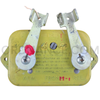
This U.S. Air Force Type A-5 bomb-rack release assembly was manufactured by The Lackner Co. of Cincinnati, Ohio. It is the left-hand configuration, identified by the “RELEASE L.H.” marking and assembly number 45G5799L. The unit operated from an aircraft’s 24-volt direct-current electrical system and converted an electrical release signal into the mechanical movement needed to trip the bomb-rack shackles. Its yellow Air Force tag records Federal Stock Number 1095-488-1581, serial number AF 51-19839, contract AF 33(038)-23185, Specification 24981, and Technical Order 11B38-2-4-1.
Identification and Features
The identification tag and technical-order reference establish this assembly as a Type A-5 Bomb Rack Release. Air Force technical material describes the Type A-5 as an electrically operated mechanical device built with a die-cast aluminum-alloy case and a dust-tight cover. Left- and right-hand versions were opposite in construction but performed the same release function. Mounting flanges secured the unit to the rack, while its rear electrical connector engaged the rack receptacle when installed.
- Official designation: Type A-5 Bomb Rack Release
- Configuration: Left-hand, marked “RELEASE L.H.”
- Assembly/part number: 45G5799L
- Federal Stock Number: 1095-488-1581
- 13-digit NSN form: 1095-00-488-1581
- Electrical rating: 24 volts DC
- Manufacturer: The Lackner Co., Cincinnati, Ohio
- Serial number: AF 51-19839
- Contract number: AF 33(038)-23185
- Specification: 24981
- Technical order: 11B38-2-4-1
- Inspection date: September 17, 1965
How It Worked
The Type A-5 operated on 18 to 32 volts DC, with 24 volts as its rated aircraft supply. When the aircraft’s release circuit sent an electrical pulse, a rotary solenoid moved the internal release mechanism and tripped the connected bomb-shackle levers. At the end of the cycle, internal switching removed power from the solenoid, transferred the sequence to the next release, and allowed the mechanism to return. The unit supported normal interval release and salvo release. A manual screw marked “TRIP” allowed the mechanism to be actuated during ground checks or servicing. The release assembly supplied the operating movement, while the attached shackle carried and released the suspended store.
End-Item Application
The verified end item for the Type A-5 release was an aircraft bomb rack. The assembly mounted to the rack with two screws, and its electrical connector automatically joined the rack receptacle during installation. Its levers operated the rack’s bomb shackles, which physically supported the stores until release. Later B-52H records identify the 45G5799 release design family as Type A-6 equipment used with B-11 shackles on cluster bomb racks. In that installation, the rack organized multiple stores inside the aircraft’s bomb bay, the B-11 shackles supported the individual stores, and the release units transmitted the selected release sequence to the shackles. Because this example’s tag specifically identifies Type A-5 equipment and cites the Type A-5 technical order, Type A-5 is the correct designation for this assembly.
Historical Background
The Type A-5 belonged to a generation of Air Force bombing equipment designed to provide electrical control of aircraft bomb racks. Its technical order states that the design provided an all-electric release system while keeping bomb-indicator circuits available throughout the bombing mission, including during the release cycle. This example’s September 17, 1965 inspection stamp places its documented service history in the Cold War period. The stamp is an inspection date rather than a manufacturing date. Technical Order 11B38-2-4-1 remained under revision in the 1960s, showing that the Air Force continued to maintain formal instructions for installation, inspection, operation, and repair of the Type A-5 system.
History of Use
Air Force maintenance personnel installed the release against the bomb rack, secured its mounting screws, safety-wired the fasteners, and checked the electrical connection at the rack receptacle. Before loading, the release system could be checked through the aircraft’s firing switch, interval control, master control, salvo circuit, and manual trip screw. During normal operation, each interval-control pulse could operate one release in sequence. The salvo circuit provided a separate release mode and prevented the normal arming action so the stores could be dropped in the safe configuration. Maintenance procedures included checking mounting security, spring action, cleanliness, and the condition of the electrical contacts. The dated inspection mark on this example records one point in that service and maintenance process.
Condition
This military-surplus assembly retains its yellow Air Force identification tag and the important manufacturer, configuration, electrical, serial, contract, specification, technical-order, and stock-number markings. The September 17, 1965 inspection stamp remains part of the item’s documented history. The listing is for the left-hand Type A-5 release assembly shown in the inventory photographs; the associated aircraft bomb rack and bomb shackles are separate components.
Ideal For
This well-marked Type A-5 assembly offers a documented example of the electrical and mechanical equipment used to control an aircraft bomb rack. Its traceable part number, stock number, contract, serial number, specification, technical-order reference, manufacturer marking, and dated inspection stamp give it strong display and research value.
- U.S. Air Force ordnance collections
- Cold War aviation displays
- Aircraft bomb-rack system exhibits
- Type A-5 and 45G5799 technical studies
- Military aviation restoration projects
- Museum and educational displays
Approx length 7.75", Approx width 4", Approx height 1.5", Approx weight 3 lbs.
Pictures are stock images of our inventory. Unless otherwise noted, you will not be receiving the exact item shown in the pictures. The pictures are representative of the item’s general condition. The item you receive might be slightly better, or worse, condition than was shown in the pictures.
Please visit our page about order lead times here: Order Lead Times.