




Description
WWII U.S. Navy Bureau of Ships Aneroid Barometer – Fee and Stemwedel, 1943
Item Overview
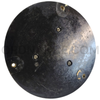
This 1943 U.S. Navy aneroid barometer was made by Fee and Stemwedel, Inc. of Chicago for the Bureau of Ships. It measured atmospheric pressure aboard a Navy vessel without using a liquid mercury column. The large dial, adjustable reference hand, and protected circular case made pressure changes easy to monitor at sea. This is a shipboard weather instrument rather than a weapon component.
Identification and Features
The visible markings identify this instrument as U.S. Navy property under Bureau of Ships control. Its face is marked “PRESSURE,” “INCHES OF MERCURY,” “COMPENSATED,” “U.S. NAVY,” “Bu Ships,” a circled “N,” number 24179, and the year 1943.
- Manufacturer: Fee and Stemwedel, Inc., Chicago
- Service marking: U.S. Navy, Bu Ships
- Visible identifying number: Circled N 24179
- Date marking: 1943
- Instrument type: Compensated aneroid barometer
- Pressure scale: Approximately 28–31 inches of mercury
- Two-hand dial with adjustable reference hand
- Central index-setting knob
- Black circular case with cream-colored dial
Function
An aneroid barometer measures air pressure without liquid. Changes in outside pressure flex a sealed metal capsule inside the instrument. A mechanical linkage transfers that movement to the indicating hand. The second hand can be positioned with the center knob to mark an earlier reading, helping the observer see whether pressure is rising or falling. The word “Compensated” indicates that the instrument was designed to reduce the effects of temperature changes on its readings.
Documented End-Item Application
The U.S. Navy and Bu Ships markings establish this as a shipboard instrument. Research into World War II Navy logbooks confirms that aneroid barometers were carried aboard ships as secondary pressure instruments, with barometers normally located in or near the bridge. The visible markings do not identify the individual ship or ship class to which this example was assigned.
Product History
This barometer was manufactured in 1943 during the major wartime expansion of the U.S. Navy. Fee and Stemwedel produced weather and measuring instruments in Chicago, and the maker’s full name remains clearly printed along the lower edge of this dial. Number 24179 is the instrument’s visible Navy identification marking; no separate model or stock number appears on the photographed face.
Bureau of Ships and Parent-Equipment History
The Navy formed the Bureau of Ships in 1940 by combining the Bureau of Construction and Repair with the Bureau of Engineering. During World War II, the bureau managed many parts of ship design, construction, machinery, repair, and equipment. This barometer belonged to a vessel’s weather and navigation equipment rather than to one specific gun, radar, or propulsion system.
U.S. Navy Shipboard Weather Background
Weather could affect navigation, flight operations, fueling, convoy movements, amphibious landings, and the safe handling of a ship. Pressure readings were considered with wind, clouds, temperature, and sea conditions to help crews recognize changing weather. Falling pressure could warn of an approaching storm, while steady or rising pressure helped show improving conditions.
History of Use
World War II Navy logbooks recorded weather and navigation information throughout each day, including pressure readings stated in inches of mercury. The value of pressure monitoring was clear during severe Pacific weather. One account from USS Dewey during Typhoon Cobra in December 1944 recorded a steadily falling barometer before the ship encountered extreme winds and seas. This example has no documented connection to USS Dewey, but it represents the type of pressure instrument used in the same shipboard weather role.
Condition
The black case retains much of its finish with visible scuffs, scratches, and edge wear. The cream-colored dial shows scattered spotting, surface dirt, and age discoloration, while the printed numbers and identification markings remain legible. The transparent face cover, pressure hand, reference hand, and central adjustment knob are present. The provided photograph does not document the rear mounting arrangement or a pressure and calibration test.
Ideal For
This original wartime naval instrument offers clear markings and a strong connection to shipboard weather observation during World War II.
- World War II U.S. Navy equipment collections
- Historic ship and bridge displays
- Naval meteorology exhibits
- Maritime museums and educational displays
- Collectors of vintage American measuring instruments
Approx length 6", Approx width 6", Approx height 4", Approx weight 4lbs.
Pictures are stock images of our inventory. Unless otherwise noted, you will not be receiving the exact item shown in the pictures. The pictures are representative of the item’s general condition. The item you receive might be slightly better, or worse, condition than was shown in the pictures.
Please visit our page about order lead times here: Order Lead Times.