







Description
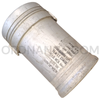
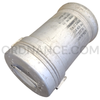
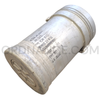
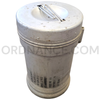
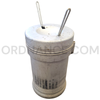
U.S. Navy Mark 3 16-Inch Propellant Tank
Item Overview
The Mark 3 propellant tank is a U.S. Navy ammunition-storage container documented for 16-inch/45-caliber battleship powder charges. Often called a powder tank in Navy records, it protected the bagged propellant used by large naval guns. This inert collectible connects to the equipment that supplied American battleship main batteries during World War II.
Identification and Features
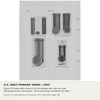
Navy powder tanks used metal bodies, removable covers, and sealing gaskets to protect their contents. The Mark designation identified the container design, while charge markings identified the ammunition packed inside. Period Navy instructions called for markings that showed the gun caliber, powder identification, portion of the charge, and intended muzzle velocity.
- U.S. Navy Mark 3 powder-tank designation
- Documented storage application for 16-inch/45-caliber propellant charges
- Part of the supply system for separately loaded naval ammunition
- Historic battleship ammunition-storage equipment
Original Function
The tank protected cloth powder bags during transport and storage. Because the bags themselves were neither airtight nor watertight, they required a sealed container to help preserve the smokeless powder inside. During gun operations, crews removed the bags from their tanks and passed them through the ship’s ammunition-handling system. The tank remained part of the storage and supply equipment.
Product History
The Mark 3 was in Navy service during World War II, when large fleets required a steady supply of ammunition and reusable containers. The Navy’s May 1943 ammunition manual described lightweight aluminum powder tanks for modern battleships and the use of steel alternatives during wartime material shortages. Empty containers were returned to ammunition depots for inspection and reuse. Later Navy handling catalogs continued to list Mark 3 tanks among the 16-inch containers handled by dedicated lifting carriers.
Documented End-Item Application
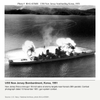
USS Massachusetts (BB-59) provides a documented wartime application. Its war diary specifically identifies Mark 3 tanks for 16-inch/45-caliber powder charges. Massachusetts carried nine 16-inch/45-caliber Mark 6 guns. This gun system also equipped the North Carolina and South Dakota classes, linking the container’s history to the ammunition supply of America’s early fast battleships.
Parent-Equipment History
The North Carolina and South Dakota classes joined the fleet in the early 1940s. They combined heavy armor, powerful main batteries, and the speed needed for fleet operations. Massachusetts, a South Dakota-class battleship, entered service in May 1942. After wartime operations and years in reserve, it opened as a museum ship at Fall River, Massachusetts, in 1965, preserving the setting in which this type of ammunition equipment served.
Weapon-System Background
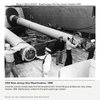
The 16-inch/45-caliber Mark 6 was a rifled naval gun that used separately loaded projectiles and bagged propellant. Nine guns were arranged in three turrets, each holding three guns. Armor-piercing projectiles addressed armored ships and reinforced targets, while high-capacity shells supported shore bombardment. Below the gun houses, magazines, handling rooms, and hoists formed the supply path that carried ammunition to the crews.
History of Use
On December 13, 1943, Massachusetts recorded returning empty Mark 3 powder tanks to the naval base at Havannah Harbor, Efate, in the New Hebrides. That entry shows the containers moving through the fleet’s wartime supply cycle. The ship’s main battery fought off Casablanca during Operation Torch in November 1942 and later supported Pacific operations, including bombardments connected with Iwo Jima and Okinawa in 1945.
Condition
This Mark 3 propellant tank is an inert military storage container offered for collection, display, and historical study.
Ideal For
Display this tank alongside period Navy manuals, inert naval projectiles, or battleship photographs to explain the storage equipment behind a ship’s heavy guns. Its documented ammunition role makes it suitable for collections centered on naval ordnance and fleet supply.
- U.S. Navy ordnance collections
- World War II battleship displays
- Military ammunition-container collections
- Naval logistics and gun-crew exhibits
Approx length 27", Approx width 18", Approx height 18", Approx weight 38lbs.
Pictures are stock images of our inventory. Unless otherwise noted, you will not be receiving the exact item shown in the pictures. The pictures are representative of the item’s general condition. The item you receive might be slightly better, or worse, condition than was shown in the pictures.
Please visit our page about order lead times here: Order Lead Times.