









Description
Experimental U.S. Navy AN/SSQ-53 (XN-2) DIFAR Sonobuoy with Marked Container – May 1968
Item Overview
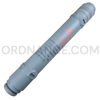
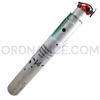
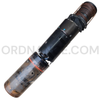
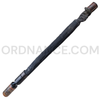
This experimental U.S. Navy AN/SSQ-53 (XN-2) DIFAR sonobuoy was manufactured by Sanders Associates, Inc., under Navy contract N00019-67-C-0039. It is accompanied by its marked gray cylindrical container and several exposed internal assemblies. The sonobuoy body is marked Serial No. 820, while the container is separately marked Serial No. 838. Both carry identification connected with the same May 1968 Sanders Associates production contract. DIFAR stands for Directional Frequency Analysis and Recording, a passive detection method developed to give anti-submarine warfare aircraft both underwater acoustic information and the direction of the detected sound.
Identification and Features
The aluminum sonobuoy body carries the experimental AN/SSQ-53 (XN-2) designation, contract number, manufacturer identification code, serial number, and a large “4-14” stencil. The gray container identifies its contents as an AN/SSQ-53 sonobuoy and records the manufacturer, part number, date, serial number, and radio channel. The XN-2 suffix identifies this as a Navy experimental or developmental configuration rather than the later standard production model.
- Sonobuoy designation: AN/SSQ-53 (XN-2)
- Type: DIFAR passive directional sonobuoy
- Manufacturer: Sanders Associates, Inc.
- Manufacturer part number: 28866
- Manufacturer identification code: 94117
- Navy contract: N00019-67-C-0039
- Date marking: 5/68, May 1968
- Production lot: Lot No. 6
- Sonobuoy-body serial number: 820
- Container serial number: 838
- Radio channel: Channel No. 24
- Large body stencil: 4-14
- Operating-duration markings: “ORN 1-HR” and “BLACK 8-HRS”
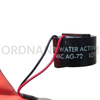
- Battery: Ray-O-Vac AG-72 water-activated battery
- Container handling marking: FRAGILE
Historical Background
Air-dropped sonobuoys developed from the radio-linked underwater listening devices introduced during World War II. These expendable sensors allowed patrol aircraft to search for submerged submarines while remaining mobile over a wide area. Early passive sonobuoys could detect and analyze machinery and propeller noise, but they did not directly show the direction of the source. As submarine capabilities improved during the Cold War, the U.S. Navy needed directional sensors that could locate contacts more quickly and help aircraft crews maintain an accurate track.
Development History
Development of the AN/SSQ-53 DIFAR sonobuoy began in 1965. The design combined two directional acoustic elements, an omnidirectional pressure hydrophone, and a compass reference to produce an unambiguous bearing toward an underwater sound source. The XN designation was used for experimental Navy equipment, with XN-1, XN-2, and later numbers identifying successive development versions. The May 1968 marking places this XN-2 example within the late development period before the AN/SSQ-53 entered production in 1969.
How It Worked
After the sonobuoy was dropped from an aircraft, the flotation assembly supported the upper section at the ocean surface while the hydrophone package was lowered into the water on its suspension cable. The AG-72 water-activated battery supplied electrical power after contact with seawater. Two directional acoustic elements measured sound along separate axes, while the compass supplied their orientation. An omnidirectional hydrophone provided the basic acoustic signal. The electronics combined the acoustic and directional information and transmitted it on the buoy’s assigned radio channel for processing aboard the aircraft.
Aircraft and End-Item Application
The AN/SSQ-53 family was developed for U.S. Navy airborne antisubmarine warfare. Compatible aircraft carried sonobuoy launch equipment, radio receivers, display equipment, and acoustic-analysis stations so their crews could deploy and monitor groups of sensors. The production SSQ-53 family is documented with the Lockheed P-3 Orion and was later supported by other maritime-patrol aircraft and antisubmarine helicopters. Because XN-2 is a developmental designation, this May 1968 assembly is most accurately associated with the Navy’s airborne ASW development program rather than assigned to one specific test aircraft.
History of Use
The production AN/SSQ-53 entered service during the Cold War and became an important passive directional sensor for submarine search and tracking missions. Aircraft crews could deploy several buoys across a likely submarine route or around an existing contact. Each buoy supplied a compass-referenced bearing toward detected machinery, propeller, or other underwater noise. Bearings from separate buoys helped establish the contact’s location and movement. Later SSQ-53 variants continued this DIFAR mission with U.S. Navy maritime-patrol aircraft and helicopters.
Condition
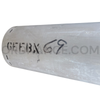
This assembly retains its marked gray container, aluminum sonobuoy body, flotation assembly, water-activated battery, electronics sections, suspension cable, and transparent sensor housing as shown. The container has handling wear, scratches, small finish losses, and faded red handling markings. The aluminum body has scratches, scuffs, surface discoloration, and green paint residue. The black internal sections show finish wear, and the clear housing has scratches and handwritten technical notations. The assembly is not fastened together. Care must be taken when opening the container and when removing or handling the item because the separate sections will move and come apart.
Ideal For
This experimental XN-2 sonobuoy preserves a detailed example of the technology that moved airborne submarine detection from basic sound monitoring to compass-referenced directional tracking. Its exposed construction, developmental designation, marked container, dated contract information, separate serial numbers, and visible sensor assemblies make it especially useful for a technical or historical display.
- U.S. Navy aviation collections
- Cold War antisubmarine-warfare displays
- Sonobuoy and underwater-acoustics collections
- P-3 Orion and maritime-patrol exhibits
- Military electronics and communications displays
- Museum, research, or educational collections
Approx length 39", Approx width 6", Approx height 6", Approx weight lbs.
Pictures are stock images of our inventory. Unless otherwise noted, you will not be receiving the exact item shown in the pictures. The pictures are representative of the item’s general condition. The item you receive might be slightly better, or worse, condition than was shown in the pictures.
Please visit our page about order lead times here: Order Lead Times.