







Description
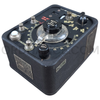
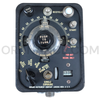
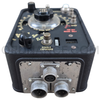
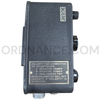
WWII USAAF Abrams Type B-7 Aircraft-Camera Intervalometer, P/N 43F1226
Item Overview
This World War II U.S. Army Air Forces Type B-7 intervalometer controlled electrically operated aerial cameras during reconnaissance and camera-bombing missions. It allowed aircrews to select when photographs were taken and supported the study of targets, bombing accuracy, and possible bomb damage. This is an aircraft-camera control unit, not a bomb-release intervalometer, bombsight, or explosive device.
Identification and Features
The formal designation was Intervalometer, Camera (Aircraft), Type B-7. Abrams Instrument Company of Lansing, Michigan, produced this equipment during the 1943–1944 period. Known examples have the following identification and operating details:
- Equipment: Type B-7 aircraft-camera intervalometer
- Manufacturer: Abrams Instrument Company
- Assembly part number: 43F1226
- Specification number: 31249
- Electrical rating: 24 volts DC, 0.75 amperes
- USAAF order: W535-AC-37460
- Camera applications: K-22 and K-24 aerial cameras
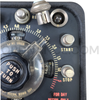
- Controls: START, STOP, RECYCLE, single exposure, timing scale, and mission selector
- Counter window: Resettable exposure counter rather than a serial-number display
- Status: Vintage aircraft electrical equipment with no explosive material
How the B-7 Worked
The bombardier selected the desired camera mode and set the anticipated time of fall, called ATF, on the large 5–80 timing scale. During camera bombing, the Norden bombsight’s automatic-release mechanism could start the B-7 at the simulated bomb-release point. If the equipment was not connected to the bombsight, the bombardier pressed the START button. The intervalometer then sent electrical signals to the aerial camera at the selected times. It operated the camera only and did not release bombs.
Camera and Bombing Applications
For high-altitude camera bombing, the B-7 was used with a K-22 or K-24 camera installed in the aircraft’s camera well. Standard three-second before-and-after settings produced two photographs six seconds apart. This spacing helped photo interpreters view the images as a stereoscopic pair and study the predicted impact point. The unit also supported day reconnaissance, day orientation, night orientation, night reconnaissance, bomb-spotting, and individual exposures.
Historical Background
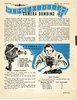
Aerial photography became an important part of USAAF reconnaissance and bombing operations during World War II. Camera systems recorded targets before, during, and after bombing runs so crews and intelligence officers could study accuracy and damage. The B-7 combined automatic timing with manual controls in a compact aircraft unit. A dedicated 79-page handbook, AN 10-1-95, was issued on February 25, 1944, and the March 1945 Bombardiers’ Information File illustrated the B-7 with the K-24 camera. The equipment was an aircraft accessory and was not limited to one bomber or reconnaissance-aircraft model.
Condition
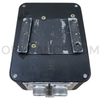
This is an original WWII-era military-surplus aircraft-camera control. It may show scratches, paint loss, oxidation, discoloration, worn markings, old repairs, or other signs of age and storage. Electrical operation has not been verified unless otherwise stated. The aerial camera, cables, mounting equipment, bombsight, aircraft, and other accessories are not included. Please check the pictures for the general condition of the item.
Ideal For
This Type B-7 intervalometer is well suited for collections and exhibits covering USAAF aerial photography, reconnaissance equipment, bombardier stations, and World War II aviation technology.
- World War II aviation collections
- USAAF bombardier displays
- Aerial-camera and photography exhibits
- K-22 and K-24 camera collections
- Norden bombsight equipment displays
- Military museums and educational exhibits
Approx length 7", Approx width 5", Approx height 4", Approx weight 5.9lbs.
Pictures are stock images of our inventory. Unless otherwise noted, you will not be receiving the exact item shown in the pictures. The pictures are representative of the item’s general condition. The item you receive might be slightly better, or worse, condition than was shown in the pictures.
Please visit our page about order lead times here: Order Lead Times.