





Description
Type AN-B-10 Bomb Shackle for B-17F Flying Fortress and B-29 Superfortress
Item Overview
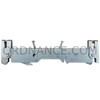
Original U.S. Type AN-B-10 aircraft bomb shackle, a removable bomb-suspension component documented in World War II B-17F Flying Fortress and B-29 Superfortress installations. The shackle connected a bomb to the aircraft's carrying equipment and worked with a separate release mechanism. It was the compact carrier directly above the bomb, rather than the complete bomb rack or the aircraft's release-control assembly.
Identification and Features
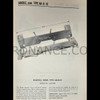
The U.S. Navy's 1944 Aviation Ordnance Equipment Catalogue lists the following identification and design details for the AN-B-10:
- Official designation: Shackle, Bomb, Type AN-B-10.
- Also identified as the Type B-10 in Army Air Forces training publications.
- Period Navy stock number: 3-S-1906.
- Army Air Forces drawing number: 43D10157.
- Historical carrying range: one bomb weighing 100–1,600 pounds.
- Two bomb-suspension hooks on 14-inch centers.
- Two side plates, end suspension stirrups, and projecting control levers.
How It Worked
The AN-B-10 held the bomb by its two suspension lugs. Its end stirrups supported the assembly in the aircraft's carrying equipment, while its mechanical linkage worked with the aircraft-mounted release unit. The shackle's upper levers connected its release and arming functions to that separate unit. The Navy catalog lists the Type A-2 and A-3 bomb-rack releases and Type N-2 bomb-shackle release as compatible equipment.
Documented Aircraft Applications
The Army Air Forces manual Aircraft Armament for Bombardiers specifically names B-17F and B-29 installations in its B-10 description. It identifies the shackle as intended for internal installations, with external use possible through specially constructed adapters. These references establish the B-10's connection to the Flying Fortress and Superfortress without treating every bomb rack or external mounting station on those aircraft as an AN-B-10 installation.
AN-B-10 Product History
The AN-B-10 was documented military equipment by May 1944, when the Navy included it in the second revision of Ordnance Pamphlet 865. Its AN designation reflected Army-Navy standardization, while Army Air Forces training material also used the shorter B-10 name. The period catalog recorded its stock number, drawing number, dimensions, and related release equipment, giving supply and maintenance personnel a common reference for the type.
Bomb-Shackle Equipment History
American wartime aircraft used several shackle designs to accommodate different bomb weights and mounting arrangements. The B-10 belonged to the same general equipment family as the B-7, with similar operation and interchangeable use within the appropriate load limits. Army Air Forces instruction distinguished the B-10 by requiring it for the heavier 1,600-pound load. This retained a familiar suspension arrangement while supporting a broader weight range.
Parent Aircraft History
The B-17 Flying Fortress became one of the principal American heavy bombers of World War II, with its most significant service over Europe. The B-29 Superfortress represented a more advanced generation of wartime bomber, incorporating pressurized crew compartments. Despite their different designs, both aircraft required internal equipment to carry and release conventional bombs. The B-10's documented applications connect this component to both bomber families.
Aircraft Bombing-System Background
A bomber's armament system included much more than the bombs themselves. Bomb-bay racks carried the load, shackles held individual bombs, and separate release units connected that equipment to the crew's controls. Bombsights and interval controls served other parts of the bombing system. Within this arrangement, the AN-B-10 performed the mechanical carrying and release role; it was not a bombsight, bomb fuze, or complete electrical control unit.
History of Use
The B-10 appears in wartime bombardier instruction alongside other shackles, bomb racks, and aircraft installations. These publications taught aircrew how the carrying equipment related to the larger bombing system and how different components were identified. Its inclusion in both Army Air Forces training material and the Navy's equipment catalog documents its place in the wartime aviation supply and training system as well as its named bomber applications.
Condition
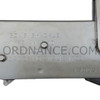
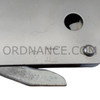
These shackles are new old stock that have been in storage for decades. They remain in excellent overall condition for their age. Please check the pictures for the general condition of the item.
Ideal For
A suitable addition to collections and displays focused on original American aviation ordnance equipment.
- World War II aircraft-armament collections.
- B-17F Flying Fortress and B-29 Superfortress historical displays.
- Static bomb-bay and bomb-suspension exhibits.
- Reference collections of military aircraft hardware.
Approx length 16.5", Approx width/thickness 1", Approx height 4.5", Approx weight 3-lbs.
Pictures are stock images of our inventory. Unless otherwise noted, you will not be receiving the exact item shown in the pictures. The pictures are representative of the item’s general condition. The item you receive might be slightly better, or worse, condition than was shown in the pictures.
Please visit our page about order lead times here: Order Lead Times.