




Description
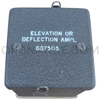
1954 U.S. Air Force Type A-4 Gunsight Elevation and Deflection Amplifier, P/N 667505
Item Overview
This U.S. Air Force electronic amplifier was made for the Type A-4 Gyro Computing Sight, a combined gun, bomb, and rocket aiming system used during the early jet age. Dated November 23, 1954, it is a two-channel servo amplifier that handled the sight’s elevation and deflection correction signals. It is an internal gunsight component, not a complete sight, optical viewer, or weapon.
Identification and Features
The visible data plate and later federal catalog record identify the unit as part number 667505. Its date, contract, and serial markings place it within a specific 1954 U.S. Air Force procurement, while the later NSN records the same component under the general supply name “Amplifier, Electronic Control.”
- System: Type A-4 Gyro Computing Sight (Gun–Bomb–Rocket)
- Component: Elevation-and-deflection electronic servo amplifier
- Part number: 667505
- Later NSN: 5996-00-284-9711
- Channels: Two
- Catalog rating: 16 watts per channel; 300 VDC
- Contract: AF 33(600)-24095
- Manufacture date: November 23, 1954
- Serial number: 21748
- Probable system version: Sperry Gyroscope; not confirmed from the visible plate alone
- Offered status: Surplus historical electronic component; untested
Original Service Function
The A-4 sight’s elevation and deflection gyros and prediction computer produced electrical correction signals as the pilot tracked a target. This amplifier increased those low-power signals and sent two controlled outputs to torque motors in the sight head. The motors moved the prediction mirror and aiming reticle in elevation and deflection, showing the pilot where to aim for the selected gun, bomb, or rocket attack. The amplifier supported the computing process, but it did not work as a complete gunsight by itself.
Type A-4 Gunsight System
The Type A-4 was an analog fire-control system built from separate serviceable units, including a computer assembly, sight head, amplifier assembly, selector controls, and reticle dimmer. Depending on the aircraft installation, the system could combine pilot tracking, target-range information, and weapon settings to calculate the required aiming correction. The result appeared as a moving reticle on the reflector glass in front of the pilot. The modular design allowed maintenance crews to replace individual units without removing the entire system.
Aircraft Applications
Documented Type A-4 installations included members of the North American F-86 Sabre family and Republic F-84 Thunderjet family. The F-86 used computing sights for air-to-air and interceptor missions, while the F-84 used gun, bomb, and rocket sights for fighter-bomber work. Fit varied by aircraft model, production block, and later modification, so this loose amplifier cannot be assigned to one specific aircraft.
Historical Background and Use
Gyro computing sights became important as military aircraft grew faster after World War II. They helped pilots judge target movement and projectile travel time more accurately than a fixed sight alone. The F-86 became one of the best-known U.S. fighters of the Korean War, while the F-84 carried out extensive ground-attack missions with guns, bombs, and rockets. This amplifier was manufactured after the July 1953 Korean Armistice, so it should be presented as an early Cold War component unless documented history connects it to a particular aircraft, unit, or mission.
Manufacturer and Configuration Notes
Period parts documentation covers Type A-4 systems manufactured by both the AC Spark Plug Division of General Motors and the Sperry Gyroscope Division of Sperry Corporation. Available evidence suggests this part belongs to a Sperry version, but the visible label does not establish the manufacturer with certainty. The Air Force contract number is a procurement identifier and should not be treated as a maker’s name. Connector layout, internal parts, inspection marks, and modification details may differ among production and overhaul batches.
Condition
This is a vintage surplus electronic component offered for collection, study, display, or restoration. It is untested and no claim of electrical serviceability is made. It may show scratches, finish wear, oxidation, dents, stains, old inspection marks, missing seals, or other signs of age and storage. Do not apply power without inspection by a qualified technician because the original system used high-voltage direct current. This listing is for the amplifier only; the sight head, computer, selector units, wiring, mounts, aircraft, and weapons are not included unless specifically stated. Please check the pictures for the general condition of the item.
Ideal For
This dated amplifier is a strong display piece for collections focused on early Cold War aircraft, analog fire-control equipment, and the development of jet-era gunsights.
- F-86 Sabre restoration displays
- F-84 Thunderjet exhibits
- Type A-4 gunsight collections
- Early Cold War avionics displays
- Military electronics collections
- Aviation museums and educational exhibits
Approx length 6", Approx width 4", Approx height 3", Approx weight lbs.
Pictures are stock images of our inventory. Unless otherwise noted, you will not be receiving the exact item shown in the pictures. The pictures are representative of the item’s general condition. The item you receive might be slightly better, or worse, condition than was shown in the pictures.
Please visit our page about order lead times here: Order Lead Times.