








Description
WWII Japanese Type 91 Aerial Torpedo Gyroscope with Wooden Carrying Case
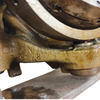
This Japanese Type 91 aerial torpedo gyroscope was manufactured by Mitsubishi Heavy Industries at Nagasaki Ordnance Works during World War II. The instrument comes with its wooden carrying case, Japanese factory records, and an American military souvenir certificate. Together, these pieces preserve the story of a precision naval instrument and the paperwork that followed its case into American hands. This set brings mechanical engineering, wartime industry, and military collecting history into one display.
Key Features
The instrument, case, and paperwork preserve several important identifying details:
- Japanese Type 91 aerial torpedo steering gyroscope.
- Mitsubishi Heavy Industries, Nagasaki Ordnance Works manufacture.
- Factory manufacture and inspection dated October 21, 1944.
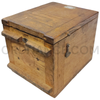
- Wooden carrying case with painted equipment markings and a metal identification plate.
- Shared Nagasaki No. 12311 identification on the instrument and case.
- Factory test entries and a table for repairs and alterations.
- U.S. Army souvenir certificate naming Chester Andrew Hubbard and describing an empty instrument case.
Function and Contents
The gyroscope helped the torpedo hold its intended course toward a target. Compressed air spun its wheel, creating a steady reference that the steering system could use to correct changes in direction. This mechanical control worked within the torpedo after launch. The carrying case protected the instrument during storage and transport. Its painted labels, metal plate, factory sheet, and accompanying certificate add records of equipment identity, inspection, and souvenir authorization to the physical instrument.
Product History
The factory record dates manufacture and completed inspection to October 21, 1944. This places the instrument in Japan's later wartime production, almost three years after the attack on Pearl Harbor. The surviving records document a specific piece of steering equipment and its factory testing. The case and instrument share the Nagasaki 12311 marking, giving collectors an important link between the two pieces. No named aircraft, complete torpedo number, or combat assignment has been established for this individual gyroscope.
Documented Applications
The equipment label identifies the item as “Type 91 steering gear, Mod 1, modified.” This places it within the steering equipment used for the Type 91 aerial torpedo family. The component's modification wording should be kept separate from the modification number of a complete torpedo. U.S. Navy studies after the war recorded air-driven control gyroscopes used in Japanese aircraft torpedoes.
Identification Marks and Case Labels
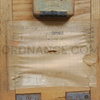
The metal case plate reads “Nagasaki Ordnance Works” and “Nagasaki No. 12311.” The main instrument marking reads “Nagasaki 12311,” with the character 長 serving as the Nagasaki factory prefix. Other visible marks include “JN,” a number appearing to read “9278,” and small unidentified symbols. A separate upper marking appears to read “エ7576.” These additional marks have not been assigned confirmed meanings. The painted case inscription identifies the steering gear, while the smaller column includes the Nagasaki prefix and 納, meaning delivery or supplied. The bottom character remains uncertain.
Factory Inspection and Test Record
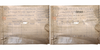
The right-hand fields on the Japanese factory sheet list starting air pressure as 180, starting time as 0.45 seconds, free-spin duration as 15 minutes 40 seconds, starting rotation speed as 8000, precession time as 3 minutes, and regulating air pressure as 15. Units that remain unclear have not been added to the pressure or speed entries. These recorded figures preserve the details of the wartime inspection. The lower table was intended for repairs and alterations; its presence alone does not establish that repairs were made. Damaged wording has not been reconstructed.
Manufacturer History
Mitsubishi's industrial presence in Nagasaki grew from its lease of the government shipyard in 1884. The business later became Mitsubishi Heavy Industries in 1934 and manufactured ships, aircraft, and heavy machinery. Its Nagasaki ordnance operations also produced torpedoes and naval equipment. The works name on this item's records connects it to that wartime manufacturing organization. The supplied markings identify Nagasaki Ordnance Works, but they do not establish a particular workshop or branch within the company's local operations.
Equipment History
The Type 91 aerial torpedo was first designed in 1931. Its 450mm body measured about 17.7 inches across, making it smaller than many ship-launched torpedoes. Japan improved the design through successive versions during the 1930s and World War II. Changes included better control, flight stability, water entry, and larger warheads. The course-steering gyroscope belonged to a wider control system that also managed depth and, on later versions, rolling movement. These separate control tasks helped an aircraft-carried weapon become a steady underwater torpedo after release.
Weapon-System Background
Japanese naval aviation used aerial torpedoes to attack ships from carrier-based and land-based aircraft. The Nakajima B5N, known to the Allies as “Kate,” was a major carrier aircraft used in this role. An aerial torpedo had to remain stable during its fall, enter the water, and continue under its own power. Course control was therefore an important part of the weapon system. This gyroscope illustrates the compact mechanical equipment behind an attack that depended on both the aircraft and the torpedo performing their separate jobs.
History of Use
At Pearl Harbor, Type 91 torpedoes allowed Japanese aircraft to strike ships below the waterline. Forty B5N aircraft in the first attack wave were assigned torpedoes. The weapon family also took part in the attacks that sank HMS Prince of Wales and HMS Repulse off Malaya on December 10, 1941. These early operations showed the threat that aircraft-carried torpedoes posed to large warships. Later Type 91 versions remained part of Japan's naval air weapons program, with wartime production records documenting continued manufacture through 1945.
Pearl Harbor to Nagasaki: A Full-Circle WWII Artifact
Mitsubishi's Nagasaki ordnance organization included the Urakami torpedo works. That plant manufactured Type 91 torpedoes used in the December 7, 1941, attack on Pearl Harbor, which brought the United States into World War II. On August 9, 1945, the American B-29 Bockscar dropped Fat Man on Nagasaki. The blast severely damaged the Urakami torpedo works and the nearby Mitsubishi Steel and Arms Works. Both were identified industrial targets, although the mission's written aiming point was the Steel and Arms Works. This is the artifact's full-circle connection: Mitsubishi's Nagasaki torpedo industry helped arm the attack that brought America into the war and was devastated in the war's closing days, before Japan's surrender. This gyro was made in 1944, so its Pearl Harbor connection is through its maker and weapon family.
Souvenir Certificate and Case Provenance
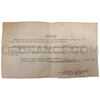
The English certificate authorizes Chester Andrew Hubbard, Army serial number 31028699, to keep or mail a “Small Japanese Instrument Case.” His rank, T/4, means Technician Fourth Grade. The handwritten word “EMPTY” beside the description limits the documented souvenir to the case. The certificate cites War Department Circular 217, Section VIII, dated June 1, 1944, and USAFFE Circular 83 of 1944. June 1 is the date of the cited War Department circular, not an established issue date for this certificate. The document adds a named American service connection to the case, but does not by itself prove that Hubbard brought home the gyroscope or obtained it in Nagasaki.
Condition
The set retains identifying marks, case labels, and associated paperwork. Some wording and small symbols are damaged or unclear, and those readings have been left unresolved. The recorded inspection results describe its wartime test; present mechanical operation has not been established. Please check the pictures for the general condition of the item.
Ideal For
This Type 91 torpedo gyroscope suits collections and exhibits that connect Japanese naval engineering with wartime factory records and the history of American military souvenirs.
- World War II Japanese naval collections.
- Torpedo development and mechanical instrument displays.
- Exhibits on Pearl Harbor and Nagasaki's wartime industry.
- Research collections focused on military markings and souvenir paperwork.
Approx length 11", Approx width 7.5", Approx height 7.5", Approx weight 17.5lbs.
Pictures are stock images of our inventory. Unless otherwise noted, you will not be receiving the exact item shown in the pictures. The pictures are representative of the item’s general condition. The item you receive might be slightly better, or worse, condition than was shown in the pictures.
Please visit our page about order lead times here: Order Lead Times.