




Description
U.S. Navy Submarine Radar-Periscope Workshop Test Control Panel, P/N 401230, NOrd 14938 – Type IV / Early Type 8 Family
Identification note: The photographed nameplate reads CONTROL PANEL 401230, not 481230. It also carries NOrd 14938, identifying a U.S. Navy Bureau of Ordnance procurement contract.
This U.S. Navy submarine radar-periscope workshop test control panel was built to support inspection, alignment, and component testing of radar-equipped submarine periscopes. It was shop or depot test equipment, not an operating control panel installed aboard a submarine.
The panel's controls directly reference optical and radar-periscope functions, including COLLIMATOR FIXTURE, RADAR TARGET, MIRROR FIXTURE TARGET, PERISCOPE RETICLE, POWER CHANGER, UPPER SECTION TEST, MIDDLE SECTION TEST, and LOWER SECTION TEST. These labels strongly connect the unit with maintenance and alignment work on the Navy's radar-equipped submarine periscope systems.
Historical Significance
During World War II, the U.S. Navy began combining traditional submarine optics with electronic ranging equipment.
One important example was the Type IV submarine periscope, design designation 93KN36. Unlike a conventional optical-only periscope, the Type IV incorporated an antenna array and waveguide for an electronic range system. It was designed for night observation and provided both 1.5-power and 6-power magnification.
The radar-equipped Type IV represented an important step toward the more advanced search periscopes developed after World War II. This technical line continued into later Type 8-series submarine periscopes, which combined observation optics with electronic equipment such as radar and, in later versions, electronic-support functions.
A panel like this belongs to the less-visible support side of that development. Precision periscopes could not simply be installed and used without specialized shop equipment. Their optical, electrical, radar, reticle, and section-to-section alignment had to be checked and maintained by trained Navy personnel.
What This Item Is and Does
This is a workshop test and control console used to connect external fixtures, targets, electrical supplies, and periscope sections during maintenance.
The panel would have allowed an optical or ordnance shop to energize selected circuits and evaluate separate portions of a radar-equipped periscope without placing the complete system back aboard a submarine.
Its labeled functions include:
- Collimator Fixture – connection for an optical collimator used during sight and alignment work
- Radar Target – connection for equipment used to simulate or evaluate the radar portion of the system
- Mirror Fixture Target – associated with optical target and mirror-alignment checks
- Periscope Reticle – electrical or test connection related to the sighting reticle
- Power Changer – associated with the periscope's low- and high-power optical settings
- Upper Section Test
- Middle Section Test
- Lower Section Test
The separate upper, middle, and lower test connections are especially important. Submarine periscopes were long precision instruments assembled from several major optical and mechanical sections. Testing these areas separately made depot repair and alignment more practical.
1.5-Power / 6-Power Connection
The panel includes a 1.5 POWER / 6 POWER selection associated with its power-changing test functions.
Those magnifications match the Navy's radar-equipped Type IV 93KN36 periscope, which used:
- Low power: 1.5X
- High power: 6X
The Type IV achieved the change in magnification through its internal Galilean telescope and power-shifting mechanism.
That close match between the panel's power controls and the periscope's actual optical system is one of the strongest clues to the panel's intended application.
Radar and Optical Test Functions
The control panel was designed around more than ordinary telescope servicing.
Visible labels include:
- COLLIMATOR FIXTURE
- RADAR TARGET
- MIRROR FIXTURE TARGET
- MIRROR TRANSFER
- POLAROID FILTER
- RECORDER ENABLING
- RADAR FILTER
- INTERRUPTER MIRROR
- POWER CHANGER
- PERISCOPE RETICLE
- UPPER SECTION TEST
- MIDDLE SECTION TEST
- LOWER SECTION TEST
The front panel also includes multiple power inputs, including markings for 115V 400-cycle AC, 28V DC, and 115V 60-cycle AC.
Together, these controls indicate a specialized bench used to test a combination of optical, electrical, and radar-related periscope components rather than a simple general-purpose electrical panel.
NOrd 14938 Navy Contract
The identification plate carries the marking NOrd 14938.
In the U.S. Navy's wartime procurement system, NOrd was the contract symbol used for purchases by the Bureau of Ordnance, with the contract written by BuOrd.
That marking establishes the panel as genuine U.S. Navy contract equipment and helps place it within the period when the Navy was rapidly developing and supporting radar, optical, and fire-control systems.
Key Features
- Official plate nomenclature: Control Panel
- Part/control-panel number: 401230
- Navy contract: NOrd 14938
- Service: U.S. Navy
- Agency: Bureau of Ordnance
- Equipment type: Submarine periscope workshop test equipment
- Application: Radar-equipped submarine periscope maintenance
- Associated periscope lineage: Type IV / 93KN36 and early Type 8 family
- Period: Late World War II / early Cold War era
- 1.5X and 6X power-selection functions
- Collimator fixture connection
- Radar target connection
- Mirror fixture target connection
- Periscope-reticle controls
- Upper-section test connection
- Middle-section test connection
- Lower-section test connection
- Multiple electrical power inputs
- Heavy metal workshop-console construction
- Carrying handles
- Numerous original switches, connectors, indicator assemblies, and engraved identification plates
Why This Item Matters
Most surviving submarine artifacts are parts that were actually installed aboard a boat. Dedicated depot and workshop test equipment is much harder to find because it remained in naval repair facilities rather than traveling with the submarine.
This panel tells a different part of the story. It represents the specialized equipment required to keep complex submarine optics aligned and serviceable.
Its combination of radar, collimator, mirror, reticle, and magnification controls also shows the transition from traditional optical periscopes to integrated electronic search and ranging systems.
For a submarine, naval optics, radar, or fire-control collection, this is an unusual piece that helps explain not just how a periscope was used, but how the Navy maintained one.
About This Item
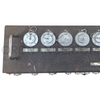
The photographed panel retains its original black metal housing, engraved identification plates, toggle switches, rotary controls, test connectors, chained connector covers, electrical fittings, and carrying handles.
The main identification plate reads:
- CONTROL PANEL
- 401230
- NOrd 14938
- Serial-number information is also present
The panel shows scratches, chipped finish, dust, oxidation, discoloration, worn hardware, and other signs of age and long-term shop or military storage.
Electrical operation, calibration, internal completeness, and individual test functions have not been verified.
This listing is for the control panel only. The submarine periscope, collimator, radar-target equipment, mirror fixtures, cables, power supplies, test adapters, and other associated shop equipment are not included unless specifically shown or stated.
Ideal For
- U.S. Navy submarine collections
- World War II naval-technology displays
- Early Cold War submarine collections
- Type IV 93KN36 periscope displays
- Type 8 submarine-periscope collections
- Naval optical-equipment collections
- Early radar history displays
- Navy Bureau of Ordnance collections
- Submarine fire-control exhibits
- Military electronics collections
- Depot and maintenance-equipment collections
- Naval museums and educational displays
Approx length 27", Approx width 8", Approx height 7", Approx weight 21 lbs.
Pictures are stock images of our inventory. Unless otherwise noted, you will not be receiving the exact item shown in the pictures. The pictures are representative of the item’s general condition. The item you receive might be slightly better, or worse, condition than was shown in the pictures.
Please visit our page about order lead times here: Order Lead Times