



Description
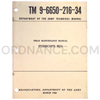
M24 Periscope Technical Manual TM 9-6650-216-34
TM 9-6650-216-34 is a March 1960 U.S. Army technical manual for the M24 infrared periscope. The M24 periscope is used with the 90mm M48 Patton tank series and 120mm M103/T43E1 heavy tank. This publication offers collectors a period reference to the powered viewing equipment that helped armored-vehicle drivers see after dark.
Identification and Features
Key publication and equipment details include:
- Manual number: TM 9-6650-216-34
- Publication date: March 1960
- Publisher: Department of the Army
- Subject: M24 infrared driver's periscope
- Related designation: M24 (T41)
- Applications: 90mm M48-series tanks and 120mm M103 gun tank
Publication Function
This technical publication supports the maintenance of the M24 periscope, a viewing device that combined optical and electronic equipment. Its subject connects tank-driver observation with the service needs of powered image-converter optics. It provides a period reference for studying the equipment maintained by military optical repair specialists.
Documented Applications
The M24 served as a driver's night-viewing periscope on the M48 tank family and M103 heavy tank. Its position allowed the driver to observe the ground ahead from inside the armored hull. These applications make the manual relevant to the study of tank driving equipment and vehicle optics.
Equipment Function
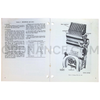
Infrared headlamps illuminated the area ahead with light invisible to the unaided eye. The M24 received the reflected infrared light through a head assembly projecting above the armor. Two image-converter tubes in the body changed it into a visible image viewed through paired eyepieces, giving the driver a view of the illuminated ground after dark.
Equipment History
Army publications also identify the M24 as the M24 (T41), preserving its earlier development designation. The instrument belongs to the era of active infrared tank viewers, which relied on special headlamps to illuminate the scene. It records an early stage in the Army's use of electronic viewing equipment for armored-vehicle drivers.
Weapon-System Background: M48 Patton
The M48 entered U.S. service in 1953 and was named for General George S. Patton. Its 90mm gun, armor, and fire-control equipment were developed for the challenges posed by Soviet armored forces in Europe. Later upgrades improved the design, including the diesel-powered M48A3 that became widely associated with the Vietnam War.
Weapon-System Background: M103 Heavy Tank
Developed from the T43, the M103 carried a powerful 120mm gun for the heavy-tank role. It was intended to provide long-range support and overwatch for tanks such as the M48. The large gun required two loaders, and the vehicle reflected the Army's postwar effort to counter heavily armored enemy tanks.
History of Use
The Army equipped heavy tank battalions with the M103 in 1958. During the Vietnam War, M48A3 tanks served with both Army and Marine Corps units, often supporting infantry. The continued publication of M24 maintenance guidance in 1980 also documents the longer support history of this infrared viewing equipment.
Ideal For
This manual adds technical context to collections and research libraries focused on tank optics, armored vehicles, and military night vision.
- Collectors of U.S. Army technical manuals
- M48 Patton and M103 heavy tank enthusiasts
- Researchers studying early infrared driver-viewing equipment
- Museums documenting Cold War armored-vehicle maintenance
Approx length 8", Approx width 10", Approx height .2", Approx weight .4lbs.
Pictures are stock images of our inventory. Unless otherwise noted, you will not be receiving the exact item shown in the pictures. The pictures are representative of the item’s general condition. The item you receive might be slightly better, or worse, condition than was shown in the pictures.
Please visit our page about order lead times here: Order Lead Times.