


Description
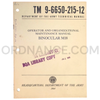
TM 9-6650-215-12 M18 Binocular Technical Manual
TM 9-6650-215-12 is the U.S. Army operator and organizational maintenance manual for the M18 infrared binocular. This April 1964 publication offers a period reference to electronic military optics and the equipment that supported early Cold War tank crews.
Identification and Features
Key publication and equipment details include:
- Manual number: TM 9-6650-215-12
- Publication date: April 6, 1964
- Publisher: Headquarters, Department of the Army
- Subject: M18 infrared binocular
- Equipment FSN: 6650-863-5657
- Scope: Operator and organizational maintenance
Manual Contents
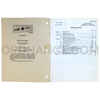
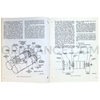
The manual covers controls, preparation for use, operation in normal and harsh conditions, inspections, and troubleshooting. Maintenance subjects include the cable assembly, eyeshields, straps, and eye-spacing adjustments. Illustrations, a basic issue items list, and a maintenance allocation chart help explain the equipment and divide service duties between maintenance levels.
Publication History
The Army issued this first edition before completing its full technical review and invited users to report errors. It records an early stage in the M18's support history, when field feedback helped refine the written guidance for new equipment.
Documented Applications
The manual names the 105mm-gun M60 tank series as the M18's initial application. It assigns organizational maintenance to the turret mechanic, placing the binocular within the support work of armored units.
Equipment Function
The M18 used two image-converter tubes to turn infrared light into a visible picture. A battery powered its electronics. For night observation, it worked with an infrared light source, such as a xenon searchlight.
Equipment History
The M18 belongs to the early history of electronic night-viewing equipment. Military specification MIL-B-46334C, dated November 15, 1972, described it as a self-contained, handheld infrared binocular. Its design brought powered viewing equipment into a portable form for military observers.
Weapon-System Background
The M60 combined a 105mm gun and diesel engine with design features developed from the M48 tank. Combat units in Europe first received it in December 1960. The improved M60A1 followed in production in 1962, and the wider M60 family remained a major part of American armored forces into the 1980s.
History of Use
A separate Army repair parts manual issued in March 1971 shows continued maintenance support for the M18 after this publication appeared. Tank night-viewing equipment later changed as passive sights became available. An Army history records that the 1977 M60A1 improvement package added passive night sights and removed the vehicle's infrared system.
Ideal For
This manual adds useful technical context to collections and research focused on military optics and armored vehicles.
- Collectors of U.S. Army technical manuals
- Researchers studying early infrared night vision
- M60 tank and armored vehicle enthusiasts
- Museums building Cold War equipment reference libraries
Approx length 8", Approx width 10", Approx height .25", Approx weight .5lbs.
Pictures are stock images of our inventory. Unless otherwise noted, you will not be receiving the exact item shown in the pictures. The pictures are representative of the item’s general condition. The item you receive might be slightly better, or worse, condition than was shown in the pictures.
Please visit our page about order lead times here: Order Lead Times.