



Description
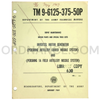
TM 9-6125-375-50P Pershing Motor Generator Inverter Technical Manual
This January 1969 technical manual covers the motor generator inverter used with the Pershing Artillery Guided Missile System and Pershing 1A Field Artillery Missile System. It offers a focused reference for collectors and researchers interested in the electrical equipment behind one of the Cold War's best-known Army missile systems.
Identification and Features
The publication number and date help identify this title within the Army's Pershing technical manual series.
- Manual number: TM 9-6125-375-50P
- Publication date: January 1969
- Covered equipment: Motor generator inverter
- Associated system: Pershing Artillery Guided Missile System
Manual Contents and Purpose
The -50P designation follows the Army's numbering for depot maintenance parts publications. This makes the manual a useful reference for studying component identification and repair-parts support. Its subject is a specific electrical assembly within the larger Pershing system, giving researchers a closer view of the parts support needed to maintain specialized missile equipment.
Equipment Function
The inverter's job was to change direct-current power into the alternating-current power needed by connected equipment. An electric motor drove a generating unit to make that change. Controlled voltage and frequency helped meet the demanding power needs of missile electronics.
Publication History
The January 1969 date places this manual at the start of an important change in the Pershing program. The first U.S. Pershing 1A training battalion received its equipment that May, and the first European battalion completed its conversion that September. This publication provides a reference point for studying Army technical support during that transition.
Documented Applications
The manual's stated application is the Pershing Artillery Guided Missile System. A 1971 Army review places a rotary inverter in the missile's guidance and control section, showing where this type of equipment served. That documented role makes the title relevant to research on Pershing's onboard electrical equipment.
Equipment History
Rotary inverters were part of Pershing development well before this manual appeared. A 1961 Bendix advertisement described a rotary inverter selected for the program and stressed its precise power regulation. By 1971, the Army reported plans to replace Pershing's rotary inverter with a solid-state unit that had no moving parts. The planned change aimed to improve reliability and reduce the need for depot repairs.
Weapon-System Background
Pershing was developed to replace the Army's Redstone missile. The original system used a mobile launcher, a two-stage solid-fuel missile, and inertial guidance, which tracked the missile's motion without outside guidance commands. Named for General John J. Pershing, the nuclear-armed system became an important part of U.S. and NATO defense planning. Pershing 1A later improved the system's reliability and ease of maintenance.
History of Use
U.S. Pershing units served in West Germany and trained in the United States during the Cold War. Their work included readiness duties, field exercises, and training launches. Maintenance publications and parts references supported the technical teams responsible for keeping the equipment serviceable. Later Pershing 1A and Pershing II missiles were eliminated under the Intermediate-Range Nuclear Forces Treaty, with the final Pershing II missiles destroyed in 1991.
Ideal For
This manual adds depth to a collection of Army missile publications by covering an electrical component that broader system histories may only mention briefly.
- Collectors of Pershing missile manuals and Cold War military publications
- Researchers studying military power conversion and maintenance history
- Museums and archives documenting Army guided missile technology
Approx length 8", Approx width 10", Approx height .25", Approx weight .5lbs.
Pictures are stock images of our inventory. Unless otherwise noted, you will not be receiving the exact item shown in the pictures. The pictures are representative of the item’s general condition. The item you receive might be slightly better, or worse, condition than was shown in the pictures. Please check the pictures for the general condition of the item.
Please visit our page about order lead times here: Order Lead Times.