




Description
TM 9-6111 Panoramic Telescopes Technical Manual — December 1953
TM 9-6111 is a U.S. Army technical manual covering the M1, M12, M12A2, M12A5, and M12A6 panoramic telescopes. This December 1953 publication brings several important artillery sight models into one ordnance maintenance reference. It offers collectors and researchers a connection to the optical equipment that supported American gun crews during the mid-20th century.
Identification and Features
The manual covers both the M1 telescope and selected members of the M12 family. Its model-specific subject makes it useful when matching historical equipment names with Army technical references.
- Manual number: TM 9-6111.
- Publication date: December 1953.
- Subject: M1, M12, M12A2, M12A5, and M12A6 panoramic telescopes.
- Publication category: Ordnance Maintenance.
Function and Manual Coverage
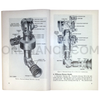
As an ordnance maintenance publication, this manual served the technical support side of artillery optics, with a focus on maintaining the listed telescope models. Panoramic telescopes gave gunners a magnified sighting reference and a way to measure horizontal angles. Their rotating heads allowed the line of sight to turn toward an aiming point. In indirect fire, this helped crews establish the weapon's direction when the target was beyond their direct view.
Publication History
The December 1953 date places TM 9-6111 in the Army's early Cold War technical library. The National Park Service's finding aid for Springfield Armory records identifies this title as formerly TM 9-1582. That recorded numbering link connects the publication to the Army's earlier panoramic telescope maintenance literature.
Documented End-Item Applications
Period Army manuals document several applications for telescope models covered by this publication. The examples below identify specific telescope and equipment pairings; each model belonged to its own sighting arrangement.
- M1: 75mm pack-howitzer equipment with the M3 telescope mount.
- M12A2: 105mm howitzer sighting equipment on the M2 carriage, using the M21 telescope mount.
- M12A5: 75mm M8 Howitzer Motor Carriage, using the M44 telescope mount.
- M12A6: 155mm M41 Howitzer Motor Carriage, using the M25 telescope mount.
Equipment History
Army instructions documented the M1 panoramic telescope in 1941 and identified the M12A2 as a standard type for 105mm howitzer equipment in May 1942. Other M12 variants adapted panoramic sighting to different weapon layouts and reticle needs. The M12A5 was a four-power instrument with an upright image and a 10-degree field of view. The M12A6 featured an eyepiece offset by 45 degrees so the observer could stand clear of the howitzer.
Parent-Equipment History
The parent weapons reflect the growth of American artillery before and during World War II. The 105mm M2 family grew from U.S. light-howitzer development in the 1920s, and the M2A1 became a major Army field weapon during the war. The M8 carried a 75mm howitzer in a tracked vehicle, while the M41 provided heavier 155mm self-propelled artillery. These platforms brought panoramic sights into both towed and mobile gun units.
Weapon-System Background
Artillery fire control depended on a team of instruments and trained crew members. The panoramic telescope worked with its mount, leveling devices, and other sighting equipment to establish the gun's alignment. Observers and fire-direction personnel supplied information for targets outside the crew's view. This link between observation, calculation, and gun laying made reliable optical instruments an important part of field artillery.
History of Use
The March 1954 Army field manual for the 105mm M2A1 howitzer on M7B1 and M7B2 motor carriages lists TM 9-6111 among its technical references. This documents the publication's place in the Army's postwar artillery training and maintenance system. Its subject also reaches back to equipment described in wartime manuals, linking World War II sighting practice with early Cold War technical support.
Ideal For
This manual adds a focused artillery optics title to a military reference collection. Its coverage is especially useful for studying telescope designations, documented weapon applications, and the maintenance literature behind historical fire-control equipment.
- Collectors of U.S. Army technical manuals and military optics references.
- Researchers studying World War II and early Cold War artillery.
- Museums interpreting gun sights, artillery crews, and ordnance maintenance.
- Collectors researching panoramic telescopes and their original equipment applications.
Approx length 6", Approx width 9", Approx height .25", Approx weight .5lbs.
Pictures are stock images of our inventory. Unless otherwise noted, you will not be receiving the exact item shown in the pictures. The pictures are representative of the item’s general condition. The item you receive might be slightly better, or worse, condition than was shown in the pictures. Please check the pictures for the general condition of the item.
Please visit our page about order lead times here: Order Lead Times.