


Description
TM 9-6109 Plotting Boards and Sound-Ranging Wind Corrector Technical Manual
Explore U.S. Army artillery observation equipment with TM 9-6109, dated November 1953. This technical manual covers plotting boards and a wind corrector used in flash and sound ranging. It offers a focused reference for collectors and readers interested in the instruments behind artillery target location.
Identification and Features
The publication brings three related equipment groups together in one reference, covering both visual observation and sound-based ranging.
- M5 and M5A2 plotting boards for flash ranging.
- M1 and M1A1 sound-ranging plotting boards.
- M1 sound-ranging wind corrector.
Function and Contents
The manual's subject matter centers on turning field observations into plotted locations. Flash-ranging boards used bearings reported by separated observation posts. Sound-ranging boards worked with differences in when a gun's sound reached spaced microphones. The M1 wind corrector supplied adjustments for wind's effect on sound travel, helping crews account for its influence on those timing measurements.
Publication History
Dated November 1953, TM 9-6109 documents these instruments during the early Cold War. Earlier Army coverage appeared in TM 9-1569, Plotting Boards for Field Artillery, dated May 21, 1942. That earlier publication already included the M5 plotting board, M1 sound-ranging board, and M1 wind corrector, giving this manual a clear place within a longer record of Army technical literature.
Documented Applications
The Army assigned the M5 plotting board to flash-ranging platoons in field artillery observation batteries. The M1 sound-ranging board and wind corrector served as associated instruments for locating sound sources. These applications connect the equipment to the specialized observation units that supplied location data for artillery operations.
Equipment History
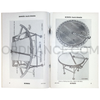
These devices belong to an era of mechanical and graphical calculation. The M5 used a rotating, gridded table and drafting equipment, while the M1 wind corrector used a disk, scales, and a movable arm. Their designs show how crews used physical scales and plotting surfaces to work through measurement problems.
Weapon-System Background
The broader setting is field artillery target acquisition, the work of finding and locating targets for guns and howitzers. Sound ranging was already used to detect enemy artillery during World War I, when weather information also supported this task. These plotting instruments form part of that history of counterbattery work, which focused on locating and engaging opposing artillery.
History of Use
Army training material continued to describe this equipment family after the manual's publication. A February 1958 publication from the U.S. Army Artillery and Missile School discussed the M5A2 flash plotting board in artillery registration. Registration checked the location of shell bursts, showing that flash-ranging equipment also helped assess friendly artillery fire.
Ideal For
TM 9-6109 adds a specialized subject to a military reference shelf and provides historical context for surviving plotting instruments. It is well suited to readers studying the people, measurements, and equipment behind artillery observation.
- Collectors of U.S. Army technical manuals.
- Researchers studying flash ranging, sound ranging, and counterbattery history.
- Collectors of mechanical calculating and plotting instruments.
- Museums and educators covering World War II and early Cold War technology.
Approx length 6", Approx width 9", Approx height .25", Approx weight .5lbs.
Pictures are stock images of our inventory. Unless otherwise noted, you will not be receiving the exact item shown in the pictures. The pictures are representative of the item’s general condition. The item you receive might be slightly better, or worse, condition than was shown in the pictures.
Please visit our page about order lead times here: Order Lead Times.