


Description
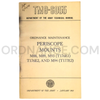
TM 9-6055 Periscope Mounts Technical Manual – January 1955
Study an important part of early Cold War tank optics with TM 9-6055. This January 1955 U.S. Army technical manual covers several related periscope mounts used in armored vehicle sighting systems. It offers a focused reference for collectors and researchers interested in the hardware behind military observation and gun sights.
Identification and Features
The publication identifies the following mount models and development designations.
- Manual number: TM 9-6055
- Publication date: January 1955
- M88 and M89 periscope mounts
- M93 / T176E1 and T176E2 periscope mounts
- M94 / T177E2 periscope mount
- Subject: U.S. Army periscope mount maintenance
Function
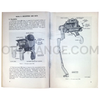
Periscope mounts support and position the viewing instrument within a tank's sighting system. Their arms, brackets, and couplings help connect the periscope to the sighting linkages. Proper alignment and limited free play help the instrument follow the intended movement and hold its relationship to the gun.
Publication History
Issued during the Army's postwar tank modernization period, this manual belongs to the specialized ordnance maintenance literature of the 1950s. Its use of both M-series service names and T-series development codes helps readers connect equipment across older technical records. Bringing related mounts into one publication also gives the manual value for comparing model designations.
Documented Applications
Army equipment records list the M88 and M89 among the M47 Patton tank's fire-control components. A March 1954 military specification identifies the M89 and M94 as mounts for M20-series periscopes used in medium and light tanks. These records provide specific links between the mount family and period armored vehicle optics.
Equipment History
These mounts were precision mechanical assemblies. The Army's 1954 specification for the M89 and M94 set requirements for arm dimensions, bracket alignment, and play in the coupling. Such standards show how carefully the supporting hardware had to be made to preserve the performance of the optical instrument.
Weapon-System Background
The M47 Patton was an early Cold War medium tank armed with a 90mm gun. Its fire-control equipment combined optical sights, a rangefinder, and a mechanical ballistic drive. This system helped the crew determine range and aim the main gun, making reliable sight mounts an important part of the tank's combat equipment.
History of Use
Period M47 crew references show periscopes at both the commander's and gunner's stations. The commander used his instrument to select targets and for emergency direct fire. The gunner's periscope served as a secondary sight when the rangefinder was installed. These roles show how mounted optics supported everyday crew duties during the 1950s.
Ideal For
This manual adds a specialized subject to a military reference collection and supports the study of period tank sighting equipment.
- Collectors of U.S. Army technical manuals
- Researchers studying Cold War optics and fire-control equipment
- Restorers identifying M47 sighting components
- Museums developing displays about armored vehicle technology
Approx length 6", Approx width 9", Approx height .25", Approx weight .5lbs.
Pictures are stock images of our inventory. Unless otherwise noted, you will not be receiving the exact item shown in the pictures. The pictures are representative of the item’s general condition. The item you receive might be slightly better, or worse, condition than was shown in the pictures.
Please visit our page about order lead times here: Order Lead Times.