



Description
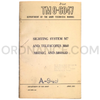
TM 9-6047 M7 Sighting System and M60 Series Telescopes Technical Manual – April 1953
TM 9-6047 is an Army technical manual for the M7 Sighting System and M60, M60A1C, and M60A1D telescopes. This April 1953 publication offers a focused reference for collectors and researchers studying military optics and heavy antiaircraft artillery.
Identification and Features
These key details identify the publication and the equipment named in its title.
- Manual number: TM 9-6047
- Publication date: April 1953
- Sighting system covered: M7
- Telescope models covered: M60, M60A1C, and M60A1D
- Publication type: U.S. Army technical manual
Function
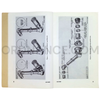
The M7 combined two sighting telescopes with mechanical supports and linkages. One operator tracked the target from side to side, while another tracked its height. This arrangement let the crew coordinate the gun’s direction and elevation during direct fire.
Publication History
An Army publications index records TM 9-6047 with an issue date of April 14, 1953. Published during the early Cold War, it documents a sighting system already described in World War II Army catalogs. It provides a useful link between wartime equipment and postwar technical literature.
Documented Applications
The documented parent weapon is the 90mm M2 antiaircraft gun on the M2 mount. Wartime Army references identify the M7 as its direct-sighting system for engaging tanks and other mechanized ground targets.
Equipment History
The M60 telescope family included variants for the system’s two tracking positions. Military specification MIL-T-13650 identifies the M60A1C for azimuth, or side-to-side sighting, and the M60A1D for elevation sighting. Their C and D suffixes distinguish the reticles, which are the aiming patterns seen through the telescopes.
90mm M2 Gun and Mount History
Development of the dual-purpose M2 gun and mount began in 1941, and both were standardized in May 1943. The design addressed wartime demands for a weapon that could fight aircraft and ground targets. It also allowed emergency firing while the mount remained on its wheels.
Weapon-System Background
The M2 belonged to the Army’s heavy antiaircraft artillery. Its air-defense equipment included remote director control and a powered fuze setter-rammer that helped prepare and load ammunition. The M7 provided the separate optical sighting arrangement used for the weapon’s ground-combat role.
History of Use
Wartime Army training materials covered the M7’s identification and care, showing that its sights required attention alongside the gun itself. The 1953 manual carries that documentary history into the early Cold War, when established artillery equipment remained part of the Army’s technical reference system.
Ideal For
This manual adds depth to a military reference library by covering a specific sighting system and three named telescope models. It also provides historical context for displays of related fire-control equipment.
- Collectors of Army technical manuals and military optics literature
- Researchers studying the M7 Sighting System and M60 telescope family
- Restorers researching 90mm M2 gun sighting equipment
- Museums interpreting World War II and early Cold War artillery
Approx length 6", Approx width 9", Approx height .25", Approx weight .5lbs.
Pictures are stock images of our inventory. Unless otherwise noted, you will not be receiving the exact item shown in the pictures. The pictures are representative of the item’s general condition. The item you receive might be slightly better, or worse, condition than was shown in the pictures.
Please visit our page about order lead times here: Order Lead Times.