


Description
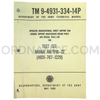
AN/TPM-22 Radar Test Set Technical Manual TM 9-4931-334-14P – May 1969
Item Overview
This May 1969 U.S. Army technical manual covers the AN/TPM-22 Radar Test Set, specialized maintenance equipment associated with the Vulcan air-defense system. It brings a lesser-known part of military electronics history into focus: the shop equipment that helped technicians keep radar components ready for service.
Identification and Features
The publication number identifies the manual, while the Federal Stock Number identifies its subject equipment.
- Technical manual number: TM 9-4931-334-14P
- Subject equipment: AN/TPM-22 Radar Test Set
- Publication date: May 1969
- Equipment Federal Stock Number: 4931-707-1229
- Associated radar: AN/VPS-2 Radar Set
Function and Technical Reference
The AN/TPM-22 used dedicated test sections to check radar electronics under controlled conditions. Its MX-8048/TPM-22 section supported receiver testing, while the MX-8049/TPM-22 range-computer test panel included a target simulator. These tools helped maintenance personnel check how radar circuits responded to known signals. Understanding these functions places the manual within the technical reference material needed to study Vulcan radar support equipment.
Publication History
The May 1969 publication date places this manual in the early production period of the Vulcan weapon family. Army reporting recorded delivery of the first production Vulcan and Chaparral systems during fiscal year 1968 for testing. This edition dates from the same period in which the Army was building the maintenance and supply support needed for its new air-defense equipment.
Documented Applications
Military specification MIL-T-60857A identifies the AN/TPM-22 as a shop set used by direct support and general support maintenance personnel. Its stated application was testing the items of the AN/VPS-2 Radar Set, excluding the AS-2049/VPS-2 antenna. That defined role connects this publication to specialized radar maintenance within the Vulcan support system.
Equipment History
The AN/TPM-22 combined console-mounted and rack-mounted equipment into a dedicated radar test system. A July–August 1968 Army procurement report listed Lockheed Electronics contracts that included AN/TPM-22 support shop sets and AN/VPS-2 radar equipment for the XM163 Vulcan program. Later Army specifications continued to identify AN/TPM-22 components into the 1990s, documenting continued technical support for the equipment.
Weapon-System Background
The Vulcan air-defense family included the M163 self-propelled gun and the M167 towed gun. Both used a six-barrel 20mm cannon to engage low-flying aircraft. The AN/VPS-2 range-only radar measured target distance for the fire-control system, while crews used visual target acquisition and optical aiming. Vulcan guns worked alongside Chaparral surface-to-air missiles as part of the Army’s close-range air-defense network.
History of Use
Vulcan weapons also saw use against ground and surface targets. An Army campaign history records a Vulcan in action during an enemy ambush on Highway 13 in Vietnam on January 11, 1969. Two decades later, an official Army interview about Operation Just Cause described an M167 Vulcan engaging a Panamanian patrol boat. These records show the wider service history of the weapon family supported by Vulcan radar maintenance equipment.
Ideal For
This manual suits collections that explore the technical work behind military weapons. It adds useful context to displays and reference libraries covering Army radar, maintenance shops, and Cold War air defense.
- Collectors of U.S. Army technical manuals
- Researchers studying AN/TPM-22 test equipment
- Museums interpreting military electronics maintenance
- Historians building Vulcan air-defense reference collections
Approx length 8", Approx width 10", Approx height 1.25", Approx weight 2.5lbs.
Pictures are stock images of our inventory. Unless otherwise noted, you will not be receiving the exact item shown in the pictures. The pictures are representative of the item’s general condition. The item you receive might be slightly better, or worse, condition than was shown in the pictures.
Please visit our page about order lead times here: Order Lead Times.