


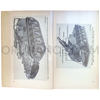

Description
TM 9-3043 Technical Manual - 155mm M1 Howitzer, M6 Recoil Mechanisms, M1A1/M1A2 Carriages and M14 Mount - December 1953
Item Overview
TM 9-3043 is a December 1953 Army ordnance maintenance manual for the 155mm M1 howitzer and its supporting equipment. It covers the M6 recoil family, M1A1 and M1A2 towed carriages, and M14 self-propelled howitzer mount. This publication connects the cannon with the mechanisms that controlled recoil, supported aiming, and carried the weapon in the field.
Identification and Features
The publication covers the following equipment:
- Manual number: TM 9-3043
- Publication date: December 1953
- Issuing authority: Department of the Army
- Publication type: Ordnance maintenance technical manual
- Howitzer: 155mm M1
- Recoil mechanisms: M6, M6A1, M6A2, M6B1, and M6B2
- Towed howitzer carriages: M1A1 and M1A2
- Self-propelled howitzer mount: M14
Function and Manual Contents
The manual addresses maintenance of the howitzer, recoil mechanisms, carriages, and mount. Its illustrated technical coverage includes recoil assemblies, the variable-recoil cam and gear sector, and electric elevating equipment used with the M14 installation. These subjects help researchers identify the separate assemblies and understand their mechanical relationships within a complete artillery piece.
Documented End-Item Application
The M1 howitzer served as a towed weapon on the M1A1 and M1A2 carriages. The M14 mount carried the same howitzer on the 155mm Howitzer Motor Carriage M41. These are distinct installations covered by the publication, linking its maintenance information to both wheeled towed artillery and a tracked self-propelled vehicle.
Publication History
The December 1953 edition documents support for an established wartime artillery family during the early Cold War. Its combined scope brings several recoil versions and two forms of weapon installation into one maintenance reference. The title uses the M1 howitzer designation associated with the weapon family later known in towed service as the M114.
Equipment History
Production of this artillery family involved several specialized assemblies. During World War II, Watervliet Arsenal made the cannon barrels, while Rock Island Arsenal manufactured recoil mechanisms and gun carriages. Rock Island assembled the howitzer family from 1941 through 1953. The publication dates from the final year of that production period.
155mm M1 Howitzer History and Background
The M1 entered production in 1941 as a medium howitzer intended for general supporting fire. Its role included engaging enemy gun positions and other ground objectives. The design used a manually operated interrupted-screw breech and separate-loading ammunition, with the projectile and propellant handled as separate items.
M6 Recoil Mechanism History and Background
The M6 family used hydraulic fluid and compressed gas to control recoil and return the barrel to position. Its variable-recoil design shortened barrel travel as elevation increased. The series evolved through changes in construction and cold-weather performance. M6A1 and M6B2 mechanisms updated earlier designs. The newly manufactured M6A2 used a one-piece floating piston and Unified screw threads, while earlier types used metric threads.
M1A1 and M1A2 Carriage History and Background
The towed carriages supported the howitzer during transport and firing. A major development was the M1A2's improved firing jack. The July 1945 Field Artillery Journal reported that the new carriage replaced the M1A1's rack-and-pinion jack with an enclosed screw-type jack. The change was intended to make the jack easier to operate and improve wear resistance.
M14 Howitzer Mount History and Background
The M14 brought the M1 howitzer into a self-propelled installation at the rear of the M41 fighting compartment. Its assemblies included the recoil equipment, top carriage, and equilibrators that helped balance the weapon. The installation combined electric elevation with manual traverse, adapting the howitzer's aiming equipment to its tracked platform.
Parent Weapon-System Background
The towed howitzer relied on a separate prime mover for movement between positions. The M41 Howitzer Motor Carriage combined the weapon and its transport in one tracked vehicle. Developed from the M24 Chaffee chassis family, the M41 placed its driving compartment at the front, engines in the center, and fighting compartment at the rear. It was part of the wartime effort to give artillery greater mobility with armored formations.
History of Use
The M1 howitzer served during World War II and the Korean War. The self-propelled M41 also saw combat in Korea. In its later M114 designation, the towed weapon family remained in service through the Vietnam War. Replacement of the M114 by the M198 began in 1979. This service history places the equipment covered by TM 9-3043 across several generations of American field artillery.
Ideal For
This manual suits collections focused on artillery maintenance and component development. Its coverage of several recoil versions and both towed and self-propelled installations makes it useful for comparing period equipment, researching surviving assemblies, and building a restoration reference library.
- Army technical manual collectors
- M1 and M114 howitzer researchers
- M6 recoil system historians
- M41 and M14 restoration archives
- Artillery museums and reference libraries
Approx length 6", Approx width 9", Approx height .5", Approx weight 1lbs.
Pictures are stock images of our inventory. Unless otherwise noted, you will not be receiving the exact item shown in the pictures. The pictures are representative of the item’s general condition. The item you receive might be slightly better, or worse, condition than was shown in the pictures.
Please visit our page about order lead times here: Order Lead Times.