


Description
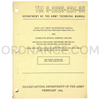
TM 9-2920-224-35 Lear Siegler G22-Series 300-AMP Generator Technical Manual
This U.S. Army technical manual covers eight Lear Siegler G22-series engine-driven generator models. The February 1964 publication brings field and depot maintenance information together with a repair parts list. It is a focused reference on the 300-amp generators used across several tracked military vehicle families, including tanks, self-propelled artillery, and recovery vehicles.
Identification and Features
The following details identify the publication and its covered generator family. The listed Federal Stock Number refers to generator equipment addressed by the manual.
- Publication number: TM 9-2920-224-35.
- Publication date: February 1964.
- Manufacturer: Lear Siegler, formerly Jack and Heintz.
- Covered models:
- G22: FSN 2920-294-3472
- G22-2: FSN 6115-629-1149
- G22-3: FSN 6115-629-1149
- G22-6: FSN 2920-786-1175
- G22-6F: FSN 2920-830-6660
- G22-7: FSN 2920-445-0857
- G22-7F: FSN 2920-830-1293
- G22-9: FSN 2920-563-0299
- Generator output rating: 300 amps.
- Maintenance level: Field and depot maintenance.
- Includes field and depot maintenance repair parts information.
Function and Contents
The manual supports the repair and overhaul of generator assemblies in Army maintenance shops. The covered equipment combines electrical parts, such as armatures, brushes, and field coils, with bearings and drive components. The repair parts list helps identify replacement items and understand how the assemblies fit together. This coverage is useful for studying the equipment and the repair work needed to keep it serviceable.
Publication History
This edition belongs to the Army's field and depot maintenance era. Its title records the generator family under the Lear Siegler name and also identifies Jack and Heintz as the former manufacturer. Later generator support publications appeared under TM 9-2920-224-34&P, with editions documented in 1986 and 2005. The 1964 volume preserves an earlier model range and the repair terminology of its time.
Documented Applications
Period Army parts publications identify G22-family installations across several types of tracked equipment. Later engine and vehicle manuals continued to direct generator service to TM 9-2920-224-35. These records establish the following applications for the generator family, with the specific model selected for each installation.
- Tanks: M48, M48A1, M48C, M48A2, M60, M103, and M103A1.
- Self-propelled artillery: M53 and M55.
- Recovery vehicles: M51 and M88.
- Flamethrower tanks: M67 and M67A1.
- Later engine references: G22-6 and G22-6F support for Continental AVDS-1790 installations used in vehicles such as the M48A3 and M60A1.
- Related artillery references: M107 and M110-family maintenance publications also refer generator service to this manual.
Equipment History
The G22 line was already documented in Army repair parts publications by 1961. Its related models supported different engine installations and cooling arrangements. Period test data describe built-in cooling fans on G22 and G22-2 generators, while the G22-7F used a separate blower. These cooling differences matter when comparing generator variants and their vehicle installations.
Manufacturer Background
The manufacturer's history reaches back to Jack and Heintz, founded by William S. Jack and Ralph M. Heintz in 1940 to make precision aircraft components. Lear Siegler formed in 1962 when Lear, Inc., merged with Siegler Corporation, which owned Jack and Heintz. The resulting power equipment business served aerospace, missile, and ordnance applications. The G22 manuals reflect this change in company ownership.
Generator Design
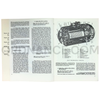
The G22 family used a rotating armature, field windings, brushes, and a commutator to generate and collect direct-current electricity. Period test data describe six-pole, six-brush construction for the G22, G22-2, and G22-7F models. The engine supplied the mechanical drive, while airflow carried heat away from the electrical parts. Servicing these units involved both rotating parts and electrical contacts.
Electrical Role in the Vehicle
The generator supplied electrical power while the engine ran and helped keep the vehicle batteries charged. In the supported armored vehicle systems, this power served lighting, instruments, communications, and electrical controls. The 300-amp rating reflects the unit's high current capacity. The generator worked with a voltage regulator, wiring, and batteries as part of the vehicle's charging system.
Parent Engine History
G22-6 and G22-6F generators appear in the Army's 1970 maintenance literature for Continental AVDS-1790 diesel engines. These were air-cooled, turbocharged V12 powerplants used in armored vehicles. Their maintenance program separated major engine work from accessory overhaul, using dedicated references for fuel pumps, starters, turbochargers, and generators. Generator overhaul was one part of keeping the complete engine installation serviceable.
Parent Equipment History
The supported vehicles span the Army's shift from early postwar armor to improved diesel-powered fleets. Early M48 tanks used gasoline engines, while the M48A3 upgrade brought diesel power in 1963. The M60 reached combat units in Europe in December 1960 and became a major Cold War tank. Artillery and recovery vehicles extended the tracked fleet into fire support and heavy repair duties.
Weapon-System Background
The parent tank systems ranged from the 90mm M48 to the 105mm M60 and 120mm M103. The M53 and M55 carried 155mm and 8-inch weapons for self-propelled fire support. Recovery vehicles such as the M51 and M88 helped move or recover heavy equipment. Their different missions explain the wide range of vehicles listed in G22-family support records.
History of Use
The vehicles associated with this generator family served in both Cold War deployments and combat operations. M60 tanks equipped American forces in Europe, while M48A3 tanks became important in Vietnam. The 2nd Battalion, 69th Armor, deployed there in early 1966 with M48A3s and fought in the Central Highlands, including the defense of Ben Het in 1969. Their service shows the demands placed on armored vehicle maintenance during the 1960s.
Ideal For
This manual suits readers building a library on military vehicle electrical equipment and generator repair. Its model coverage makes it useful alongside engine and vehicle manuals when comparing period generator installations. It also supports research on the Army's maintenance system of the 1960s.
- Military technical manual collectors.
- Tracked vehicle restoration libraries.
- Lear Siegler and Jack and Heintz researchers.
- Military generator and electrical equipment collections.
- Museums studying Cold War vehicle maintenance.
Approx length 8", Approx width 11", Approx height .5", Approx weight 1lbs.
Pictures are stock images of our inventory. Unless otherwise noted, you will not be receiving the exact item shown in the pictures. The pictures are representative of the item’s general condition. The item you receive might be slightly better, or worse, condition than was shown in the pictures.
Please visit our page about order lead times here: Order Lead Times.