


Description
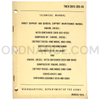
TM 9-2815-205-34 GMC 6V53 and 6V53T Diesel Engine and Container Technical Manual
This U.S. Army technical manual covers two GMC diesel engine models and their container assemblies. It documents shop-level maintenance for powerplants used in tracked military vehicles. The book brings engine repair and container support together in one publication, making it a useful record of how the Army maintained and supplied these diesel engines during the Cold War.
Identification and Features
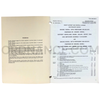
The following details identify the publication and the equipment it covers. The Federal Stock Numbers apply to the engine-and-container assemblies and their separate containers.
- Publication date: March 1975.
- Maintenance level: Direct support and general support.
- Series 6V53 engine: GMC Model 5063-5299.
- Engine with container: FSN 2815-022-6732.
- Container assembly: FSN 8115-202-8589.
- Series 6V53T engine: GMC Model 5063-5398.
- Engine with container: FSN 2815-909-5949.
- Container assembly: FSN 8115-999-5356.
Function and Contents
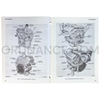
Written for repair shops, this manual covers work beyond routine crew and unit upkeep. Its subjects include engine disassembly, inspection, repair, assembly, and testing. Major components include cylinder heads, pistons, crankshafts, fuel injectors, blowers, and the turbocharger used on the 6V53T. Cooling and lubrication equipment also form part of the engine coverage. The coverage follows both major components and complete engine assemblies.
Publication History
Issued in March 1975, this edition supported engine repairs when the vehicles using these powerplants were already established in Army service. It records the service methods used before later revisions of the manual series. A new edition dated August 1992 replaced the March 1975 manual and the changes issued for it. It is a period reference for Army engine support in the 1970s.
Documented Applications
Related Army engine and vehicle references document applications across troop carriers, command vehicles, cargo haulers, and special-purpose chassis. This range explains why one engine maintenance publication could serve shops supporting a varied tracked fleet. The two model numbers connect that broad use to specific vehicles.
- Model 5063-5299: M113A1 armored personnel carrier, M577A1 command post carrier, M106A1 107mm mortar carrier, and M125A1 81mm mortar carrier.
- Model 5063-5299: M548 tracked cargo carrier, M667 and M730 guided missile equipment carriers, and M741 20mm antiaircraft gun chassis.
- Model 5063-5398: M551 Sheridan armored reconnaissance and airborne assault vehicle.
Equipment History
The military 6V53 and 6V53T came from Detroit Diesel's Series 53 engine family, introduced during the 1950s. This family served heavy-duty vehicles and other equipment that needed compact diesel power. Military versions adapted that design to the limited space inside tracked vehicles. The covered models reflect the different power needs of armored carriers and vehicles built for airborne support.
Manufacturer Background
General Motors began its diesel engine operation in 1938. Its early Series 71 engines served construction equipment, military vehicles, and power generation, with wartime demand expanding their use. The company later developed a wider range of truck and industrial diesels. The GMC and Detroit Diesel names found in period references connect this manual to that General Motors engine business.
Engine Design
Both models are liquid-cooled V6 diesels with fuel injection and a two-cycle design. A blower supplies fresh air to the cylinders and helps clear exhaust gas as the engine runs. Model 5063-5299 uses a cast iron block and has no turbocharger. Model 5063-5398 uses an aluminum block and adds a turbocharger driven by exhaust gas. These differences help readers understand why engines with similar family names require model-specific parts and repair information.
Container Assemblies
The containers formed part of the Army's engine storage and shipping system. They supported the movement of engine assemblies between supply facilities and maintenance shops while protecting the equipment during handling. Including container coverage alongside engine repair reflects the full support cycle: preparing an engine, moving it, storing it, and returning it to service. It also shows the supply work needed to keep replacement engines available.
Parent Equipment History
The M113 armored personnel carrier first entered production in 1960. The diesel-powered M113A1 followed in 1964, marking an important change from the original gasoline-powered vehicle. Its basic tracked layout also supported many specialized carriers. The M551 Sheridan entered service in 1967 to give airborne forces a light armored vehicle with heavy firepower. Together, they show the range of vehicles supported by these powerplants.
Weapon-System Background
Diesel power helped these vehicles carry troops, equipment, and weapons across ground that could limit wheeled transport. The carrier family supported infantry movement, mobile command posts, mortar units, and missile or gun systems. The Sheridan combined armor and mobility with a 152mm gun-launcher designed to fire conventional ammunition or Shillelagh guided missiles.
History of Use
The M113A1 became a major armored vehicle of the Vietnam War, serving American, Australian, and South Vietnamese forces. The Sheridan began combat service in Vietnam in January 1969. The Sheridan vehicle family later served during Operation Just Cause in Panama in 1989 and Operations Desert Shield and Desert Storm in 1990–1991. Maintenance references helped keep this widely used equipment serviceable.
Ideal For
This manual suits readers who want a focused reference on military diesel engine repair and the supply equipment that supported it. Its coverage is especially relevant to collections built around tracked vehicle maintenance, General Motors engine development, and Army shop practices of the 1970s.
- Military technical manual collectors.
- M113-family and M551 Sheridan restoration libraries.
- Detroit Diesel and GMC engine history researchers.
- Museums and Cold War vehicle reference collections.
Approx length 8", Approx width 11", Approx height .5", Approx weight 1lbs.
Pictures are stock images of our inventory. Unless otherwise noted, you will not be receiving the exact item shown in the pictures. The pictures are representative of the item’s general condition. The item you receive might be slightly better, or worse, condition than was shown in the pictures.
Please visit our page about order lead times here: Order Lead Times.