


Description
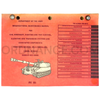
TM 9-2350-303-20-2 M109A2 155mm Howitzer Cab Maintenance Manual – June 1981
Item Overview
TM 9-2350-303-20-2 is a June 1981 U.S. Army technical manual for the 155mm M109A2 Self-Propelled Howitzer. This volume covers the cab, armament, fire control, and elevating and traversing systems. Its organizational maintenance focus makes it a useful period reference for studying the crew compartment and the equipment that supported the howitzer's weapon and aiming functions.
Identification and Features
The publication number and National Stock Number identify this manual and its listed equipment. Its cab coverage connects the weapon, sighting equipment, and powered gun-positioning systems.
- Technical manual: TM 9-2350-303-20-2
- Publication date: June 26, 1981
- Equipment: 155mm M109A2 Self-Propelled Howitzer
- National Stock Number: 2350-01-031-0586
- Maintenance level: Organizational maintenance
- Coverage: Cab, armament, fire control, elevating and traversing systems
Function and Contents
This manual supports the unit maintenance personnel responsible for the howitzer's cab and armament. Its listed subjects bring the gun, aiming equipment, and positioning systems into one technical reference. These assemblies worked together, so understanding their relationship was important to maintenance work. For researchers, the volume adds practical context to studies of M109A2 mechanical layout and the Army's approach to equipment upkeep.
Publication History
The June 1981 edition belongs to the early period of M109A2 service. A catalog record for a later Army cab maintenance manual confirms this volume's date as June 26, 1981. The later edition, dated June 30, 1986, superseded it and covered both the M109A2 and M109A3. This documented sequence places the offered publication within the development of the Army's M109 technical library.
Documented End-Item Application
The listed end item is the M109A2 under NSN 2350-01-031-0586. The manual's subject coverage follows the cab and armament of that model. Matching the publication number, vehicle designation, and stock number helps readers select the correct period reference. These details are useful when comparing M109 manuals, since the family includes several models with different equipment and maintenance publications.
Equipment History
The M109A2 grew from a late-1970s effort to improve reliability, ease of maintenance, crew safety, and ammunition storage. Bowen-McLaughlin-York received a production contract in 1978, with initial deliveries following in 1979. Period Army reporting described more reliable door latches, added handholds, improved warning devices, and changes to the rammer and recoil equipment. These improvements addressed both crew needs and the demands of keeping the howitzer serviceable.
Cab and Armament Background
The M109A2's rotating armored cab housed the main weapon and the crew positions used to serve it. Its 155mm M185 cannon was installed in the M178 gun mount. The cab brought the gun, loading area, controls, and sighting equipment together in one working space. Maintenance of this area supported the crew's ability to handle the weapon and keep its related systems in order.
Fire-Control Background
Fire-control equipment helped the crew establish the cannon's direction and elevation from firing data. Sights, mounts, and related instruments supplied aiming references and a means to check alignment. Their accuracy depended on the proper relationship between the sighting equipment and the weapon. Maintaining these relationships was a distinct part of the cab's support needs.
Elevating and Traversing Systems
Elevation means raising or lowering the cannon. Traverse means turning the cab and weapon from side to side. The M109A2 used powered systems to help position these heavy assemblies under crew control. Mechanical and electrical components had to work together for smooth movement. These systems formed an important connection between the gunner's controls and the physical direction of the weapon.
Parent Equipment History
The original M109 entered Army service in 1963 as the United States expanded its use of mobile 155mm artillery. Early M109s served in Vietnam, where commanders raised concerns about reliability and ruggedness. The family developed through upgrades, including the longer-gunned M109A1 and the later M109A2. That history explains why Army technical publications evolved alongside changes to the weapon, crew equipment, and vehicle.
Weapon-System Background
The M109 family supplied mobile artillery support to armored and mechanized forces. Its main mission was indirect fire, reaching targets outside the crew's direct view. A tracked chassis let the howitzer travel with supported units and move between firing positions using its own engine. The cab equipment covered by this manual supported the weapon's part in that wider artillery mission.
History of Use
The M109A2 served during Cold War training and later combat in the Persian Gulf. Army records describe crews preparing in Germany before deploying to Saudi Arabia in 1990. An Army account of gunner Bob Lehtonen's service with the 2nd Battalion, 29th Field Artillery documents M109A2 use during Operations Desert Shield and Desert Storm in 1990–1991. This connects the model's training history with its wartime service.
Documented Maintenance Use
PS Magazine listed this manual among recent publications for organizational maintenance personnel in December 1981. Its January 1984 issue later directed M109A2 maintainers to the volume for slip-ring contact-arm adjustment guidance when discussing uneven powered cab movement. These references show that the publication formed part of the Army's practical maintenance support. They also give collectors documented examples of its use after publication.
Ideal For
This M109A2 cab manual suits readers building a technical library around tracked artillery and Army weapon maintenance. It supports historical research, comparison of period publications, and study of the cab and its gun movement systems. Its coverage of this model also makes it useful for museum documentation and restoration research.
- Military technical manual collectors
- M109A2 restoration researchers
- Tracked artillery historians
- Fire-control equipment researchers
- Museum reference libraries
- Cold War and Gulf War collections
Approx length 11", Approx width 8", Approx height 1.5", Approx weight 3lbs.
Pictures are stock images of our inventory. Unless otherwise noted, you will not be receiving the exact item shown in the pictures. The pictures are representative of the item’s general condition. The item you receive might be slightly better, or worse, condition than was shown in the pictures.
Please visit our page about order lead times here: Order Lead Times.