


Description
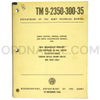
TM 9-2350-300-35 XM163 20mm Vulcan Technical Manual – November 1968
TM 9-2350-300-35 is a U.S. Army technical manual dated November 1968 for the 20mm XM163 Vulcan Antiaircraft Artillery Gun. Its listed equipment includes the XM168 cannon, XM157 mount, and XM61 sight. This maintenance reference belongs to the early technical record of a tracked weapon that brought rapid cannon fire to mobile Army air defense.
Identification and Features
The publication number and equipment designations identify this volume within the Vulcan manual series. Its Federal Stock Number connects the listed weapon system with the Army supply records used during this period.
- Technical manual: TM 9-2350-300-35
- Publication date: November 1968
- Weapon system: 20mm XM163 Vulcan Antiaircraft Artillery Gun
- Cannon: XM168
- Gun mount: XM157
- Sight: XM61
- Federal Stock Number: 2350-999-4392
- Publication type: Support maintenance reference
Function and Contents
This -35 volume belongs to the Army's support maintenance series. Its listed scope centers on the Vulcan cannon, gun mount, and sight. Support maintenance deals with technical repair work beyond routine crew care. For researchers, the book supports study of the weapon's mechanical assemblies, powered aiming equipment, and related maintenance needs. These subjects help explain the workshop support required to keep a complex gun system serviceable.
Publication History
The November 1968 date places this edition during the Vulcan's early field evaluation period. Its XM equipment names preserve the designations used in Army documentation from that era. Related military publications listed separate Vulcan operator, organizational maintenance, and repair-parts references. Together, these books formed a technical record for different users and maintenance tasks. This edition is useful for tracing how the Army documented its new air-defense equipment during the Vietnam War years.
Documented Applications
The listed application is the self-propelled XM163 system identified by FSN 2350-999-4392. The named components connect the manual to its armament and aiming equipment: the XM168 supplied the gun, the XM157 carried and positioned it, and the XM61 assisted the gunner. Matching these designations helps researchers connect the publication with the correct early Vulcan equipment and compare its terminology with other period Army references.
Equipment History
The Army developed Vulcan during the 1960s by adapting existing equipment into a mobile air-defense system. The work involved more than placing a gun on a tracked vehicle. Engineers had to develop the ammunition feed and bring the weapon, carrier, and fire-control equipment together. The Defense Department's fiscal year 1968 report records progress in these areas and states that engineering and service tests were underway at year-end.
Parent Vehicle History
The XM163 used a modified M113A1 armored personnel carrier chassis known as the XM741. The original M113 entered Army service in 1960, giving mechanized troops a light tracked carrier with good cross-country mobility. The diesel-powered M113A1 followed in 1964. A December 1968 Army transmission publication specifically listed the XM741 as the chassis for the XM163 weapon system. This vehicle lineage connected Vulcan with a large family of Army carriers and support vehicles.
Cannon Background
The XM168 was a ground adaptation of the M61A1 Vulcan cannon. It used six rotating barrels in a Gatling-style arrangement, with an external drive powering the mechanism. Period Army reporting described the ground Vulcan's firing rates as 1,000 or 3,000 rounds per minute. This design carried rotary cannon technology from aircraft armament into a mobile ground weapon, where a short burst could place many projectiles along a target's path.
Mount Background
The XM157 mount supported the cannon and controlled its direction. Its powered movement allowed the gun to turn from side to side and move up or down as the gunner followed a target. These movements are called traverse and elevation. The mount was a major part of the system's design because it had to carry the weapon while allowing smooth, controlled aiming.
Sight and Fire-Control Background
The XM61 was the Vulcan's lead-computing sight. Lead means aiming ahead of a moving target to account for its travel while a projectile is in flight. The broader weapon system also used the AN/VPS-2 range-only radar to supply target-distance information. The gunner followed the target through an optical sight while the fire-control equipment assisted aiming. This mix of visual tracking and electronic support was central to the early Vulcan design.
Weapon-System Background
Vulcan formed the gun portion of the Army's Chaparral/Vulcan air-defense program. Chaparral supplied guided missiles, while Vulcan supplied rapid 20mm cannon fire for close-range defense. The program aimed to protect field forces from low-altitude air attacks. Vulcan also had a recognized secondary ground-support role. Its tracked carrier allowed the gun to move with mechanized units and bring air-defense firepower closer to the troops it supported.
Cold War and Later Service
The Vulcan family later became part of the Army's air-defense network in Europe. The first divisional Chaparral/Vulcan battalion deployed to Germany in November 1969 and joined the 8th Infantry Division at Mainz. Later M163 vehicles remained in service into the Gulf War period. Army Transportation Museum records show an M163 being loaded aboard USNS Bellatrix for Operation Desert Shield in 1990. These later deployments belong to the wider family's service history.
Ideal For
This early Vulcan maintenance manual suits readers building a reference library around Army air-defense guns and tracked vehicles. Its publication date and equipment names make it useful for comparing period documentation, researching surviving components, and preparing historical displays. It also adds technical context to studies of the Army's development and support of mobile air-defense equipment.
- Military manual collectors
- XM163 Vulcan researchers
- Military vehicle restoration research
- Museum reference libraries
- Vietnam War equipment studies
- Cold War air-defense collections
Approx length 8", Approx width 10", Approx height .5", Approx weight 1lbs.
Pictures are stock images of our inventory. Unless otherwise noted, you will not be receiving the exact item shown in the pictures. The pictures are representative of the item’s general condition. The item you receive might be slightly better, or worse, condition than was shown in the pictures.
Please visit our page about order lead times here: Order Lead Times.