



Description
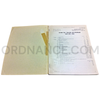
TM 9-2350-213-20 Organizational Maintenance Manual for the 90mm M56 Scorpion Full-Tracked Self-Propelled Gun, June 1958
Publication Overview
TM 9-2350-213-20 is the June 1958 U.S. Army organizational-maintenance manual for the 90mm M56 Scorpion full-tracked self-propelled gun. Written for personnel maintaining the vehicle at unit level, it documents the equipment and assemblies that supported this lightweight airborne weapon. The manual is a useful reference for M56 research, restoration planning, and collections of Cold War Army technical publications.
Identification and Features
The publication’s designation identifies its maintenance level and the specific vehicle covered.
- Manual Number: TM 9-2350-213-20.
- Publication Date: June 1958.
- Issuing Organization: Department of the Army.
- Publication Type: Organizational-maintenance technical manual.
- Covered Equipment: 90mm M56 full-tracked self-propelled gun, commonly called the Scorpion.
- Documented Vehicle Stock Number: FSN 2350-508-1060.
- Maintenance Level: Unit-level maintenance personnel.
Function and Manual Contents
The manual supports the inspection, servicing, and authorized maintenance of the M56’s vehicle and weapon equipment. Documented illustrations cover the engine and transmission arrangement, hull access points, fuel tank, battery installation, suspension assemblies, road wheels, tracks, gun installation, and recoil equipment. Detailed views show how major components fit together and where they are located within the compact carrier. These illustrations are especially useful for identifying assemblies and studying the Scorpion’s mechanical layout.
Documented End-Item Application
This publication applies to the M56 self-propelled gun identified by FSN 2350-508-1060. The vehicle carried a 90mm M54 gun in an M88 gun mount on a small tracked chassis. Period references also use the abbreviation SPAT, meaning self-propelled antitank, for the Scorpion. The manual’s application includes the complete M56 vehicle and its installed equipment, connecting the automotive carrier with the gun system it supported.
Publication History
The Army issued TM 9-2350-213-20 during the M56’s early service period in 1958. It formed part of a technical-publication series that also included the May 1958 operating manual, TM 9-2350-213-10, and a separate organizational-maintenance repair-parts publication, TM 9-2350-213-20P. This division of information gave crews, unit mechanics, and supply personnel references suited to their responsibilities. The June 1958 maintenance manual records the technical support provided for the Scorpion as the vehicle entered Army use.
M56 Equipment History
Cadillac Motor Car Division of General Motors manufactured the M56 for U.S. Army airborne forces. Its lightweight aluminum carrier used a Continental gasoline engine, band-type tracks, and pneumatic road-wheel tires. A four-man crew occupied an open arrangement around the gun, with a small blast shield at the front. The Scorpion combined several unusual features to keep a substantial weapon mobile on a compact vehicle suitable for airborne transport and delivery.
Airborne Antitank Weapon-System Background
Airborne troops needed heavier weapons than soldiers could carry, but transport aircraft limited the weight and size of supporting vehicles. The M56 addressed that problem by pairing a conventional 90mm gun with a lightweight tracked carrier. An Army publication from 1962 described its purpose as giving airborne troops a mobile antitank weapon. Its design emphasized transportability and firepower, while the exposed crew positions reflected the weight limits under which the vehicle was developed.
History of M56 Use
Company D, 16th Armor, operated M56 Scorpions with the 173rd Airborne Brigade after the brigade formed on Okinawa in 1963. Before the company deployed to South Vietnam in May 1965, two platoons exchanged their Scorpions for M113 armored personnel carriers. A remaining M56 platoon deployed with the unit and later received M113s in late 1966. Unit history records that the Scorpions were difficult to maintain in Vietnam and were used largely for base security during their final months with the company.
History of Manual Use
Organizational-maintenance manuals supported the mechanics assigned to keep Army equipment serviceable within its operating units. For the M56, that work involved a compact carrier with distinctive running gear and closely arranged automotive and gun components. Illustrated technical references helped personnel identify equipment and understand its arrangement. Today, this publication supplies period documentation for researchers examining the Scorpion’s construction, maintenance requirements, and place in the Army’s airborne equipment program.
Ideal For
This manual is suited to collections and research focused on military vehicles, technical literature, and airborne equipment.
- Collectors of U.S. Army technical manuals
- M56 Scorpion owners and restoration researchers
- Military vehicle maintenance and construction
- Museums developing airborne equipment or Vietnam-era displays
Approx length 8", Approx width 10", Approx height .5", Approx weight 1lbs.
Pictures are stock images of our inventory. Unless otherwise noted, you will not be receiving the exact item shown in the pictures. The pictures are representative of the item’s general condition. The item you receive might be slightly better, or worse, condition than was shown in the pictures.
Please visit our page about order lead times here: Order Lead Times.