



Description
Item Overview
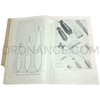
This December 1950 edition of Technical Manual TM 9-1980, also identified as Air Force Manual AFM 136-7, is the official U.S. military reference titled Bombs for Aircraft. Issued jointly by the Departments of the Army and the Air Force, it provides detailed information about the identification, assembly, handling, and use of American aircraft bombs and their components during the early Cold War and Korean War era.
Publication Details
The following details identify this period military publication and its official issue status:
- Manual Number: TM 9-1980 / AFM 136-7
- Official Title: Bombs for Aircraft
- Issuing Agencies: Departments of the Army and the Air Force
- Publication Date: December 7, 1950
- Original Security Marking: Restricted
- Subject: Aircraft bombs, bomb fuzes, components, clusters, assembly, identification, handling, and use
Manual Function and Contents
TM 9-1980 was prepared as a technical reference for personnel responsible for aircraft ordnance. Its chapters explain bomb recognition, markings, assembly, components, handling procedures, fuzes, bomb types, cluster adapters, explosive and practice-bomb clusters, and emergency destruction to prevent enemy use. Reference tables cover bomb-and-fuze combinations, arming wires, fin assemblies, fin lock nuts, fuze seats, and other technical data.
Documented Bomb Types and Applications
The manual covers aircraft bombs and components procured and issued by the Ordnance Corps, including Navy-designed equipment carrying joint Army-Navy “AN” model numbers. Its documented categories include general-purpose, demolition, light-case, armor-piercing, semi-armor-piercing, depth, fragmentation, service, practice, and drill bombs. Representative entries include the 100-pound AN-M30A1, 250-pound AN-M57A1, 500-pound AN-M64A1, 1,000-pound AN-M65A1, 2,000-pound AN-M66A2, 4,000-pound M56A2, 120-pound M86 fragmentation bomb, and 350-pound AN-Mk 54 depth bomb.
Publication History
This 1950 revision replaced TM 9-1980 dated November 15, 1944, along with a large group of aircraft-bomb technical bulletins issued during World War II. The revision updated bomb and fuze information, added newer models, removed items declared obsolete or discontinued, and moved chemical-bomb coverage to Chemical Corps publications. Its joint Army and Air Force designation reflects continued standardization after the Air Force became a separate military service in 1947.
Aircraft Bomb Equipment History
By 1950, American aircraft bombs were built as complete systems made from several matched components. A typical assembly included the bomb body, explosive charge, nose or tail fuze, booster, fin assembly, suspension fittings, and arming wire. Standardized M-series and AN-series designs allowed common bomb components and procedures to serve different aircraft and missions while older World War II equipment remained in service beside newer postwar models.
Aircraft Bomb-Armament System Background
An aircraft bomb worked as part of a larger armament system that included bomb racks, shackles, suspension lugs, release equipment, and arming controls. Bombs could be carried inside a bomb bay or on external wing and fuselage stations. During release, the rack or shackle freed the bomb while the arming wire controlled the fuze’s safety device. The fin assembly stabilized the bomb after separation so it would follow the intended path toward the target.
History of Use
TM 9-1980 was published during the first year of the Korean War and was distributed to Air Force bases, wings, bomb groups, fighter squadrons, and Air National Guard units. Conventional aircraft bombs supported strategic bombing, battlefield support, interdiction, and attacks on transportation routes, bridges, supply areas, troop positions, and fortified targets. B-29 Superfortresses performed both strategic and tactical missions, while aircraft such as the F-80 Shooting Star served in the fighter-bomber role. The manual supported the ordnance personnel who inspected, assembled, fuzed, transported, loaded, and maintained the bombs used for these missions.
What Is Included
This listing is for the technical manual only. No aircraft bomb, fuze, explosive material, bomb rack, suspension hardware, or other ordnance equipment is included.
Ideal For
This period technical manual offers detailed primary-source information for collectors, historians, museums, researchers, and restoration projects focused on American military aviation and ordnance.
- World War II and Korean War militaria collections
- Military aviation and aircraft-ordnance research
- Museum exhibits and educational displays
- Historical bomb and fuze identification
- Aircraft restoration and armament-display research
- Collectors of original U.S. Army and Air Force manuals
Approx length 6", Approx width 9", Approx height .5", Approx weight 1.5lbs.
Pictures are stock images of our inventory. Unless otherwise noted, you will not be receiving the exact item shown in the pictures. The pictures are representative of the item’s general condition. The item you receive might be slightly better, or worse, condition than was shown in the pictures.
Please visit our page about order lead times here: Order Lead Times.