



Description
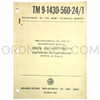
TM 9-1430-560-24/1 AN/TSQ-51 Missile Mentor Air Defense Fire Distribution System Check and Adjustments Manual – March 1967
Item Overview
This March 1967 U.S. Army Technical Manual covers checks and adjustments for the AN/TSQ-51 Air Defense Fire Distribution System, commonly known as Missile Mentor. Identified as TM 9-1430-560-24/1, this specialized maintenance publication supported the electronic equipment used to coordinate Nike Hercules and HAWK guided missile units. It is an original-period reference for the inspection, maintenance, and adjustment of one of the Army’s early solid-state air-defense command systems.
Identification and Features
Important identification and coverage details include:
- Technical manual: TM 9-1430-560-24/1
- Publication date: March 1967
- System designation: AN/TSQ-51
- System name: Missile Mentor
- Official equipment type: Air Defense Fire Distribution System
- Manual subject: System checks and adjustments
- Publication family: TM 9-1430-560 series
- Associated fire units: Nike Hercules and HAWK guided missile systems
- Service: United States Army
- Era: Cold War
Manual Contents and Purpose
TM 9-1430-560-24/1 was intended for maintenance personnel responsible for checking the condition and performance of the AN/TSQ-51. Its check-and-adjustment procedures helped technicians verify system readiness, locate performance that was outside required limits, and make the adjustments needed to return equipment to proper operation. The manual was part of a larger technical-publication family that separately covered operation, system maintenance, computer functions, data-processing consoles, and other major elements of Missile Mentor. This division allowed personnel to use the volume that matched the equipment or maintenance task being performed.
How the System Worked
The AN/TSQ-51 collected radar information from local and remote sources and processed it into a coordinated air-defense picture. Its computers supported target detection, identification, track correlation, threat evaluation, fire-unit monitoring, and target assignment. The operations trailer contained tracking and tactical-display consoles, while the equipment trailer housed equipment used to receive, process, and store data. A separate remote radar integration station extended coverage by supplying processed target tracks from distant radars. Digital data links and voice communications connected Missile Mentor with the missile units assigned to the defended area.
Historical Background
This manual was issued during the early operational period of Missile Mentor. The first AN/TSQ-51 entered service in the Chicago defense area in July 1966, only about eight months before this March 1967 publication. The new system required detailed maintenance instructions because its solid-state electronics, computers, displays, and data links differed greatly from the vacuum-tube equipment used in earlier command centers. TM 9-1430-560-24/1 represents the Army’s effort to standardize the checks and adjustments needed to keep this new generation of air-defense equipment ready for service.
Weapon System History
Missile Mentor was developed to replace older Missile Master command-and-control installations at selected Army air-defense command posts. Missile Master had served since the late 1950s but required large permanent facilities, many personnel, and extensive maintenance. Missile Mentor used second-generation solid-state electronics and computer technology in a smaller modular system. Its operations and equipment trailers could form a mobile air-defense control facility, while equipment could also be removed and installed in a permanent building when used at a fixed site. The system marked an important step between early Cold War radar-control centers and later automated battlefield command networks.
History of Use
The AN/TSQ-51 was used at Army air-defense command posts to coordinate several missile batteries across a defended region. It did not guide an individual missile to its target. Instead, it gathered radar tracks, displayed the current air situation, monitored weapon availability, and assigned threats to the most suitable Nike Hercules or HAWK fire unit. This helped commanders avoid duplicate engagements, reduce the risk of friendly aircraft being targeted, and direct available weapons toward the most important threats. Missile Mentor supported Cold War continental air-defense operations until newer command-and-control systems, including Missile Minder, began replacing the older equipment.
Ideal For
This technical manual is well suited for:
- U.S. Army technical manual collections
- AN/TSQ-51 Missile Mentor research
- Nike Hercules and HAWK missile collections
- Cold War air-defense displays
- Early military computer and radar research
- Museum and equipment-restoration libraries
- Military electronics and communications collections
Approx length 8", Approx width 10", Approx height .25", Approx weight .5lbs.
Pictures are stock images of our inventory. Unless otherwise noted, you will not be receiving the exact item shown in the pictures. The pictures are representative of the item’s general condition. The item you receive might be slightly better, or worse, condition than was shown in the pictures.
Please visit our page about order lead times here: Order Lead Times.