


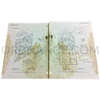

Description
TM 9-1430-250-12P/5/2 Nike-Hercules AN/MPA-5, AN/MPA-6, AN/MPA-6A, and AN/MPA-7 Tracking Station Illustration Supplement - January 1963
Item Overview
This January 1963 Department of the Army technical manual is TM 9-1430-250-12P/5/2. It is an Operator and Organizational Maintenance Repair Parts and Special Tool Lists Illustration Supplement for the trailer-mounted AN/MPA-5, AN/MPA-6, AN/MPA-6A, and AN/MPA-7 Guided Missile Tracking Station Groups. These tracking stations were part of the Radar Course Directing Central used with the Nike-Hercules Air Defense Guided Missile System.
Identification and Features
TM 9-1430-250-12P/5/2 was prepared as an illustrated military maintenance and supply reference. It helped operators, organizational maintenance personnel, and supply personnel identify the assemblies, repair parts, and special tools associated with the covered tracking stations. The manual is specific to Nike-Hercules tracking equipment and should not be confused with a general missile operator’s manual or a complete manual for the entire radar system.
- Manual Number: TM 9-1430-250-12P/5/2
- Publication Date: January 1963
- Publication Type: Operator and Organizational Maintenance Repair Parts and Special Tool Lists Illustration Supplement
- Equipment Covered: AN/MPA-5, AN/MPA-6, AN/MPA-6A, and AN/MPA-7
- Equipment Type: Guided Missile Tracking Station Groups, Trailer Mounted
- Major Assembly: Radar Course Directing Central
- Parent System: Nike-Hercules Air Defense Guided Missile System
- Primary Purpose: Illustrated identification of supported assemblies, repair parts, and special tools
What This Manual Covers
This manual covers the illustrated repair-parts information for the AN/MPA series of trailer-mounted tracking stations. These stations contained the controls, indicators, radar coding equipment, power equipment, and supporting components used by the target- and missile-tracking personnel. As the illustration supplement in the publication series, the manual supported visual identification of equipment and parts referenced by the related maintenance and supply information. It would have been used when inspecting equipment, locating an assembly, identifying a required replacement part, or confirming the relationship between components.
The Nike-Hercules Air Defense Guided Missile System
The Nike-Hercules was developed during the 1950s as a more powerful successor to the Nike-Ajax surface-to-air missile. Development of the system began as the Army sought a missile capable of engaging faster aircraft at greater ranges and altitudes. Nike-Hercules used solid-propellant booster and sustainer motors and could carry either a conventional high-explosive warhead or a nuclear warhead. It entered U.S. service on June 30, 1958, with batteries near New York, Philadelphia, and Chicago. Many Nike-Ajax installations were modified to accept the larger missile and its updated radar equipment.
How the Tracking System Worked
The Nike-Hercules system used command guidance based on information from several radars and an electronic computer. An acquisition radar first detected and designated a possible target. The target-tracking radar then followed the selected aircraft and continuously measured its azimuth, elevation, and range. A separate missile-tracking radar followed the launched missile and supplied its position to the Radar Course Directing Central computer. The computer compared the target and missile positions, calculated the required flight path, and produced steering commands. These commands were transmitted to the missile through the missile-tracking radar. The AN/MPA tracking station housed the consoles and supporting equipment used by the personnel responsible for these tracking operations.
History of Use
The United States Army eventually deployed 145 Nike-Hercules batteries, including 110 converted Nike-Ajax sites and 35 installations built specifically for the newer missile. These batteries protected major cities, industrial centers, military installations, and Strategic Air Command bases during the Cold War. The Army began introducing Improved Hercules equipment at selected batteries in 1961, making this January 1963 manual a period reference from the system’s active development and deployment years. Most Nike-Hercules sites in the continental United States closed by the middle of the 1970s. The Alaskan sites remained active until 1978, while the remaining Florida sites stood down in 1979. Allied nations continued operating and training with Nike-Hercules equipment into the early 1990s.
Historical Significance
This manual documents the maintenance and supply system behind one of the United States Army’s most important Cold War air-defense weapons. While the Nike-Hercules missile is the most recognizable part of the system, it depended on a large network of radars, computers, tracking stations, cables, power equipment, and trained personnel. Publications such as TM 9-1430-250-12P/5/2 helped keep that equipment organized and serviceable. The manual is now a valuable reference for studying surviving Nike missile sites, restoring radar equipment, identifying original components, and understanding the technical work performed by Nike-Hercules crews.
Condition
This listing is for the January 1963 technical manual only. Please check the pictures for the general condition of the item. No tracking-station equipment, radar components, trailers, missiles, loose repair parts, or additional publications are included unless specifically shown and stated.
Ideal For
This original military publication is a useful technical and historical reference for collectors, researchers, museums, veterans, and restoration projects connected with the Nike-Hercules missile system.
- U.S. military technical manual collections
- Nike-Hercules and Project Nike historians
- Cold War air-defense museum displays
- AN/MPA tracking-station restoration projects
- Military radar and electronics research
- Veteran and unit-history displays
- Identification of original Nike-Hercules parts and assemblies
Approx length 8", Approx width 10", Approx height .75", Approx weight 1lbs.
Pictures are stock images of our inventory. Unless otherwise noted, you will not be receiving the exact item shown in the pictures. The pictures are representative of the item’s general condition. The item you receive might be slightly better, or worse, condition than was shown in the pictures.
Please visit our page about order lead times here: Order Lead Times.