



Description
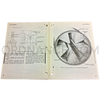
U.S. Army Technical Manual TM 9-1410-206-35 for Nike-Hercules and Improved Nike-Hercules Ammunition Items, April 1963
Item Overview
This official U.S. Army technical manual covers intercept-aerial guided missile ammunition items used with the Nike-Hercules and Improved Nike-Hercules Air Defense Guided Missile Systems. Published as TM 9-1410-206-35 in April 1963, it was prepared for direct support, general support, and depot maintenance personnel responsible for keeping these specialized missile components serviceable. This copy has the updated pages from Changes 1 through 4 placed in their proper locations within the manual. The integrated changes make this an updated working copy rather than an original 1963 issue accompanied by separate change sheets. This listing is for the technical manual only. It does not include a missile, warhead, explosive, rocket motor, launcher, radar, guidance set, test equipment, tools, or other Nike system components.
Identification and Features
The “35” suffix identifies this as a higher-level maintenance manual covering work beyond routine operator and organizational care. The manual focuses on ammunition items associated with the Nike-Hercules missile rather than the complete radar, guidance, launching, or battery-control systems. Publications at this level supported trained personnel performing technical identification, inspection, troubleshooting, disassembly, repair, reassembly, adjustment, testing, preservation, and related maintenance tasks. Diagrams, component views, technical descriptions, and maintenance data helped specialists understand how ammunition sections were constructed and how they connected with other parts of the missile. Because the revised pages from Changes 1 through 4 are already integrated, the manual also records updates made as the Army improved its maintenance practices and supported later Nike-Hercules configurations.
- Manual number: TM 9-1410-206-35
- Publication date: April 1963
- Official subject: Intercept-Aerial Guided Missile Ammunition Items
- System application: Nike-Hercules and Improved Nike-Hercules
- Missile family: MIM-14 Nike Hercules
- Equipment category: Air-defense guided missile ammunition items
- Maintenance level: Direct support, general support, and depot maintenance
- Change status: Updated pages from Changes 1 through 4 integrated
- Primary users: Trained Army missile and ordnance maintenance personnel
- Issuing authority: Headquarters, Department of the Army
- Country of origin: United States
- Item included: Technical manual only
Historical Background
The Nike program began after World War II as the United States searched for a guided weapon that could defend cities and military sites from fast, high-flying bombers. Nike Ajax became the first operational member of the family, but its range, altitude, and warhead capacity were limited. The Army developed Nike Hercules as a larger and more powerful successor. First deployed in 1958, the Hercules used solid-propellant rocket motors and ground-based command guidance. Acquisition radar searched for approaching aircraft, tracking radar followed the target, and a separate radar tracked the missile while a ground computer calculated the intercept course. Nike Hercules could carry conventional or nuclear warhead sections, allowing one system to engage individual aircraft or larger bomber formations. Many Hercules batteries were installed at converted Nike Ajax sites, while new positions protected major cities, industrial regions, Strategic Air Command bases, Alaska, Hawaii, and other important areas. Improved Nike Hercules added better acquisition and tracking equipment, stronger resistance to electronic countermeasures, and a limited anti-tactical ballistic-missile capability. In June 1960, a Nike Hercules struck a Corporal ballistic missile over White Sands Missile Range, marking the first successful destruction of a ballistic missile by another missile. The Army began placing Improved Hercules equipment with selected batteries in 1961. This April 1963 manual was issued during that transition, when both the original and improved systems required reliable ammunition maintenance support. Nike crews remained on alert around the clock throughout much of the Cold War, making careful inspection, storage, handling, and maintenance of missile ammunition sections essential. Most continental U.S. sites closed in 1974, while Alaska remained active until 1978 and the last Florida sites stood down in 1979. The system also served for many years with allied nations, giving this manual value beyond its original Army maintenance role.
Condition
This vintage military technical manual may show cover wear, edge wear, folds, creases, yellowing, stains, writing, military stamps, punched holes, page repairs, loose pages, or other signs of age, handling, and storage. Because Changes 1 through 4 have been integrated, some replacement pages may have later dates, different paper, or printing that varies from the original April 1963 pages. These differences are normal for an updated military working manual and help document its service history. Binding style, markings, printing details, completeness, and overall condition may vary between available copies.
Ideal For
TM 9-1410-206-35 is a specialized reference for collectors, museums, restorers, and historians studying the Nike missile program. Its focus on ammunition items provides information that may not appear in general system or operator manuals. The integrated change pages also make it useful for comparing the original Nike-Hercules system with later Improved Nike-Hercules equipment and maintenance practices.
- U.S. Army technical-manual collections
- Nike-Hercules and MIM-14 research
- Cold War air-defense exhibits
- Guided-missile ammunition research
- Nike missile-site restoration projects
- Army ordnance and maintenance-history collections
- Museum, library, and archival collections
- Military radar and missile-system displays
Approx length 8", Approx width 10", Approx height .5", Approx weight 1lbs.
Pictures are stock images of our inventory. Unless otherwise noted, you will not be receiving the exact item shown in the pictures. The pictures are representative of the item’s general condition. The item you receive might be slightly better, or worse, condition than was shown in the pictures.
Please visit our page about order lead times here: Order Lead Times.