


Description
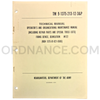
U.S. Army Technical Manual TM 9-1375-213-12-3&P for M122 Demolition Firing Device, November 1981
Item Overview
This U.S. Army technical manual covers the M122 Demolition Firing Device, NSN 1375-01-021-0606. The base manual was issued on November 25, 1981 and this copy has the June 1982 Change 1 update integrated. It provides operator and organizational maintenance instructions, along with repair-parts and special-tools information. This listing is for the technical manual only. It does not include an M122 firing device, transmitter, receiver, carrying case, batteries, blasting caps, explosives, or other equipment.
Publication Details
This publication was prepared for military personnel responsible for operating, inspecting, maintaining, storing, and accounting for the M122 system.
- Manual number: TM 9-1375-213-12-3&P
- Base publication date: November 25, 1981
- Integrated update: Change 1, June 1982
- Subject: M122 Demolition Firing Device
- National Stock Number: 1375-01-021-0606
- Equipment Identification Code: 2NA
- Manual level: Operator and organizational maintenance
- Additional coverage: Repair parts and special tools list
- Air Force publication number: TO 11A20-15-1
- Issuing authority: Headquarters, Department of the Army
- Country of origin: United States
- Item included: Technical manual only
Manual Coverage
The manual explains the M122 system’s identification, components, controls, operating principles, precautions, inspection, testing, troubleshooting, care, and maintenance. It includes coverage of the transmitter, receivers, antennas, batteries, carrying case, electrical connections, and approved test equipment. Illustrated parts information helps identify serviceable components and authorized replacement parts.
About the M122 Demolition Firing Device
The M122 was a reusable radio-controlled system designed to initiate prepared demolitions from a remote location. The device itself contained no explosives. A handheld transmitter sent a coded radio signal to a selected receiver placed near the demolition site. The receiver then supplied electrical power to an attached firing circuit. This arrangement allowed trained personnel to control demolitions without running a firing wire all the way back to the operator’s position.
System Components and Capabilities
A complete M122 set was issued in a fitted carrying case with one transmitter and ten receivers. The transmitter was identified as P/N 9252773, while the receiver was P/N 9279048. Each receiver had an individual code, and the transmitter could be set to more than one million possible code combinations. The manual lists a nominal operating distance of at least 1,000 meters, although terrain, vegetation, weather, and line of sight could affect performance. The olive-drab units carried white identification markings.
System History
The M122 appeared during the late Cold War, when solid-state electronics were changing military communications and demolition equipment. Earlier electrical demolition systems often depended on long firing wires between the charge and the operator. The M122 used coded radio control to provide greater separation and more flexible placement. Language in the 1981 manual concerning initial deployment and malfunction reporting places this publication near the system’s early service period. The June 1982 change updated the original instructions as field experience and maintenance information became available.
History of Use
The M122 was intended for combat-engineer and military demolition missions where charges needed to be controlled from a protected location. Possible missions included obstacle construction, route denial, bridge or structure demolition, and other prepared demolition work. Its ten separately coded receivers allowed one transmitter to control several firing points individually. The reusable equipment could also be inspected, tested, and maintained during training without containing explosive material. Military publications continued to document the M122 for many years, although no specific combat use is claimed for this individual manual.
Collector and Research Value
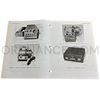
TM 9-1375-213-12-3&P is a valuable reference for studying Cold War combat engineering, radio-controlled firing systems, military electronics, and Army maintenance practices. The integrated Change 1 material makes this copy useful for researchers seeking the June 1982 configuration of the publication. Its diagrams of the transmitter, receivers, carrying case, and controls also support museum displays and equipment identification.
Condition
This vintage military technical manual may show cover wear, edge wear, folds, yellowing, stains, writing, stamps, punched holes, loose pages, or other signs of age and storage. Printing details and condition may vary between available copies.
Ideal For
This manual is well suited for military collections, historical research, equipment identification, and displays related to combat-engineer demolition equipment.
- U.S. Army technical-manual collections
- M122 firing-device research
- Cold War military-electronics displays
- Combat-engineer equipment exhibits
- Military demolition-system research
- Museum and archival collections
Approx length 8", Approx width 11", Approx height .25", Approx weight 1lbs.
Pictures are stock images of our inventory. Unless otherwise noted, you will not be receiving the exact item shown in the pictures. The pictures are representative of the item’s general condition. The item you receive might be slightly better, or worse, condition than was shown in the pictures.
Please visit our page about order lead times here: Order Lead Times.