




Description
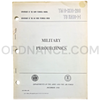
U.S. Army and Air Force Technical Manual TM 9-1370-200, Military Pyrotechnics, December 1958
This military technical manual documents the flares, signals, photoflash cartridges, and training devices used by American forces during the early Cold War. It explains their identification, general characteristics, and service roles through text and illustrations. This listing is for the technical manual only. No pyrotechnics, ammunition, or equipment are included.
Publication Details
The Army and Air Force issued this shared reference under separate publication numbers.
- Army manual number: TM 9-1370-200
- Air Force publication number: TO 11A10-1-1
- Title: Military Pyrotechnics
- Publication date: December 29, 1958
- Issuing authorities: Departments of the Army and the Air Force
- Publication type: General and technical reference
- Country of origin: United States
Manual Coverage
The manual describes several families of military pyrotechnics, including their markings, packaging, and identifying features. It also addresses care, handling precautions, and preservation. Drawings and comparative illustrations help readers recognize the equipment discussed.
- Photoflash cartridges for aerial photography
- Aircraft and surface flares for illumination
- Aircraft, ground, and marine signals
- Training simulators that reproduce battlefield sounds and flashes
- Miscellaneous items, including guided-missile tracking tracers and ramjet engine igniters
Publication History
This edition replaced TM 9-1981, dated January 29, 1951. Its expanded coverage records changes in military equipment during the 1950s. Newly included subjects featured M123-series photoflash cartridges, M125 through M130 handheld ground signals, and M138 and M139 aircraft parachute flares. Coverage of missile tracers and engine igniters also reflects the growing importance of guided weapons and jet technology.
History of Military Pyrotechnics
Military pyrotechnics form a broad group of devices that produce light, smoke, or sound. By World War II, dedicated Army manuals covered their use in visual communication, night observation, and aviation support. These devices remained useful as radios and other electronic equipment improved. The 1958 publication captures this mix of established signaling methods and newer Cold War applications.
History of Use
Ground troops used visual signals to communicate with nearby units and aircraft. Aviation units used flares for illumination and photoflash devices for night photography. Marine signals supported distress signaling and rescue work. Training simulators gave exercises the sounds and flashes associated with service weapons. These varied roles explain why one manual covered equipment used on land, in the air, and at sea.
Collector and Research Value
This reference offers a detailed record of military equipment that is often overlooked in broader weapons histories. Its period names, markings, and illustrations are useful for identifying inert display pieces and interpreting older supply records. Collectors can also compare it with earlier editions to study changes in equipment and military terminology.
Ideal For
This publication supports several collecting, research, and display interests.
- U.S. Army and Air Force technical-manual collections
- 1950s and Cold War military research
- Military flare and signal history
- Aviation photography and rescue-equipment studies
- Inert ordnance identification and displays
- Museum and archival collections
Approx length 8", Approx width 11", Approx height .5", Approx weight 1lbs.
Pictures are stock images of our inventory. Unless otherwise noted, you will not be receiving the exact item shown in the pictures. The pictures are representative of the item’s general condition. The item you receive might be slightly better, or worse, condition than was shown in the pictures.
Please visit our page about order lead times here: Order Lead Times.