



Description
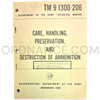
U.S. Army Technical Manual TM 9-1300-206 for Care, Handling, Preservation, and Destruction of Ammunition, November 1964
Item Overview
This official U.S. Army technical manual provides general guidance for the care, handling, preservation, and destruction of ammunition. Issued as TM 9-1300-206 in November 1964, this copy is an official reprint that includes current pages from Changes 1 through 6. This listing is for the technical manual only. It does not include ammunition, explosives, weapons, tools, containers, or other equipment.
Publication Details
This consolidated reprint placed the base publication and its updated pages into one working reference. Unlike a separate change packet, it was prepared for use as a complete manual with Changes 1 through 6 already incorporated.
- Manual number: TM 9-1300-206
- Publication date: November 1964
- Subject: Care, Handling, Preservation, and Destruction of Ammunition
- Edition: Official reprint
- Changes incorporated: Changes 1 through 6
- Manual type: General ammunition safety and support reference
- Issuing authority: Headquarters, Department of the Army
- Country of origin: United States
- Item included: Technical manual only
Manual Coverage
TM 9-1300-206 supplied common procedures and precautions that could be used with more specialized ammunition publications. Its guidance addressed the safe movement, storage, protection, inspection, segregation, and disposal of conventional ammunition and explosives.
- General ammunition care and handling
- Protection from moisture, corrosion, heat, impact, and rough handling
- Preservation of serviceable ammunition and packaging
- Sorting and segregation of damaged or unserviceable material
- Shipping and movement precautions
- Storage and magazine safety practices
- Fire-prevention and hazard-control guidance
- Authorized destruction of limited quantities of unserviceable, unsalvageable, or hazardous ammunition
- Emergency destruction when ammunition could not be evacuated
Purpose of the Official Reprint
Army technical manuals were often revised by issuing replacement pages through numbered changes. This official reprint incorporates the pages from Changes 1 through 6 that were current when the reprint was prepared. It allowed personnel to consult one updated copy instead of comparing the November 1964 manual with several separate change packets.
Ammunition-System History
This manual was not written for one weapon or ammunition model. It supported the larger Army ammunition system that supplied conventional rounds and explosive material for small arms, automatic weapons, artillery, mortars, recoilless rifles, rockets, grenades, mines, demolition work, and pyrotechnic equipment. Item-specific manuals described individual cartridges or weapons, while TM 9-1300-206 provided the shared safety and preservation rules needed across those categories.
Historical Background
The November 1964 publication date places this manual during the Cold War and at the beginning of increased American involvement in Vietnam. The Army was maintaining large stocks of ammunition left from World War II and Korea while also adopting new weapons and munitions. Standard instructions helped reduce accidents, protect supplies from damage, and keep ammunition serviceable during storage and movement in different climates.
History of Use
TM 9-1300-206 was intended for ammunition specialists, ordnance personnel, supply units, storage personnel, transport crews, commanders, and other trained soldiers who worked with conventional ammunition. Copies could be used at ammunition supply points, storage depots, maintenance facilities, training ranges, and field installations. The manual also served as a supporting reference when an item-specific publication directed personnel to follow its general handling, preservation, or destruction guidance.
Collector and Research Value
This official reprint documents Army ammunition-safety practices during an important period of military expansion. Its incorporated changes make it useful for studying how technical guidance was revised and distributed before digital publications. It is a strong reference for historians researching Cold War logistics, Vietnam-era ammunition operations, ordnance safety, military storage, and the management of damaged or unserviceable munitions.
Condition
This vintage military technical manual may show cover wear, edge wear, folds, yellowing, stains, writing, stamps, punched holes, loose pages, or other signs of age and storage. Printing details and condition may vary between available copies. Please check the pictures for the general condition of the item.
Ideal For
This manual is well suited for collections, research projects, restoration references, and historical displays related to military ammunition and ordnance support.
- U.S. Army technical-manual collections
- Cold War and Vietnam War research
- Military ammunition and explosives studies
- Ordnance-safety and logistics displays
- Ammunition storage and preservation research
- Museum and archival collections
- Military training and reference libraries
Approx length 8", Approx width 10", Approx height .6", Approx weight 1lbs.
Pictures are stock images of our inventory. Unless otherwise noted, you will not be receiving the exact item shown in the pictures. The pictures are representative of the item’s general condition. The item you receive might be slightly better, or worse, condition than was shown in the pictures.
Please visit our page about order lead times here: Order Lead Times.