



Description
Technical Manual (TM 9-1005-208-12P) for .30cal M1918A2 Browning Automatic Rifle "BAR" January 1964 FSN 1005-674-1309
Own a strong piece of U.S. military small-arms documentation with this Technical Manual TM 9-1005-208-12P for the Rifle, Caliber .30, Automatic, Browning, M1918A2, better known as the BAR. Dated January 1964, this manual covers operator and organizational maintenance repair parts and special tool lists for one of the most legendary American automatic rifles of the 20th century. National Park Service archive records identify this exact manual as TM 9-1005-208-12P, a Department of the Army technical manual for the Rifle, Caliber .30, Automatic, Browning, M1918A2, dated January 1964.
This manual is tied to FSN 1005-674-1309 and belongs to the official Army support-documentation trail for the M1918A2 BAR. A later 1969 Army manual for the same weapon lists the stock number 1005-674-1309 and notes that it superseded TM 9-1005-208-12P, dated January 28, 1964, in its entirety.
Historical Significance
The Browning Automatic Rifle is one of the great names in U.S. military small-arms history. Designed by John Moses Browning, the BAR was adopted by the U.S. Army in May 1918 and introduced to American front-line units later that year as the M1918. It gave U.S. troops a powerful automatic rifle during the final campaigns of World War I.
The M1918A2 version is the BAR configuration most collectors associate with World War II, Korea, and later service. The Army Historical Foundation notes that the M1918A2 was adopted in 1940 and changed the original BAR concept into a full-automatic-only weapon with two selectable rates of fire. It also added features such as a bipod, flash suppressor, and hinged buttplate.
That makes this January 1964 parts and special tools manual especially interesting. It shows that the Army was still maintaining formal documentation for the M1918A2 decades after the BAR’s World War I debut and long after its World War II fame.
The M1918A2 BAR
The M1918A2 Browning Automatic Rifle has serious collector appeal. It served across multiple eras and became one of the most recognizable U.S. automatic weapons ever issued.
The BAR saw service in World War I, World War II, Korea, and Vietnam, giving it a service history few small arms can match. For collectors, that long timeline is the cool factor. This manual connects to a weapon that spans trench warfare, World War II infantry squads, Korean War combat, and Cold War-era reserve and support documentation.
What This Manual Covers
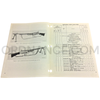
As a 12P technical manual, this publication focuses on repair parts and special tools for operator and organizational maintenance support. It is especially valuable for collectors who want the parts-list side of the BAR’s official Army documentation.
This manual is especially relevant for:
- M1918A2 BAR repair-parts research
- Browning Automatic Rifle technical manual collections
- FSN 1005-674-1309 documentation
- World War II and Korean War small-arms displays
- Cold War-era Army ordnance manual libraries
- organizational maintenance reference collections
- museum and archival small-arms documentation
- collectors completing a BAR manual set
Key Features
- Technical Manual TM 9-1005-208-12P
- Covers the .30 Cal M1918A2 Browning Automatic Rifle
- Dated January 1964
- Listed with FSN 1005-674-1309
- Department of the Army technical manual
- Operator and organizational maintenance repair-parts subject
- Includes special tools list subject matter
- Directly tied to the legendary BAR
- Strong World War II, Korean War, Vietnam-era, and Cold War small-arms collector appeal
- Excellent reference for BAR collectors, museums, historians, and technical manual libraries
Why This Collectible Stands Out
The BAR is one of those weapons every serious U.S. small-arms collector recognizes. It has battlefield history, Browning design pedigree, and a reputation that crosses several generations of U.S. service.
This manual stands out because it is not just a general history booklet. It is part of the Army’s official maintenance and parts documentation for the M1918A2. That makes it a strong companion piece for BAR displays, .30-06 small-arms collections, World War II infantry exhibits, Korean War displays, and Cold War technical manual libraries.
For collectors, the 1964 date adds another layer of interest. It shows the BAR’s continued relevance in Army paperwork well after newer infantry weapons had taken center stage.
About This Manual
This listing is for Technical Manual TM 9-1005-208-12P, covering the Rifle, Caliber .30, Automatic, Browning, M1918A2 “BAR”, dated January 1964, with FSN 1005-674-1309.
This listing is for the manual only unless otherwise stated. No rifle, firearm, receiver, barrel, magazine, ammunition, sling, bipod, tools, repair parts, storage case, or additional accessories are included unless specifically shown or noted.
Ideal For
This manual is a strong fit for:
- M1918A2 BAR collectors
- U.S. Army technical manual collections
- World War II and Korean War small-arms displays
- Vietnam-era military paperwork collections
- Browning firearms reference libraries
- .30 caliber ordnance collectors
- museum and archival reference collections
- collectors completing a BAR technical manual set
- serious U.S. military small-arms historians
Approx length 10", Approx width 8", Approx height .2", Approx weight .5lbs.
Pictures are stock images of our inventory. Unless otherwise noted, you will not be receiving the exact item shown in the pictures. The pictures are representative of the item's general condition. The item you receive might be slightly better, or worse, condition than was shown in the pictures.
Please visit our page about order lead times here: Order Lead Times