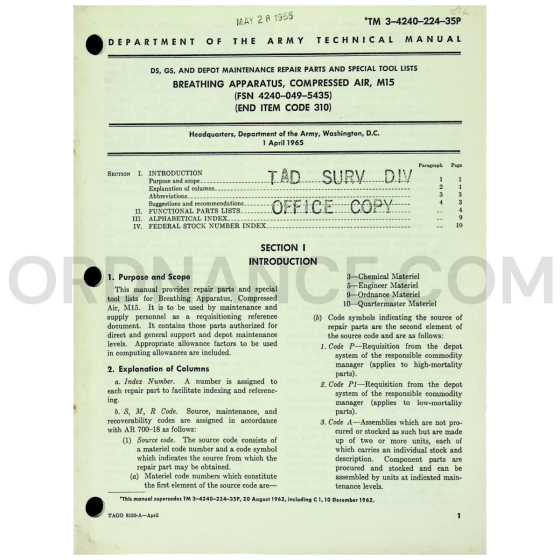
Technical Manual (TM 3-4240-224-35P) M15 Breathing Apparatus
$50.00
In stock
SKU
Technical Manual (TM 3-4240-224-35P) for M15 Breathing Apparatus

This Technical Manual TM 3-4240-224-35P covers the M15 Compressed Air Breathing Apparatus, identified under FSN 4240-049-5435, and is dated April 1965. For collectors of U.S. Army technical manuals, Chemical Corps material, Cold War protective equipment, and military support-system literature, this is a strong period reference tied to a specialized and less commonly encountered piece of Army respiratory protection equipment.
Because this is a -35P technical manual, it belongs to the repair parts and special tools side of Army documentation rather than simple operator use. Manuals in this category were intended to help identify assemblies, components, replacement parts, and the special tools required to keep equipment serviceable. That gives this publication a more technical and workshop-oriented value than a basic field-use manual and makes it especially useful for collectors, researchers, and restorers who want detailed service-era documentation.
The M15 Compressed Air Breathing Apparatus
The M15 belongs to the broader family of U.S. military compressed-air breathing and protective-support equipment. As identified by its nomenclature, it was a compressed air breathing apparatus, placing it squarely in the support side of Army chemical-defense and hazardous-environment operations rather than in the category of conventional weapons or vehicles.
Equipment of this type was associated with the need to provide breathable air in environments where normal ambient air could not be relied upon. In military terms, that makes it relevant to the broader history of Chemical Corps equipment, protective systems, and specialized support gear used in hazardous atmospheres.
For collectors, that makes this manual especially interesting because it documents the technical side of Cold War protective equipment rather than more commonly seen combat hardware. It is a useful example of the Army’s broader readiness infrastructure during the chemical-defense era.
What This Manual Covers
As a -35P technical manual, TM 3-4240-224-35P would have been intended to support parts identification and maintenance support functions for the M15 Compressed Air Breathing Apparatus.
In practical terms, a manual like this is especially relevant for:
That makes it valuable not only as a collectible, but also as a practical reference for anyone studying how the Army supported specialized respiratory-protection equipment during the Cold War period.
Historical Significance
The date April 1965 places this publication squarely in the Cold War period, when the U.S. military maintained extensive technical literature covering chemical defense, respiratory protection, filtration, decontamination, and protected-environment support systems. Manuals like this reflect a period when Army documentation extended far beyond weapons and vehicles to include the equipment required to help personnel remain operational in hazardous conditions.
For collectors and historians, this manual is especially relevant to subjects such as:
Because it covers a specialized breathing apparatus rather than a more common vehicle or weapon system, it also adds variety to collections that already include standard ordnance or maintenance manuals.
About This Manual
This listing is for Technical Manual TM 3-4240-224-35P for the M15 Compressed Air Breathing Apparatus, identified under FSN 4240-049-5435 and dated April 1965.
It is especially well suited for:
Because manuals were working documents, surviving examples are valued not only for their content, but also for their connection to real military maintenance and support practice.
Why This Manual Matters
Many military manuals focus on weapons, vehicles, or combat systems. This one documents the support side of military readiness, specifically respiratory-protection equipment intended for hazardous environments. That makes it especially useful for collectors who want to preserve the broader technical and logistical picture of Army Cold War preparedness rather than only front-line hardware.
For collectors, it is a solid stand-alone Cold War technical manual with a specialized subject focus. For researchers, it offers a useful reference point for Army respiratory-protection documentation, parts support, and maintenance practice. For museums, it helps explain the behind-the-scenes systems that supported personnel operating in contaminated or hazardous conditions.
Ideal For
This manual is a strong fit for:
Approx length 10", Approx width 8", Approx height .2", Approx weight .2lbs.
Pictures are stock images of our inventory. Unless otherwise noted, you will not be receiving the exact item shown in the pictures. The pictures are representative of the item's general condition. The item you receive might be slightly better, or worse, condition than was shown in the pictures.
Please visit our page about order lead times here: Order Lead Times