




Description
WWII U.S. Navy NAF 1174-1 TBM-3 Avenger Bombardier’s Handheld Bomb-Release Firing Key — Cutler-Hammer
Item Overview
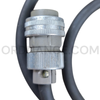
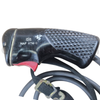
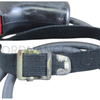
This U.S. Navy NAF 1174-1 handheld trigger switch was used aboard the TBM-3 Avenger as the bombardier’s electrical bomb-release firing key. The bombardier held the switch during a bombing run and pressed its trigger to activate the aircraft’s bomb-release circuit. This example retains its fabric hand strap, electrical cord, and two-pin connector.
Identification and Features
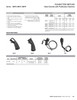
The C-H logo identifies Cutler-Hammer as the manufacturer. Cutler-Hammer catalog number 8897K1 corresponds to U.S. Navy government drawing NAF 1174-1. Eaton’s later aerospace catalog identifies it as the hand-strap version of a normally open, single-pole, momentary trigger switch.
- Government drawing number: NAF 1174-1
- Manufacturer: Cutler-Hammer
- Manufacturer catalog number: 8897K1
- Later company catalog: Eaton Aerospace
- NSN: 5930-00-243-4496
- Official federal name: Switch, Trigger
- Switch type: Normally open, single-pole, single-throw
- Operation: Momentary contact; OFF normally and ON when depressed
- 28-volt DC rating: 40 amps resistive, 35 amps inductive, or 5 amps lamp load
- Aircraft application: Eastern Aircraft Division TBM-3 Avenger
- Crew application: Bombardier’s handheld firing key
- Included features: Fabric hand strap, cord, and two-pin connector
How the Firing Key Worked
The firing key’s long cord allowed the bombardier to hold it while aiming and conducting a bombing run. Pulling the trigger closed the electrical contact and sent a release signal into the aircraft’s bombing system. The key could also activate the intervalometer, which controlled the spacing between bombs released in a train. When the key was not needed, it was returned to a retaining clip above the bombardier’s electrical panel.
Aircraft and Control Application
The 1945 TBM-3 pilot’s handbook states that bombs could be released electrically by either the pilot or bombardier. However, only the pilot could release the torpedo or smoke tank. The bombardier’s NAF 1174-1 handheld key was therefore a bomb-release control and should not be described as a torpedo-drop trigger. The aircraft’s emergency manual bomb release was operated by a different handle and was not part of this switch assembly.
Historical Background
The Avenger was developed as a replacement for the Douglas TBD Devastator and entered combat during 1942. Grumman-built aircraft carried the TBF designation, while Avengers made by the Eastern Aircraft Division of General Motors were designated TBM. The improved TBM-3 became an important late-World War II version and served in bombing, torpedo, patrol, and anti-submarine missions. The bombardier’s firing key formed a small but important part of the electrical system that allowed bombs to be released at the selected time and spacing.
Configuration Details
The opening near the cap is part of this single-trigger NAF 1174-1 configuration and should not automatically be treated as evidence of a missing switch. The similar NAF 1173-2 grip used an additional auxiliary switch in the cap. The NAF 1174-1 instead used the hand strap shown in the Eaton catalog, allowing the operator to hold the key securely while performing other duties.
Condition
This is a military-surplus aircraft electrical component that may show scratches, finish wear, discoloration, oxidation, fraying, stiff wiring, connector wear, or other signs of age and storage. The condition of the fabric strap, cord, connector, markings, and trigger mechanism may vary. No claim is made that the switch remains electrically serviceable. Please check the pictures for the general condition of the item.
Ideal For
This uncommon firing key is well suited for collections and exhibits covering the TBM Avenger, World War II naval aviation, aircraft bombing systems, and historic Cutler-Hammer controls.
- TBM-3 Avenger restoration projects
- World War II naval-aviation collections
- Aircraft bomb-release system displays
- Cutler-Hammer switch collections
- Bombardier equipment exhibits
- Military museums and educational displays
Approx length 6", Approx width 2", Approx height 1.5", Approx weight 0.8lbs.
Pictures are stock images of our inventory. Unless otherwise noted, you will not be receiving the exact item shown in the pictures. The pictures are representative of the item’s general condition. The item you receive might be slightly better, or worse, condition than was shown in the pictures.
Please visit our page about order lead times here: Order Lead Times.