




Description
Mk57 / B57 Nuclear Bomb Bakelite N57-1 Radar-Nose Tip
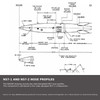
This inert Cold War component is the forward radar-nose tip or radome used with the N57-1 nose section of the Mk57/B57 nuclear bomb. This is an extremely rare nuclear ordnance collectible item to find in private hands.
Identification and Features
Weapon family: U.S. Mk57/B57 nuclear bomb.
Attributed nose configuration: N57-1 radar nose.
Component type: Removable forward nose tip or radome.
Documented material match: Epoxy-resin-impregnated fiberglass with a black neoprene protective coating.
Compatible basic assemblies: B57 Mod 1 and B57 Mod 2.
Status: Inert historical component with no explosive or nuclear material.
Function
The N57-1 nose section contained dual-channel fuzing radars, antennas, and power supplies for airburst operation. This forward tip formed an aerodynamic and weather-resistant cover over the radar equipment. Sandia documentation describes the N57-1 tip as epoxy-resin fiberglass coated with neoprene. The rubberized coating helped protect the composite shell from rain erosion during high-speed aircraft carriage and delivery.
Documented End-Item Application
The B57 system joined either a B57-1 or B57-2 basic assembly with an N57-0, N57-1, or N57-2 nose section. These modular nose sections allowed the weapon to be arranged for different missions. The radar-equipped N57-1 was developed mainly for airburst delivery, but the complete nose section could also support parachute-retarded laydown and underwater depth-bomb missions. The component offered here represents the small outer tip of that larger nose assembly.
Component History
Development of the radar-equipped Mk57 nose continued during the early 1960s, and the radar-nose design was released in September 1962. Its composite shell had to protect sensitive electronics while remaining light enough for a compact tactical weapon. The black neoprene coating was part of this protective design. Separate N57 nose sections could be fitted to the B57 Mod 1 and Mod 2 basic assemblies, making the weapon adaptable without changing its main center section.
N57-1 Nose-System History
The N57-1 was the B57 family’s radar-fuzing nose. Its dual radar channels supported an airburst function, while other controls in the complete weapon supported additional delivery modes. The nose also included features for underwater use when the B57 was assigned to anti-submarine warfare. This multi-mission design reflects the compact radar and fuzing technology developed for American nuclear weapons during the early Cold War.
B57 Weapon-System Background
The B57 began with separate military requests made in 1957 and 1958 for a lightweight nuclear depth charge and a low-yield tactical bomb. The combined program received the TX-57 designation in 1959, and development followed in 1960. The first Mk57 design was released in December 1961, and early production began in January 1963. About 3,100 weapons were produced through May 1967. A complete B57 measured about 9 feet 10 inches long, had a diameter of 14.75 inches, weighed about 500 pounds, and was produced with yields from approximately 5 to 20 kilotons.
History of Use
The B57 served as a compact tactical strike weapon and an air-dropped nuclear depth bomb during the Cold War. Fixed-wing aircraft and helicopters could carry it, giving the system roles against both land targets and submarines. Available delivery methods included free-fall airburst, parachute-retarded airburst, delayed laydown, and underwater depth-bomb operation. The underwater version was associated with the nickname “Little Lulu.” The B57 remained in the U.S. inventory for decades but was never used in combat. Mod 1 weapons had been retired by April 1992, and the last Mod 2 weapons were retired by June 1993.
Condition
The pictured example retains its rounded profile and black rubberized exterior. The surface shows age, scuffs, handling marks, and heavier abrasion near the lower edge. These signs of storage and service history add character to the piece. This item is sold only as an inert military collectible.
Ideal For
This attributed N57-1 radar-nose tip is well suited for Cold War collections, military museums, nuclear-weapons history displays, aviation exhibits, radar and fuzing technology studies, restoration projects, and advanced inert-ordnance collections.
Approx length 7", Approx width 6", Approx height 6", Approx weight 0.5lbs.
Pictures are stock images of our inventory. Unless otherwise noted, you will not be receiving the exact item shown in the pictures. The pictures are representative of the item’s general condition. The item you receive might be slightly better, or worse, condition than was shown in the pictures.
Please visit our page about order lead times here: Order Lead Times.