





Description
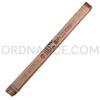
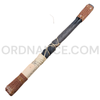
WWII U.S. Navy Life Raft Radar Corner Reflector Target MX-138/A
The WWII U.S. Navy Life Raft Radar Corner Reflector Target MX-138/A is a passive radar-rescue device developed for multi-person Navy aircraft life rafts. Its folding metal-mesh surfaces increased a small rubber raft’s radar return, helping aircraft and ships equipped with search radar locate survivors at sea.
Officially designated Reflector Target MX-138/A, this example is identified by Navy stock number R83-R-AN/MX-138/A and packaging marked for The Vendo Co. of Kansas City. It requires no batteries or electronic components and is not a transmitter, beacon, or visual signal mirror.
Historical Significance
Radar became an important part of U.S. air-sea rescue during World War II, but an inflatable life raft presented a very small target on a search-radar display. The MX-138/A addressed that problem with a compact reflector that could be carried as raft equipment and erected after an emergency landing at sea.
An October 1945 Naval Aviation Bulletin reported that the multi-place-raft MX-138/A reached the fleet in January 1945. The same period account credited life-raft radar reflectors with assisting in two verified rescues involving 24 men, illustrating the practical importance of this simple, passive rescue technology.
WWII Radar Rescue Equipment
The July 1945 AAF Graphic Survey describes the MX-138/A as a reflector target for multi-place rafts. It records a total weight of 2 pounds, a collapsed size of approximately 2 × 2 × 24 inches, and a period detection range of 12 to 18 miles when searched with AN/APS-2 radar.
Navy Technical Order 132-44 associates the MX-138/A with multi-person Mark 2, Mark 4, and Mark 7 aircraft life rafts. The reflector was erected above the raft using sections of the raft’s oar as its support.
What This Item Is and Does
The WWII U.S. Navy Life Raft Radar Corner Reflector Target MX-138/A contains folding supports and twelve triangular reflecting elements of silver-plated knitted fabric. When opened, the intersecting mesh surfaces form multiple radar-reflecting corners that return search-radar energy and increase the apparent radar target presented by the raft.
The device operates entirely by reflection. It generates no signal of its own and needs no battery, wiring, vacuum tubes, or radio transmitter. The raft and oar sections used to support the reflector are separate equipment and are not included.
Key Features
- Official designation: Reflector Target MX-138/A
- Navy stock number: R83-R-AN/MX-138/A
- Manufacturer marking: The Vendo Co., Kansas City
- Contract marking: Appears to read NOa(s)-8948
- Era: Approximately 1944–1945
- Application: Multi-person Navy Mark 2, Mark 4, and Mark 7 aircraft life rafts
- Construction: Folding supports with metal-mesh reflecting surfaces
- Reflecting elements: Twelve triangular elements of silver-plated knitted fabric
- Period weight: 2 pounds
- Period collapsed size: Approximately 2 × 2 × 24 inches
- Documented period range: 12–18 miles with AN/APS-2 search radar
- Power requirements: None; passive radar reflector
- Scope: Reflector target only; life raft and supporting oar sections are not included
Why This Item Matters
The MX-138/A is a distinctive example of wartime rescue engineering: lightweight, compact, and able to improve radar visibility without a power source. Its official nomenclature and Navy stock number distinguish it from the smaller MX-137/A intended for one-man life rafts and from the Army-oriented MX-138A/A version.
Its documented 1945 service introduction, specialized Navy raft application, and unusual folding reflector construction make it a strong display piece for collections focused on naval aviation, survival equipment, early radar, or air-sea rescue history.
About This Item
The offered item is one WWII U.S. Navy Life Raft Radar Corner Reflector Target MX-138/A, Navy stock number R83-R-AN/MX-138/A. The packaging identifies The Vendo Co., Kansas City, and carries a contract marking that appears to read NOa(s)-8948.
The package contains the folding passive reflector assembly. It is not a radar transmitter, electronic beacon, signal mirror, life raft, or complete oar assembly. The stated 12–18-mile range is the period figure published for the design.
All items are opened from the original packaging to verify its condition before shipment.
Ideal For
This documented WWII naval survival artifact is well suited for:
- World War II U.S. Navy aviation collections
- Air-sea rescue and aircraft survival-equipment displays
- Early radar and rescue-technology history exhibits
- Mark 2, Mark 4, or Mark 7 life-raft restoration reference
- Military museums and naval aviation education
- Film and prop departments seeking authentic WWII rescue equipment
Approx length 26", Approx width 2", Approx height 2", Approx weight lbs.
Pictures are stock images of our inventory. Unless otherwise noted, you will not be receiving the exact item shown in the pictures. The pictures are representative of the item's general condition. The item you receive might be slightly better, or worse, condition than was shown in the pictures.
Please visit our page about order lead times here: 
