




Description
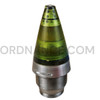
Mk 45 VT Proximity Fuze — Extremely Rare Original WWII Naval Ordnance
Own an extremely rare, original World War II-production Mk 45 VT Proximity Fuze for the U.S. Navy’s 3-inch/50-caliber gun. This is genuine wartime production, not a reproduction, and it still contains its original transceiver electronics in the nose section. More than an empty fuze body, this example preserves part of the technology behind one of America’s most closely guarded wartime weapons programs. It offers a rare opportunity to add an original artifact of wartime invention and naval history to your collection.
Ranked Alongside Radar and the Atomic Bomb
Historians recognize the proximity fuze, radar, and the atomic bomb as three of the most important technological innovations of World War II. The proximity fuze’s place alongside these better-known breakthroughs reflects its major contribution to American and Allied victory. This was not simply an improvement to an existing shell—it brought electronic target sensing into artillery ammunition and changed what naval antiaircraft guns could accomplish. This original Mk 45 connects your collection to one of the landmark technologies that helped the United States win the war.
TOP SECRET: A Breakthrough Kept Out of Enemy Hands
The proximity-fuze project was developed under TOP SECRET wartime security. Its technology was considered so valuable that early combat use was restricted to firing over water, not over land, where unexploded rounds could be recovered by the enemy. At sea, rounds that failed to explode would fall into the water, making recovery far less likely. These restrictions were intended to prevent enemy engineers from studying the fuzes, reverse-engineering their design, or developing ways to defeat them. Even the designation “VT,” meaning “Variable Time,” helped conceal the fuze’s true radio-based operation. This naval Mk 45 represents technology that the United States went to extraordinary lengths to keep out of enemy hands.
A Major Contribution to Victory in the Pacific
VT proximity fuzes played a major contributing role in helping the United States win the war in the Pacific. By greatly improving the effectiveness of naval antiaircraft fire, they helped destroy attacking Japanese aircraft, protect American warships, and save sailors’ lives. Their importance became especially clear during the kamikaze attacks of the later war, when stopping an approaching aircraft could mean the difference between a successful defense and a devastating hit. The Navy’s wartime analysis found VT fuzes approximately three times as effective as time fuzes in destroying enemy aircraft. Working alongside radar, fighter cover, and naval gun crews, this technology helped protect the fleet that carried the Allied advance toward Japan.
The Technology Behind the Advantage
Conventional antiaircraft ammunition depended on a direct hit or a timed burst close enough to strike an aircraft with shell fragments. A VT fuze used miniature radio electronics to detect a nearby target, allowing the shell to burst as it passed close to an aircraft. A near miss could now become an effective burst without requiring direct contact. Creating electronics small enough to fit inside a projectile—and strong enough to survive being fired from a naval gun—was a remarkable wartime achievement. The Mk 45 helped bring this capability to the Navy’s 3-inch/50-caliber ammunition.
Original Electronics and Condition
The retained nose-section electronics are an important part of this example’s appeal, preserving actual wartime components from the once-secret design. No battery or power supply is present. This item is offered as an inert historical collectible. Please check the pictures for the general condition of the item.
Ideal For
An exceptional centerpiece for a World War II ordnance collection, U.S. Navy exhibit, or display of early military electronics. For the collector who values both rarity and historical significance, this Mk 45 brings together wartime invention, extraordinary secrecy, and the defense of the Pacific Fleet in one original artifact. Own an original piece of technology that helped the US win the war!
Pictures are stock images of our inventory. Unless otherwise noted, you will not be receiving the exact item shown in the pictures. The pictures are representative of the item’s general condition. The item you receive might be slightly better, or worse, condition than was shown in the pictures.
Please visit our page about order lead times here: Order Lead Times.